Wat is gegoten aluminium?
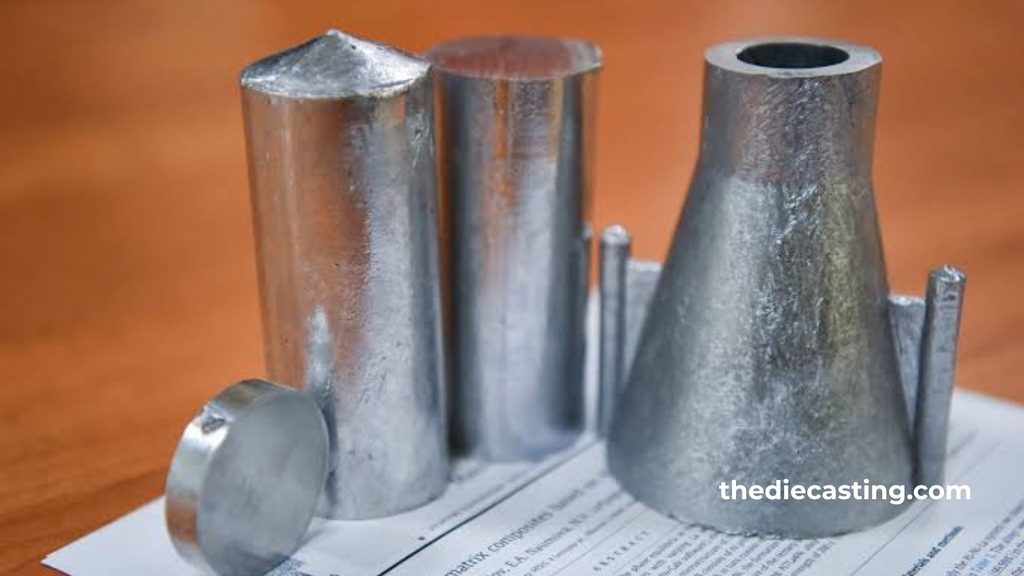
Gegoten aluminium is een productieproces waarbij gesmolten aluminium onder hoge druk in een herbruikbare stalen mal, een zogenaamde matrijs, wordt gespoten. Zodra het metaal is afgekoeld en gestold, gaat de matrijs open en wordt het afgewerkte onderdeel uitgestoten. Deze methode wordt op grote schaal toegepast voor de productie van complexe metalen onderdelen in grote series, met een uitstekende maatnauwkeurigheid en een gladde oppervlakteafwerking.
Aluminium is een van de populairste materialen voor spuitgieten, omdat het licht van gewicht en corrosiebestendig is en een uitstekende thermische en elektrische geleidbaarheid heeft. In combinatie met de efficiëntie van het spuitgietproces is aluminium daarmee een ideale keuze voor sectoren variërend van de automobiel- en lucht- en ruimtevaartindustrie tot consumentenelektronica en telecommunicatie.
Hoe het aluminiumspuitgietproces werkt
Het aluminiumspuitgietproces verloopt doorgaans in vier hoofdfasen.
1. Voorbereiding van de mal
De twee helften van de stalen matrijzen worden vervaardigd door een professionele matrijzenbouwer met hoogwaardig staal en een complex productieproces. Dit productieproces omvat CNC-bewerking, vonkverspaning (EDM), het boren van koelkanalen, draadsnijden, polijsten, passen enzovoort, totdat alles zorgvuldig is afgewerkt, zodat de spuitgietmatrijs klaar is voor massaproductie. Tijdens de massaproductie wordt er na elke gietcyclus smeermiddel gespoten. Dit smeermiddel helpt de temperatuur van de matrijs te regelen en maakt het gemakkelijker om het afgewerkte onderdeel van legering na het gieten te verwijderen.
2. Injectie
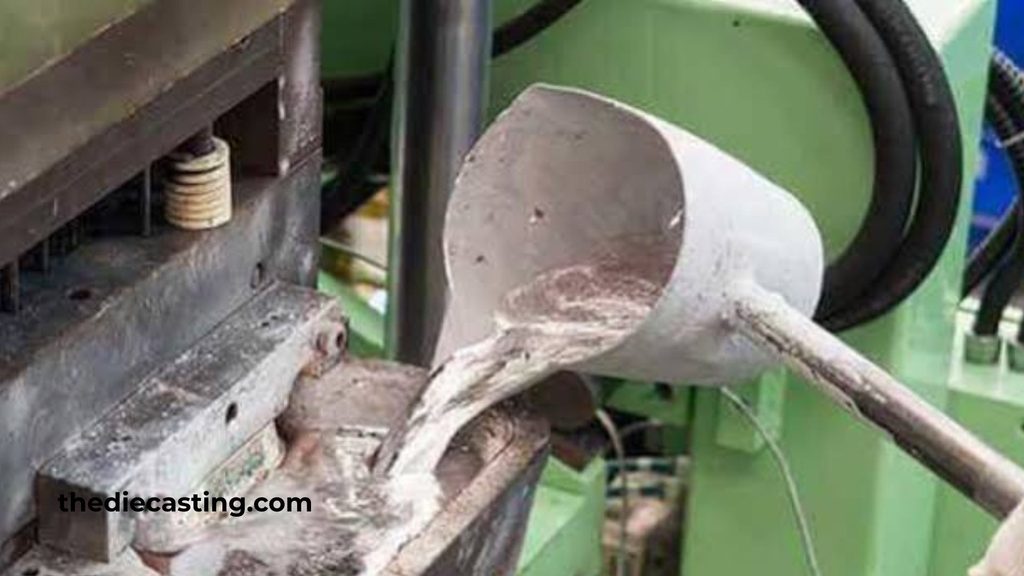
Gesmolten aluminium wordt onder hoge druk, doorgaans tussen 1.500 en 25.000 psi, in de holte van de matrijs gespoten. De hoge druk zorgt ervoor dat het gesmolten metaal elk detail van de matrijs snel en volledig vult.
3. Koelen en stollen
Zodra de holte is gevuld, laat men het aluminium afkoelen en uitharden. De afkoeltijd hangt af van de afmetingen en de wanddikte van het onderdeel.
4. Uitwerpen en afwerking
Na het uitharden gaat de matrijs open en duwen uitwerppinnen het gietstuk naar buiten. Het onderdeel kan vervolgens worden bijgesneden, ontbraamd, machinaal bewerkt of een oppervlakteafwerking krijgen (lakken, anodiseren, poedercoaten of E-coaten), afhankelijk van de eisen van de toepassing.
Gemeenschappelijke aluminiumlegeringen gebruikt bij spuitgieten
Niet alle aluminium is hetzelfde. Bij het spuitgieten van aluminiumlegeringen wordt doorgaans gebruikgemaakt van specifieke legeringssamenstellingen die een optimale balans bieden tussen gietbaarheid, sterkte en corrosiebestendigheid.
Enkele van de meest voorkomende legeringen zijn:
A380: De bewering dat A380 de “meest gebruikte” aluminiumlegering is voor hogedrukgieten (HPDC) wordt breed onderschreven binnen de gieterij- en automobielindustrie. Deze status heeft de legering niet per se te danken aan het feit dat het de sterkste of meest gespecialiseerde legering is, maar omdat het een uitzonderlijke, toonaangevende balans biedt tussen gietbaarheid, mechanische eigenschappen en kosteneffectiviteit.
Hier volgt een uitgebreide toelichting op waarom de A380 de HPDC-markt domineert:
1. Uitstekende gietbaarheid en vloeibaarheid
De belangrijkste reden voor het grote succes van de A380 is de manier waarop het zich in de matrijs zelf gedraagt. Bij hogedrukgieten wordt gesmolten metaal met hoge snelheid en onder hoge druk in een stalen matrijs gespoten.
- Eutektische samenstelling: De chemische samenstelling van A380 (die onder meer bestaat uit ongeveer 8,5% silicium en 3,5% koper) ligt zeer dicht bij het eutectische punt van aluminium en silicium. Eutectische legeringen smelten en stollen bij één enkele, lagere temperatuur in plaats van over een bepaald temperatuurbereik. Dit geeft A380 uitzonderlijke vloeibaarheid (het vermogen om vóór het stollen in dunne wanden en complexe geometrieën te vloeien).
- Minder scheuren bij hoge temperaturen: Omdat A380 snel en gelijkmatig stolt, is het zeer goed bestand tegen “hot tearing” (scheuren die ontstaan doordat het metaal tijdens het afkoelen krimpt). Hierdoor kunnen ontwerpers complexe, kant-en-klare onderdelen met wisselende wanddiktes ontwerpen zonder dat het onderdeel in de matrijs scheurt.
- Lagere smelttemperatuur: A380 smelt bij een lagere temperatuur dan smeedlegeringen of 6061, waardoor de thermische belasting op de dure stalen matrijzen wordt verminderd, de levensduur van de matrijs wordt verlengd en de energiekosten worden verlaagd.
2. De “sweet spot” van mechanische eigenschappen
Hoewel A380 niet de sterkste aluminiumlegering is die er bestaat (die titel gaat naar warmtebehandelbare legeringen zoals 201 of 7075, die zelden onder druk worden gegoten), biedt het een zeer gewilde combinatie van eigenschappen voor de productie.
- Matige sterkte: Het biedt voldoende trek- en vloeigrenssterkte voor een breed scala aan constructieve en niet-constructieve onderdelen.
- Hardheid en bewerkbaarheid: Het hoge siliciumgehalte fungeert als een natuurlijk hard deeltje, waardoor A380 een uitstekende slijtvastheid heeft en zeer gemakkelijk te bewerken is. De siliciumdeeltjes breken netjes af in plaats van dat ze het snijgereedschap verstoppen.
- Dichtheid: Door de fijne korrelstructuur die het gevolg is van de snelle stolling is A380 relatief drukdicht. Terwijl legering A383 vaak wordt voorgeschreven wanneer extreem Als het gaat om lekbestendigheid, is A380 voor veel vloeistof- en pneumatische componenten doorgaans “goed genoeg”.
3. Kosteneffectiviteit en beschikbaarheid
In de productie is de beste legering die in een laboratorium kan worden ontwikkeld, nutteloos als deze te duur is of moeilijk te verkrijgen. De A380 wint puur op economische gronden.
- Aandeel gerecycleerd materiaal: A380 is speciaal ontworpen om een hoog percentage secundair (gerecycled) aluminium te kunnen verwerken. Aluminiumschroot afkomstig van auto’s, extrusies en verspaningsspanen kan in A380-ingots worden gemengd zonder dat de mechanische eigenschappen ervan worden aangetast.
- Geen warmtebehandeling nodig (meestal): Veel hoogsterkte aluminiumlegeringen moeten een T6-warmtebehandeling ondergaan (oplossingsgloeien, afkoelen en veroudering) om hun volledige sterkte te bereiken. Dit proces is duur en leidt tot vervorming. A380 is direct “zoals gegoten”, rechtstreeks uit de gietvorm, al geschikt voor gebruik.
- Standaardisatie: Omdat A380 de industriestandaard is, hebben gieterijen het altijd op voorraad, hebben leveranciers altijd blokken beschikbaar en beschikken ingenieurs over tientallen jaren aan gegevens over de prestaties ervan. Dit vermindert het risico in de toeleveringsketen.
4. Breed scala aan toepassingen
Vanwege de bovengenoemde factoren is de A380 in de productiesector alomtegenwoordig. Voorbeelden hiervan zijn:
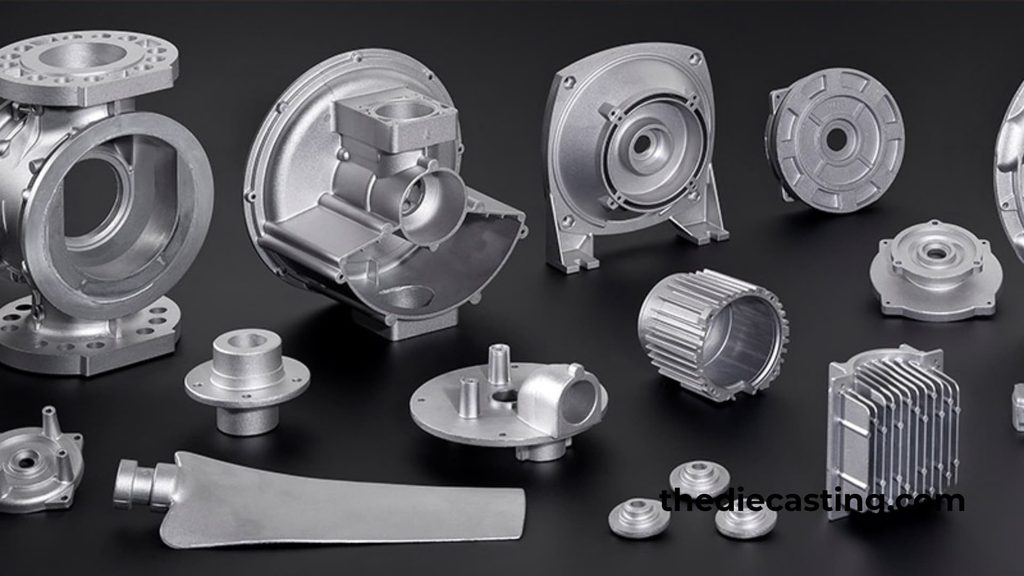
- Automobiel: Motorbeugels, versnellingsbakbehuizingen, kleppendeksels, fusees en behuizingen van elektronische onderdelen.
- Elektrisch gereedschap: Behuizingen voor boormachines, zagen en gazononderhoudsapparatuur, waarbij stijfheid en warmteafvoer van cruciaal belang zijn.
- Elektronica: Heat sinks, chassis for routers/servers, and frames for LED lighting (where its thermal conductivity and lightweight nature are prized).
- General Hardware: Ladder steps, pneumatic manifold blocks, and consumer appliance parts.
The Caveat: The Rise of Structural Alloys
It is worth noting that A380’s “throne” is being challenged in specific sectors. Because A380 contains copper, it suffers from lower corrosion resistance and poor ductility (it is brittle when bent).
As the automotive industry moves toward electric vehicles (EVs) and requires large, structural castings (like “Gigacastings” for the entire underbody of a car), alloys like Silafont 36 (A356 derivative) of C611 are becoming more popular. These are “structural die-casting alloys” that are silicon-based but copper-free. They can be heat-treated, welded, and riveted, and they absorb crash energy much better than A380.
Summary:
A380 is the “workhorse” of the HPDC industry. Its dominance stems from the fact that it is the easiest alloy to cast into complex, high-volume parts at the lowest possible manufacturing cost, while still providing sufficient strength for the vast majority of everyday applications.
A383 – While A380 is the most widely used general-purpose aluminum die-casting alloy due to its excellent combination of castability and mechanical properties, it has two specific limitations: it is prone to hot cracking (tearing) during solidification and can be difficult to hold to tight tolerances due to shrinkage.
A383 is specifically engineered to overcome these issues: - Resistance to Hot Cracking: Hot cracking occurs when a casting is restrained from shrinking naturally as it cools from the molten state. This creates internal stresses that tear the semi-solid metal apart. A383 achieves better resistance to this by modifying the alloying elements. Specifically, A383 often has a slightly modified chemistry (including adjusted levels of copper, silicon, and iron). The reduced copper content and optimized silicon phase help the metal “feed” (flow) into shrinking areas during freezing, preventing the formation of micro-tears along grain boundaries. This makes A383 ideal for complex thin-wall parts, housings, or components that require intricate tooling with varying cross-sections.
Improved Dimensional Stability: Because A383 solidifies with less internal stress and manages shrinkage more evenly, the final cast part warps or “drifts” less out of shape after ejection from the die. This is critical for components that require tight tolerances without extensive secondary machining, such as electronic enclosures, intricate lighting fixtures, and complex chassis components.
Trade-off: The trade-off for this improved castability and stability is that A383 typically offers slightly lower ultimate tensile strength and hardness compared to A380. However, in many applications, the elimination of casting defects (cracks) more than compensates for this minor reduction in raw strength.
A380 and A383 prioritize “castability” (the ability to fill a mold easily and eject cleanly). However, this often comes at the cost of ductility (the ability to bend without breaking) and corrosion resistance due to their relatively high copper content.
A360: A 360 is designed to solve these environmental and mechanical limitations: - Superior Corrosion Resistance: The primary culprit for poor corrosion resistance in standard die-casting alloys is copper. When exposed to moisture, salt, or industrial chemicals, copper-rich phases within the aluminum matrix create galvanic micro-cells that accelerate oxidation (rusting) of the aluminum. A360 is formulated with a very low or nominal copper content (typically 0.60%). By removing copper from the alloy, A360 becomes much more resistant to atmospheric corrosion, stress corrosion cracking, and pitting.
Better Ductility (Elongation and Toughness): Ductility is the ability of a metal to deform under tensile stress without fracturing. High-copper alloys are generally harder but more brittle. Because A360 lacks this hardening copper phase, it is “softer” and more elastic. It can absorb impact energy much better than A380/A383. If an A380 part is overloaded, it will snap or shatter; an A360 part will typically bend or deform first.
Trade-offs & Applications: Because A360 lacks the copper that makes the metal flow easily, it is slightly more difficult to cast than A380 (lower fluidity in the die). Additionally, it has lower yield strength and hardness. Therefore, A360 is used specifically for parts that must survive harsh environments of impact loads, rather than parts needing high structural rigidity.
Typical Applications include: - Marine hardware: Brackets, housings, and handles exposed to saltwater.
Automotive chassis/suspension parts: Components subjected to road salt, water, and vibration where cracking is not an option.
Outdoor electrical enclosures: Junction boxes and lighting fixtures that must survive weather without white corrosion blooming on the surface.
Pneumatic and hydraulic components: Manifolds or housings that must withstand pressure spikes without brittle fracture.
Summary Comparison:
A380: The standard; cheapest, high strength, moderate corrosion, low ductility.
A383: The “tweaked” version; fixes cracking and warping issues for complex shapes; slightly softer than A380.
A360: The “tough” version; sacrifices some strength and ease of casting to achieve high corrosion resistance and high impact absorption.
Choosing the right alloy depends on the specific mechanical requirements, operating environment, and production volume of the part.
Voordelen van spuitgietaluminium
Die casting aluminum offers several significant benefits over other manufacturing methods.
Lightweight and Strong
Aluminum provides a high strength-to-weight ratio. This makes it particularly valuable in automotive and aerospace applications, where reducing weight directly improves fuel efficiency and performance.
High-Speed Production
Once the die is created, the casting cycle is fast. A single die can produce thousands of identical parts with minimal variation, making aluminum die casting highly cost-effective for large production runs.
Excellent Dimensional Accuracy
Die cast aluminum parts require little to no secondary machining. Tight tolerances are achievable consistently, reducing waste and lowering overall production costs.
Smooth Surface Finish
Parts produced through aluminum die casting typically have a clean, smooth surface right out of the mold. This reduces the need for additional finishing processes and makes the parts suitable for painting, powder coating, or plating.
Complexe geometrieën
The process allows for the creation of intricate shapes with thin walls, internal features, and detailed contours that would be difficult or impossible to achieve with other manufacturing methods.
Toepassingen van gietaluminium
Aluminum die casting is used across a broad range of industries. Common applications include:
- Automotive – Engine blocks, transmission housings, brackets, and structural components.
- Ruimtevaart – Lightweight structural parts and housings.
- Elektronica – Heat sinks, enclosures, and connectors.
- Consumentenproducten – Power tool housings, kitchen appliances, and furniture hardware.
- Telecommunicatie – RF filter housings and antenna mounts.
Choosing the Right Aluminium Die Casting Manufacturer
Working with the right partner is critical to the success of any die casting project. A qualified aluminium die casting manufacturer will offer:
- Experience with the specific alloy your project requires.
- In-house tooling design and maintenance capabilities.
- Quality control systems such as ISO certification.
- Value-added services like CNC machining, surface finishing, and assembly.
When evaluating potential suppliers, ask about their previous projects, production capacity, and ability to meet your tolerance and surface finish requirements. A manufacturer with a strong engineering team can also help optimize your part design for the die casting process, reducing costs and improving quality.
Conclusie
Die casting aluminum remains one of the most efficient and versatile manufacturing methods for producing high-quality metal components. With its combination of lightweight strength, corrosion resistance, and cost-effectiveness for high-volume production, aluminium spuitgietwerk continues to be a go-to solution across many industries. By understanding the process, the available alloys, and the importance of partnering with a reliable aluminium die casting manufacturer, you can make informed decisions that lead to better products and more efficient production.