
黒色アルマイト処理 アルミニウム これは、暗い色調、高い耐摩耗性、および耐食性が求められる金属部品に広く採用されている仕上げ方法です。この黒色仕上げは塗装ではなく、陽極酸化処理によって生成されます。表面に酸化アルミニウムの層を形成した後、電流を制御することで着色されます。.
この仕上げは、表面に別の層が乗っているのではなく、アルミニウムの表面と非常に密着しています。このコントラストにより、黒色アルマイト処理されたアルミニウムに求められる外観と耐久性が実現されています。また、この仕上げは、まぶしさ、指紋、熱、日常的な使用による摩耗が問題となる製品にも適しています。.
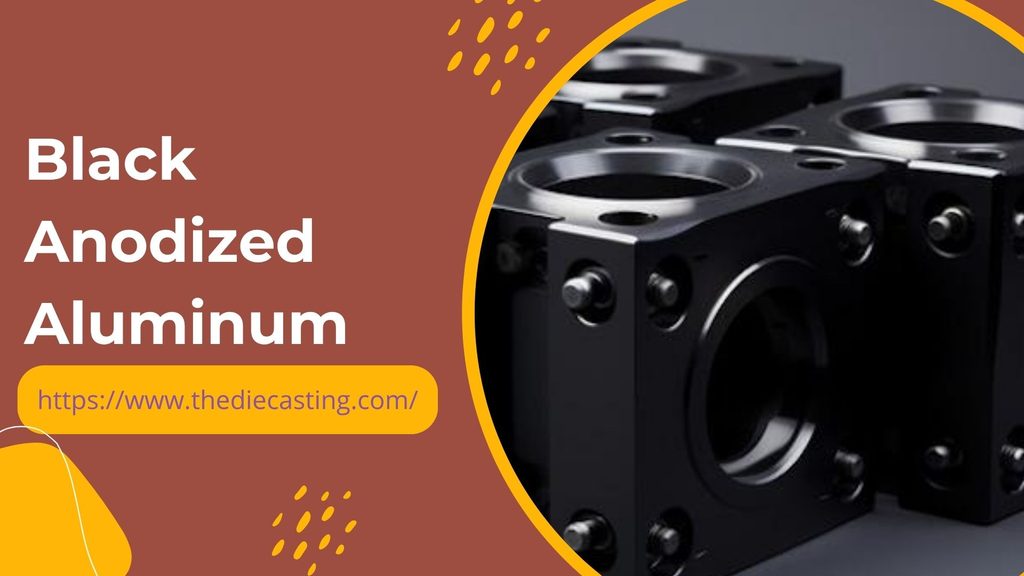
しかし、美しい黒色の仕上げを実現するのは、単にアルミニウム部品を黒色染料浴に浸すほど簡単ではありません。アルミニウム合金の種類、表面処理、陽極酸化処理の種類、酸化皮膜の厚さ、染料、封止方法、そして部品の設計など、あらゆる要素が仕上がり結果に影響を及ぼします。.
黒色アルマイト処理されたアルミニウムとは?
黒 アルマイト これは、電気化学的処理を施したアルミニウムを黒く着色したものです。.
陽極酸化処理の際、 アルマイト・ダイカスト この部品は、電解液槽内で陽極として機能します。直流電流を流すことで、表面に制御された酸化アルミニウム層が形成されます。塗料や粉体塗装とは異なり、この酸化層はアルミニウム自体から生成されます。.
新たに形成された酸化膜は多孔質の構造をしています。これらの細孔は、染料や金属系着色剤を浸透させるための空間となります。着色後、細孔を封鎖することで、色を定着させ、表面を保護します。.
このシンプルな工程により、黒色アルマイト処理を施したアルミニウムには、次のような多くの優れた特性がもたらされます:
- 未処理のアルミニウムよりも表面が硬い。.
- 耐摩耗性および耐擦傷性が向上しました。.
- 耐食性の向上
- 濃い色または黒色。.
- 適切な下地処理を行えば、表面のグレアが抑えられます。.
- 酸化膜は電気絶縁体の役割を果たします。.
- 陽極酸化処理された表面は、優れた放熱性を備えています。.
仕上がりは、材料や加工条件に大きく左右されます。 アルミニウム合金の種類によって、さまざまな色合いを実現することができます。6xxx系合金(例:6061、6063)は均一な黒色仕上げに適していますが、銅を多く含む合金や高シリコン合金では、均一な仕上げが得られない場合があります。.
黒色アルマイト処理の仕組み
黒色アルマイト処理は、一般的に「表面処理」「アルマイト処理」「着色」「シーリング」という4つの主要な工程を経て行われます。.
· 表面処理
最初の工程では、アルミニウムから油分、汚れ、切削液、その他の不純物を取り除きます。.
洗浄の後には、通常、化学エッチングが行われます。エッチングにより、表面の薄い層が除去され、より均一な表面粗さが得られます。一部の工程では、合金元素の残留物を除去するために、酸による脱スラグ処理も行われます。.
機械的な前処理は異なります。陽極酸化処理の前に、サンドブラストや研磨、その他の研磨処理によって表面を加工します。.
この工程は、仕上がりの見た目に大きな影響を与えます。表面が粗いと光が散乱し、マットな仕上がりになります。表面が滑らかだと光をより多く反射し、より明るい仕上がりになります。.
· 陽極酸化処理
処理済みのアルミニウムは電解液槽に入れられます。タイプIIまたはタイプIIIの陽極酸化処理では、多くの場合、硫酸が使用されます。.
このアルミニウム部品は直流電源のプラス極に接続され、陰極によって電気回路が閉じられます。電流が電解質を流れ、部品表面に酸化アルミニウムの層が形成されます。.
酸化膜は完全に密閉されているわけではなく、多孔質となっています。これらの細孔には、後に黒色の着色剤が保持されます。.
· ぬりえ
酸化膜が形成された後に、黒色が現れます。.
一般的な手法としては、有機染料、無機染料、および金属塩を用いた電解着色という3つが挙げられる。.
有機染料は、比較的低コストで深みのある豊かな色を生み出す傾向があります。その主な弱点は紫外線への耐性が低いことです。長時間日光にさらされると、色あせの原因となる可能性があります。.
無機染料は、より優れた耐光性を備えています。電解着色法では、酸化物の細孔内に金属塩を析出させるため、一般的に屋外での色安定性が高くなります。.
· シーリング
最終工程では、陽極酸化層の細孔を塞ぎます。.
シーリング処理を行うことで、酸化膜内に染料を閉じ込め、汚れや腐食に対する耐性を高めることができます。この目的のために用いられる方法として、水熱シーリングと化学的シーリングの2つがあります。.
適切に密封しないと、仕上げられた表面は汚れや色あせの影響を受けやすくなります。.
どのアルミニウム合金が最適か?
アルミニウム合金の選定は、黒色陽極酸化処理に直接的な影響を及ぼします。.
一部の合金元素は、陽極酸化処理の際に反応が不十分になることがあります。銅、シリコン、マンガンなどの元素は、アルミニウムの組織内に粒子や残留物を形成します。これらの部分は、表面処理の際に異なる反応を示す可能性があり、色むらが生じることがあります。.
外観用の黒色アルマイト処理には、一般的に5xxx、6xxx、および7xxxシリーズの合金が好まれます。6xxxシリーズの合金、特に6061は、均一な黒色仕上げが得られる傾向があるため、特に注目されています。.
| アルミニウムシリーズ | 黒色アルマイト処理に対する典型的な反応 |
| 2xxx | 銅の影響で、しばしば色むらが生じたり、色がくすんだりすることがある |
| 3xxx | 灰色になったり、仕上がりにムラが生じたりする場合があります |
| 5xxx | 全体的に良好な黒色仕上げ |
| 6xxx | 一貫性があり、深みのある黒色、特に6061 |
| 7xxx | ダークな仕上がりですが、正確な色合いは異なります |
異なるサプライヤーの部品を組み合わせる際も、合金の選定は重要です。名目上は同じ黒色仕上げの2つの部品であっても、使用されている合金、焼戻し状態、機械加工プロセス、あるいは前処理プロセスが異なれば、見た目が同じとは限らないからです。.
生産においては、所望の色を決定するために、同じ合金の認定済みサンプルを使用するのが賢明です。.
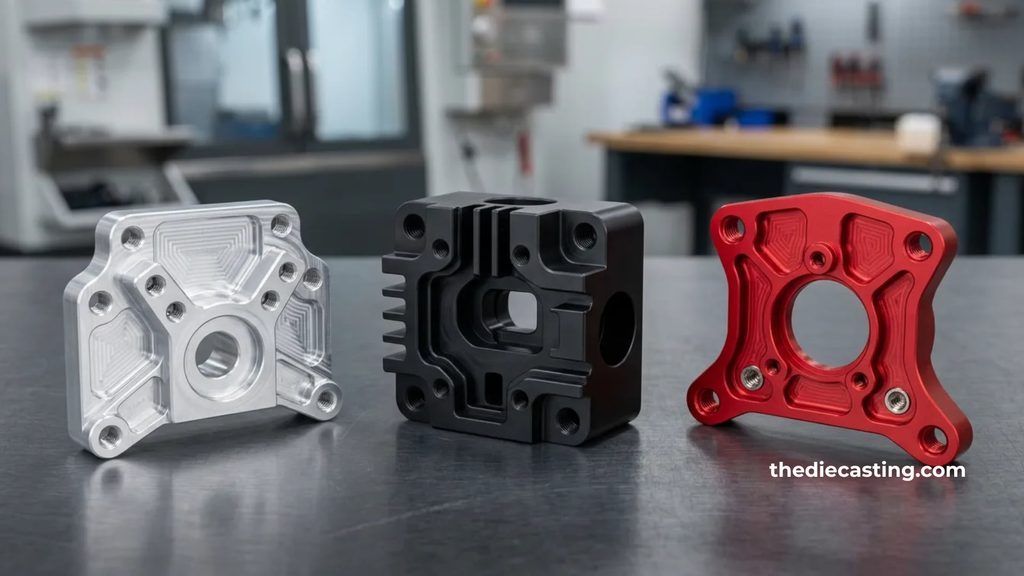
タイプIIとタイプIIIの黒色アルマイト処理の比較
タイプIIとタイプIIIの2つが アルマイト types most often discussed for black aluminum parts.
· Type II anodizing
Type II is commonly used for parts that require only basic protection and where appearance is important.
The oxide layer is not as thick or dense as a Type III hardcoat. This makes it easier to absorb the dye and to obtain a deep black.
Common uses include:
- Electronics housings
- 装飾パネル
- Automotive trim
- Architectural components
- Consumer products
- Equipment covers
· Type III anodizing
Hardcoat anodizing is also referred to as Type III.
This process creates a thicker and denser oxide layer, which has a much higher wear resistance. The compromise is in coloring. A dense hardcoat layer has smaller and less uniform pores, making it more difficult to achieve a deep and even black color.
Type III suits parts that are subject to frequent rubbing, abrasion, or mechanical contact. Some examples are aerospace parts, machinery components, pistons, gears, valves, and guides.
| 特徴 | Type II | Type III |
| Main purpose | Appearance and general protection | High wear resistance |
| Oxide layer | Thinner | Thicker and denser |
| Dye absorption | グッド | More difficult |
| Black color | Usually easier to achieve | Often gray-black or bronze-black |
| Typical use | Electronics, trim, housings | Machinery, aerospace, high-wear parts |
The choice comes down to the job of the part. A housing that needs a clean black appearance often suits Type II. A sliding mechanical component needs the harder surface provided by Type III.
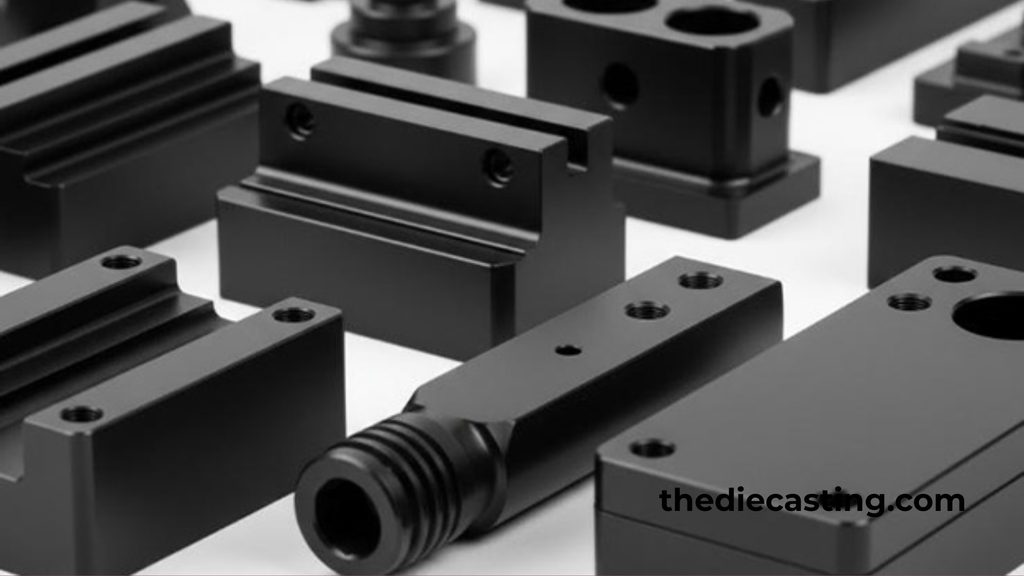
Matte vs. Glossy Black Anodized Aluminum
Anodizing alone does not decide whether a black aluminum part looks matte or glossy. Surface preparation has a major role.
· マットブラック
A matte finish usually starts with chemical etching or blasting.
These processes create small surface irregularities. Light scatters across those irregularities instead of reflecting directly toward the viewer.
Matte black aluminum is useful for products where glare and fingerprints are concerns. This finish is commonly applied to optical equipment, electronics housings, and equipment panels.
· Glossy black
A smooth starting surface is required for a glossy finish.
Mechanical polishing removes small peaks on the surface and creates a more reflective surface. Chemical bright dipping also creates a smoother surface on the aluminum on a microscopic level.
This black anodizing process, then, yields different visual effects depending on the pre-anodizing treatment.
| 表面処理 | Typical appearance |
| Bead blasting | Uniform matte |
| Alkaline etching | Fine matte or satin |
| Mechanical polishing | Glossy |
| Chemical bright dipping | Bright, highly reflective |
How Thick Should Black Anodizing Be?
The thickness of oxides has an impact on protection and color.
A thicker oxide layer typically yields more pore volume to absorb the dye for Type II finishes. Approximately 18 to 25 microns is a good range for a rich Type II black finish. Thinner films yield lighter or less saturated colors.
The pattern of Type III is different. The thicker the hardcoat, the more wear-resistant it is, but the thicker the hardcoat, the more difficult it will be to dye.
This results in a compromise. The thickest anodic layer does not necessarily equal the darkest black. Appearance and wear resistance must be taken into account.
Organic, Inorganic, and Electrolytic Coloring
The coloring method determines the durability of black anodized aluminum.
· Organic dyes
Organic dyes are extensively used due to their good color strength and relatively easy processing.
They are suitable for products that are used indoors, electronics, decorative parts, and other applications that do not receive much sunlight.
Their greatest weakness is long-term exposure to UV. Ordinary organic dyes may cause fading on black surfaces when exposed to sunlight for extended periods of time.
· Inorganic dyes
Inorganic coloring systems provide better resistance to light and heat.
They suit outdoor products and parts exposed to demanding conditions. The color depth may differ from a deep organic-dyed black, but service life under UV exposure is often better.
· Electrolytic coloring
Electrolytic coloring uses metal salts and electrical current to place metallic material inside the anodic pores.
Tin, nickel, cobalt, and other metals are used in different coloring systems. Such finishes generally offer strong color stability and are useful for outdoor and architectural applications.
For an exterior product, dye selection deserves as much attention as the anodizing type itself.
Black Anodizing vs. Paint and Powder Coating
- Black anodizing has one major structural difference from paint and powder coating. The anodic layer grows from the aluminum surface.
- Paint and powder coating sit on top of the metal. Under enough impact, abrasion, or poor adhesion, a conventional coating may chip or peel.
- Anodizing does not behave in the same way. A scratch still damages the finish, but there is no separate paint film waiting to peel away from the aluminum.
- Black anodizing also leaves the metal surface relatively thin compared with many applied coatings. This is important in areas where heat transfer is a concern, like electronic enclosures and heat sinks.
- Paint and powder coating still have their role to play. They offer more color options and cover up more surface defects, such as scratches and machining marks.
- The choice depends on the function of the completed part.
Where Is Black Anodized Aluminum Used?
Black anodized aluminum is used in a variety of industries where appearance and surface performance are important.
· エレクトロニクス
Black anodized aluminum is commonly used for laptops, audio equipment, camera bodies, equipment housings, and more. The finish gives a clean look and protects the surface from regular use and wear. The oxide layer also acts as electrical insulation.
· Optical equipment
Black matte aluminum is suitable for use around optical components, as it reflects less light. This property is useful in camera housings, scientific instruments, and other optical equipment.
· 自動車部品
Trim, interior components, and certain mechanical components are black anodized aluminum. The finish is designed to provide a blend of aesthetics and durability for everyday use.
· Architecture
Anodized aluminum is used to protect against corrosion and for appearance in window frames, doors, trim, panels, and other architectural components. The color system is important for exterior applications. The UV-resistant dye or electrolytic coloring process offers greater long-term color stability than simple organic dye.
· Aerospace and space equipment
Black anodized aluminum is also used in the aerospace and space industry. Black anodized surfaces on satellite components aid in heat radiation. Low outgassing is also important for properly sealed anodized parts in vacuum applications.
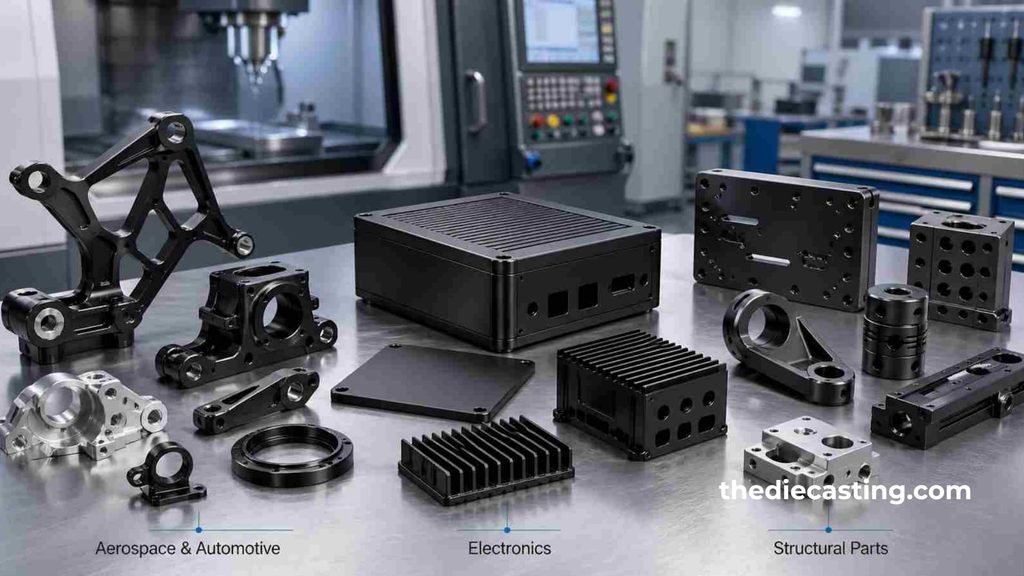
Designing Parts for Black Anodizing
Good results start before manufacturing.
Sharp internal corners may receive uneven current during anodizing. Deep cavities may hold chemicals after rinsing. Large flat surfaces may also show color differences more clearly than smaller textured surfaces.
Several simple design choices help:
- Add reasonable radii to sharp corners.
- Provide drainage and venting for hollow sections.
- Keep racking points away from visible surfaces.
- Tell the manufacturer which surfaces are cosmetic.
- Avoid unnecessary deep blind cavities.
- Approve a color sample before production.
- Maintain uniformity of alloy, temper, and finishing.
Another item of interest is racking. The part is secured in the rack, which also makes an electrical connection during processing. Poor positioning can cause non-uniform current distribution and coating thickness.
結論
Black anodized aluminum is more than a black surface treatment. The anodizing process is used to form a protective layer of aluminum oxide. The coloring stage is used to give the part a dark color.
The outcome depends on various decisions made prior to and during production. Aluminum alloy has an impact on color consistency. Surface preparation controls matte or gloss appearance. Type II is more absorbent and appears more, and Type III is harder and more wear-resistant. The efficiency of the black color in resisting sunlight and heat depends on dye chemistry.
A standard organic dyed Type II finish can be used for indoor products and may offer a reasonable appearance and cost. Dye chemistry, sealing, oxide thickness, and anodizing type are more critical for outdoor or high-wear parts.
A clear specification is the first step to the best black anodized finish. Specify the alloy, anodizing type, thickness, surface texture, coloring process, and color standard before production. This provides the manufacturer with a clear target and minimizes the chances of surprises between the approved sample and the finished parts.