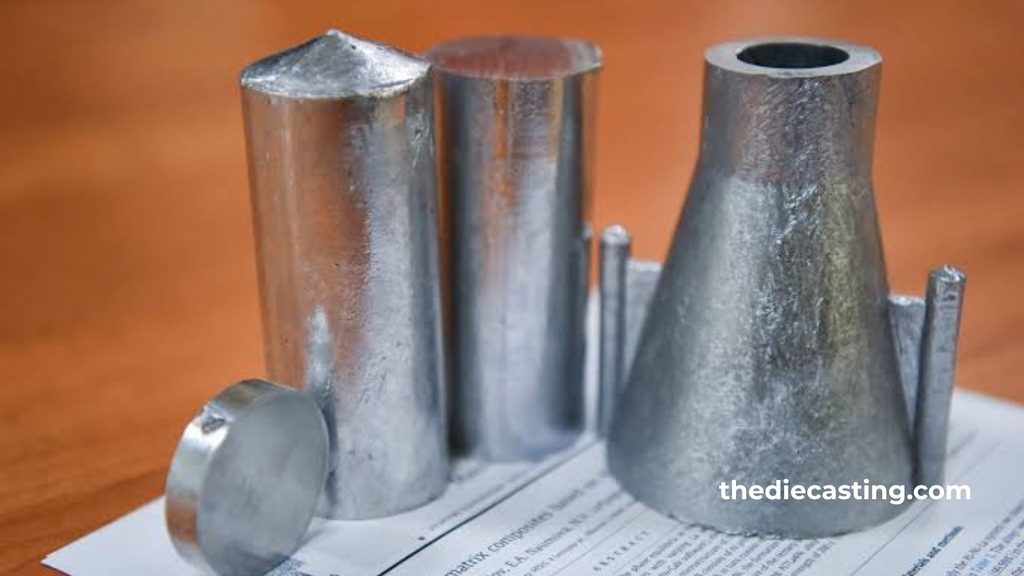
アルミダイカストとは?
アルミダイカスト これは、溶融アルミニウムを高圧下で「ダイ」と呼ばれる再利用可能な鋼製金型に射出する製造プロセスである。金属が冷却・固化すると、金型が開き、完成した部品が取り出される。この方法は、優れた寸法精度と滑らかな表面仕上げを持つ、複雑で大量生産される金属部品の製造に広く用いられている。
アルミニウムは、軽量で耐食性に優れ、熱伝導率と電気伝導率も極めて高いため、ダイカストに最も広く用いられている材料の一つです。ダイカストプロセスの効率性と相まって、アルミニウムは自動車や航空宇宙から、民生用電子機器や通信に至るまで、幅広い産業において理想的な選択肢となっています。
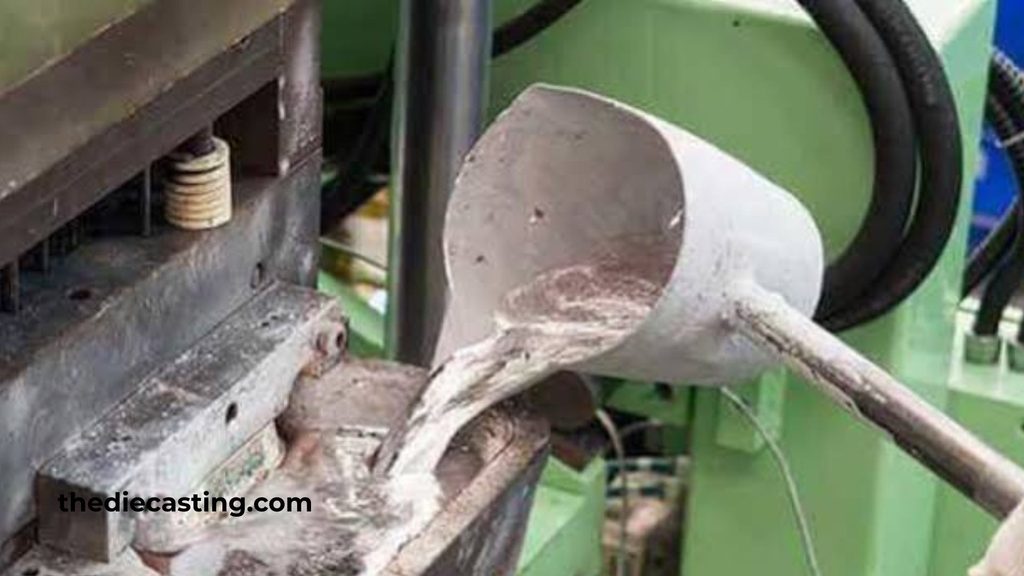
アルミニウムダイカスト成形の仕組み
アルミニウムのダイカスト成形プロセスは、一般的に4つの主要な段階を経ます。
1.金型の準備
鋼製金型の2つの半身は、専門の金型職人が高品質の鋼材と複雑な金型製造工程を用いて製作しています。この金型製造工程には、CNC加工、放電加工(EDM)、冷却路の穿孔、ワイヤーカット、研磨、組み付けなどが含まれ、ダイカスト金型が量産に備えられるよう、すべての工程が丁寧に仕上げられます。 量産中は、鋳造の開始ごとに潤滑剤が噴射されます。この潤滑剤は金型の温度を制御するのに役立ち、鋳造後の完成した合金部品の取り外しを容易にします。
2. 注入
溶融アルミニウムは、通常1,500~25,000 psiの範囲の高圧で金型のキャビティに射出されます。この高圧により、溶融金属が金型の細部まで迅速かつ完全に充填されます。
3.冷却と凝固
キャビティへの充填が完了したら、アルミニウムを冷却して固化させます。冷却時間は、部品のサイズや肉厚によって異なります。
4. 排出と仕上げ
凝固後、金型が開き、エジェクタピンによって鋳物が押し出されます。その後、用途の要件に応じて、部品のトリミング、バリ取り、機械加工、または表面処理(塗装、陽極酸化処理、粉体塗装、またはE-コーティング)が行われます。
ダイカストで使用される一般的なアルミニウム合金
アルミニウムにはさまざまな種類があります。アルミニウム合金のダイカストでは、通常、鋳造性、強度、耐食性のバランスが最適に取れた特定の合金組成が使用されます。
最も一般的な合金には、次のようなものがあります:
A380: A380が高圧ダイカスト(HPDC)において「最も広く使用されている」アルミニウム合金であるという主張は、鋳造業界および自動車業界において十分に裏付けられています。A380がこの地位を確立したのは、必ずしも最も強度が高い、あるいは最も特殊な合金であるからではなく、業界をリードする卓越したバランスを兼ね備えているからです。 鋳造性、機械的特性、および費用対効果。
A380がHPDC市場で圧倒的な地位を占めている理由について、以下に詳しく解説します:
1. 優れた鋳造性と流動性
A380が広く普及している主な理由は、金型内でのその挙動にあります。高圧ダイカストとは、溶融金属を高速かつ高圧で鋼製の金型に射出する工程のことです。
- 共晶組成: A380の化学組成(シリコン約8.5%、銅約3.5%を含む)は、アルミニウム・シリコンの共晶点に極めて近い。共晶合金は、温度範囲にわたってではなく、単一の低い温度で溶融・凝固する。これにより、A380は 並外れた滑らかさ (凝固する前に、薄い壁や複雑な形状に流れ込む能力)。
- ホットティアリングの低減: A380は急速かつ均一に凝固するため、「ホットティアリング」(冷却時に金属が収縮することで生じる亀裂)に対して非常に高い耐性を示します。これにより、設計者は、金型内で部品に亀裂が生じることを防ぎつつ、肉厚が変化する複雑なネットシェイプ部品を製造することが可能になります。
- 融点の低下: A380は、鍛造合金や6061よりも低い温度で溶融するため、高価な鋼製金型にかかる熱疲労を軽減し、金型の寿命を延ばすとともに、エネルギーコストを削減します。
2. 機械的特性の「スイートスポット」
A380は、現存するアルミニウム合金の中で最も強度が高いわけではありません(その称号は、201や7075のような熱処理可能な合金に与えられますが、これらはダイカストされることはほとんどありません)。しかし、製造において非常に望ましい特性の組み合わせを備えています。
- 中程度の強度: この材料は、多種多様な構造用および非構造用部材に対して、十分な引張強度および降伏強度を提供します。
- 硬度と被削性: シリコン含有量が高いため、天然の硬質粒子として機能し、A380には優れた耐摩耗性がもたらされ、加工も非常に容易になります。シリコン片は切削工具に付着して詰まらせることなく、きれいに剥離します。
- 気密性: 急速凝固によって生じる微細な結晶組織により、A380は比較的気密性に優れています。一方、合金A383は、多くの場合、 極端な 耐漏れ性が求められる場合でも、多くの流体・空圧部品においては、A380は通常「十分」です。
3. 費用対効果と入手可能性
製造業において、実験室で開発された最高の合金であっても、コストが高すぎたり、調達困難だったりすれば、何の役にも立ちません。A380は純粋に経済性の面で優れています。
- リサイクル素材の含有率: A380は、高比率の二次(リサイクル)アルミニウムを許容できるよう特別に設計されています。自動車、押出成形品、および切削くずから得られるアルミニウムスクラップは、A380インゴットに混合しても、その機械的特性を損なうことはありません。
- (通常)熱処理は不要: 多くの高強度アルミニウム合金は、その強度を最大限に引き出すために、T6熱処理(溶体化処理、焼入れ、時効処理)を必要とします。この工程はコストがかかり、歪みも生じます。一方、A380は鋳型から取り出したばかりの「鋳出し状態」のまま、その実用性を発揮します。
- 標準化: A380は業界の標準規格であるため、鋳造所では常に在庫を確保しており、サプライヤーも常にインゴットを調達可能で、エンジニアは同材の性能に関する数十年にわたるデータを保有しています。これにより、サプライチェーンのリスクが低減されます。
4. 幅広い用途
上記の要因により、A380は製造業において広く普及しています。その例としては、次のようなものがあります:
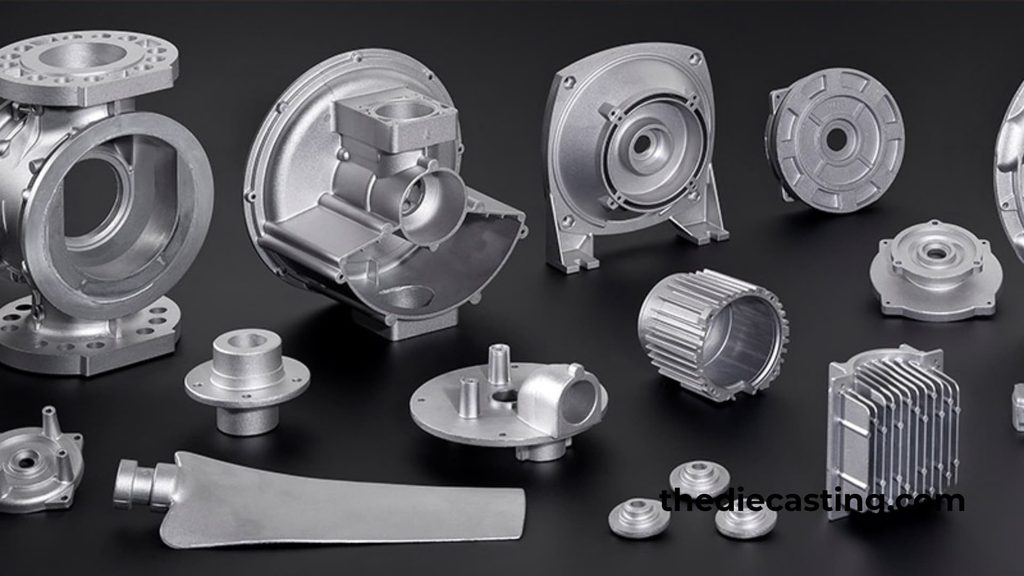
- 自動車: エンジンブラケット、トランスミッションケース、バルブカバー、ステアリングナックル、および電子機器のハウジング。
- 電動工具: ドリル、のこぎり、芝生用機器用のハウジング。これらにおいては、剛性と放熱性が極めて重要です。
- エレクトロニクス: Heat sinks, chassis for routers/servers, and frames for LED lighting (where its thermal conductivity and lightweight nature are prized).
- General Hardware: Ladder steps, pneumatic manifold blocks, and consumer appliance parts.
The Caveat: The Rise of Structural Alloys
It is worth noting that A380’s “throne” is being challenged in specific sectors. Because A380 contains copper, it suffers from lower corrosion resistance and poor ductility (it is brittle when bent).
As the automotive industry moves toward electric vehicles (EVs) and requires large, structural castings (like “Gigacastings” for the entire underbody of a car), alloys like Silafont 36 (A356 derivative) または C611 are becoming more popular. These are “structural die-casting alloys” that are silicon-based but copper-free. They can be heat-treated, welded, and riveted, and they absorb crash energy much better than A380.
Summary:
A380 is the “workhorse” of the HPDC industry. Its dominance stems from the fact that it is the easiest alloy to cast into complex, high-volume parts at the lowest possible manufacturing cost, while still providing sufficient strength for the vast majority of everyday applications.
A383 – While A380 is the most widely used general-purpose aluminum die-casting alloy due to its excellent combination of castability and mechanical properties, it has two specific limitations: it is prone to hot cracking (tearing) during solidification and can be difficult to hold to tight tolerances due to shrinkage.
A383 is specifically engineered to overcome these issues: - Resistance to Hot Cracking: Hot cracking occurs when a casting is restrained from shrinking naturally as it cools from the molten state. This creates internal stresses that tear the semi-solid metal apart. A383 achieves better resistance to this by modifying the alloying elements. Specifically, A383 often has a slightly modified chemistry (including adjusted levels of copper, silicon, and iron). The reduced copper content and optimized silicon phase help the metal “feed” (flow) into shrinking areas during freezing, preventing the formation of micro-tears along grain boundaries. This makes A383 ideal for complex thin-wall parts, housings, or components that require intricate tooling with varying cross-sections.
Improved Dimensional Stability: Because A383 solidifies with less internal stress and manages shrinkage more evenly, the final cast part warps or “drifts” less out of shape after ejection from the die. This is critical for components that require tight tolerances without extensive secondary machining, such as electronic enclosures, intricate lighting fixtures, and complex chassis components.
Trade-off: The trade-off for this improved castability and stability is that A383 typically offers slightly lower ultimate tensile strength and hardness compared to A380. However, in many applications, the elimination of casting defects (cracks) more than compensates for this minor reduction in raw strength.
A380 and A383 prioritize “castability” (the ability to fill a mold easily and eject cleanly). However, this often comes at the cost of ductility (the ability to bend without breaking) and corrosion resistance due to their relatively high copper content.
A360: A 360 is designed to solve these environmental and mechanical limitations: - Superior Corrosion Resistance: The primary culprit for poor corrosion resistance in standard die-casting alloys is copper. When exposed to moisture, salt, or industrial chemicals, copper-rich phases within the aluminum matrix create galvanic micro-cells that accelerate oxidation (rusting) of the aluminum. A360 is formulated with a very low or nominal copper content (typically 0.60%). By removing copper from the alloy, A360 becomes much more resistant to atmospheric corrosion, stress corrosion cracking, and pitting.
Better Ductility (Elongation and Toughness): Ductility is the ability of a metal to deform under tensile stress without fracturing. High-copper alloys are generally harder but more brittle. Because A360 lacks this hardening copper phase, it is “softer” and more elastic. It can absorb impact energy much better than A380/A383. If an A380 part is overloaded, it will snap or shatter; an A360 part will typically bend or deform first.
Trade-offs & Applications: Because A360 lacks the copper that makes the metal flow easily, it is slightly more difficult to cast than A380 (lower fluidity in the die). Additionally, it has lower yield strength and hardness. Therefore, A360 is used specifically for parts that must survive harsh environments または impact loads, rather than parts needing high structural rigidity.
Typical Applications include: - Marine hardware: Brackets, housings, and handles exposed to saltwater.
Automotive chassis/suspension parts: Components subjected to road salt, water, and vibration where cracking is not an option.
Outdoor electrical enclosures: Junction boxes and lighting fixtures that must survive weather without white corrosion blooming on the surface.
Pneumatic and hydraulic components: Manifolds or housings that must withstand pressure spikes without brittle fracture.
Summary Comparison:
A380: The standard; cheapest, high strength, moderate corrosion, low ductility.
A383: The “tweaked” version; fixes cracking and warping issues for complex shapes; slightly softer than A380.
A360: The “tough” version; sacrifices some strength and ease of casting to achieve high corrosion resistance and high impact absorption.
Choosing the right alloy depends on the specific mechanical requirements, operating environment, and production volume of the part.
アルミダイカストの利点
Die casting aluminum offers several significant benefits over other manufacturing methods.
Lightweight and Strong
Aluminum provides a high strength-to-weight ratio. This makes it particularly valuable in automotive and aerospace applications, where reducing weight directly improves fuel efficiency and performance.
High-Speed Production
Once the die is created, the casting cycle is fast. A single die can produce thousands of identical parts with minimal variation, making aluminum die casting highly cost-effective for large production runs.
Excellent Dimensional Accuracy
Die cast aluminum parts require little to no secondary machining. Tight tolerances are achievable consistently, reducing waste and lowering overall production costs.
Smooth Surface Finish
Parts produced through aluminum die casting typically have a clean, smooth surface right out of the mold. This reduces the need for additional finishing processes and makes the parts suitable for painting, powder coating, or plating.
複雑な幾何学
The process allows for the creation of intricate shapes with thin walls, internal features, and detailed contours that would be difficult or impossible to achieve with other manufacturing methods.
アルミダイカストの用途
Aluminum die casting is used across a broad range of industries. Common applications include:
- 自動車 – Engine blocks, transmission housings, brackets, and structural components.
- 航空宇宙 – Lightweight structural parts and housings.
- エレクトロニクス – Heat sinks, enclosures, and connectors.
- 消費者製品 – Power tool housings, kitchen appliances, and furniture hardware.
- 電気通信 – RF filter housings and antenna mounts.
Choosing the Right Aluminium Die Casting Manufacturer
Working with the right partner is critical to the success of any die casting project. A qualified aluminium die casting manufacturer will offer:
- Experience with the specific alloy your project requires.
- In-house tooling design and maintenance capabilities.
- Quality control systems such as ISO certification.
- Value-added services like CNC machining, surface finishing, and assembly.
When evaluating potential suppliers, ask about their previous projects, production capacity, and ability to meet your tolerance and surface finish requirements. A manufacturer with a strong engineering team can also help optimize your part design for the die casting process, reducing costs and improving quality.
結論
Die casting aluminum remains one of the most efficient and versatile manufacturing methods for producing high-quality metal components. With its combination of lightweight strength, corrosion resistance, and cost-effectiveness for high-volume production, アルミダイキャスト continues to be a go-to solution across many industries. By understanding the process, the available alloys, and the importance of partnering with a reliable aluminium die casting manufacturer, you can make informed decisions that lead to better products and more efficient production.