Alüminyum Baskı Döküm Nedir?
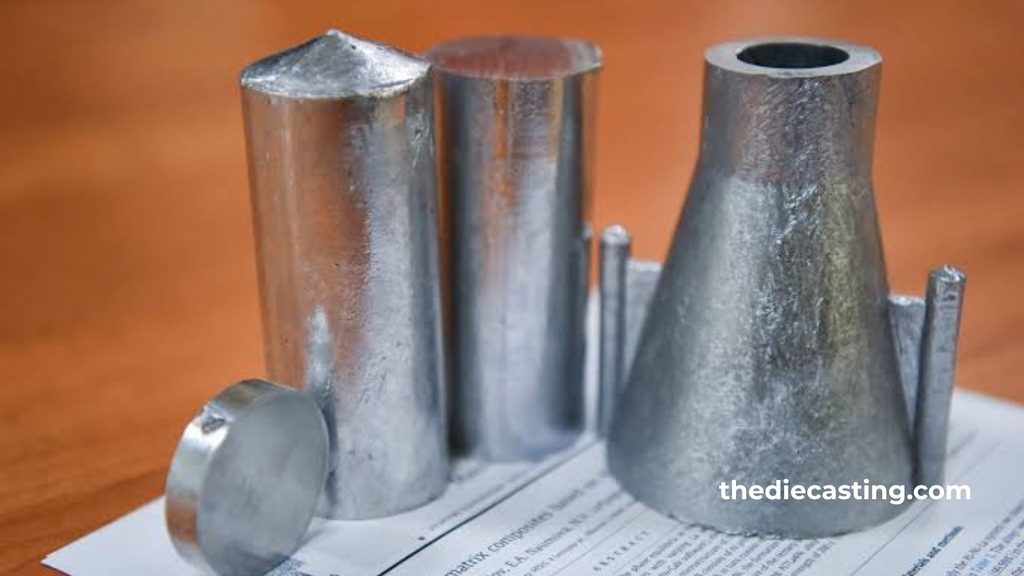
Döküm alüminyum Bu, erimiş alüminyumun yüksek basınç altında “kalıp” olarak bilinen yeniden kullanılabilir bir çelik kalıba enjekte edildiği bir üretim sürecidir. Metal soğuyup katılaştığında kalıp açılır ve bitmiş parça dışarı çıkarılır. Bu yöntem, mükemmel boyutsal doğruluk ve pürüzsüz yüzey kalitesine sahip karmaşık, yüksek hacimli metal bileşenlerin üretiminde yaygın olarak kullanılmaktadır.
Alüminyum, hafif olması, korozyona dayanıklı olması ve mükemmel termal ve elektriksel iletkenliğe sahip olması nedeniyle kalıp dökümünde en çok tercih edilen malzemelerden biridir. Kalıp döküm sürecinin verimliliği ile birleştiğinde alüminyum, otomotiv ve havacılık sektörlerinden tüketici elektroniği ve telekomünikasyona kadar uzanan çeşitli endüstriler için ideal bir seçenek haline gelir.
Alüminyum Basınçlı Döküm Süreci Nasıl İşler?
Alüminyum basınçlı döküm işlemi genellikle dört ana aşamadan oluşur.
1. Kalıp Hazırlama
Çelik kalıpların iki yarısı, profesyonel bir kalıp ustası tarafından yüksek kaliteli çelik kullanılarak ve karmaşık bir kalıp üretim süreciyle imal edilmektedir. Bu kalıp üretim süreci, CNC işleme, EDM, soğutma kanalı delme, tel kesme, parlatma, montaj vb. aşamaları içerir; her şey özenle tamamlanana kadar devam eder, böylece basınçlı döküm kalıbı seri üretime hazır hale gelir. Seri üretim sırasında, her döküm işleminin başlamasından sonra yağlayıcı püskürtülür. Bu yağlayıcı, kalıbın sıcaklığını kontrol etmeye yardımcı olur ve dökümden sonra bitmiş alaşımlı parçanın çıkarılmasını kolaylaştırır.
2. Enjeksiyon
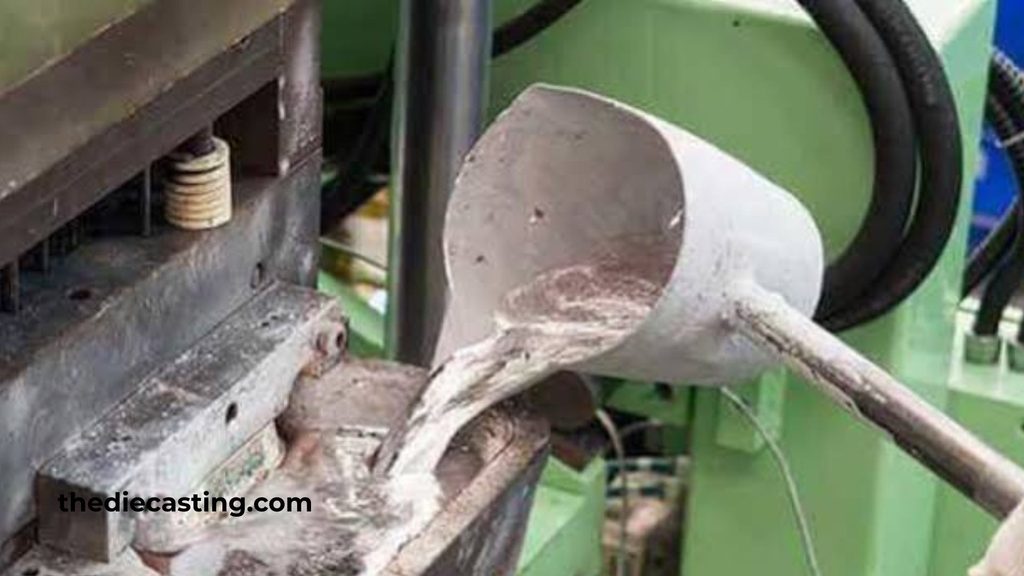
Erimiş alüminyum, genellikle 1.500 ila 25.000 psi arasında değişen yüksek basınçla kalıp boşluğuna enjekte edilir. Bu yüksek basınç, erimiş metalin kalıbın her bir detayını hızlı ve eksiksiz bir şekilde doldurmasını sağlar.
3. Soğutma ve Katılaşma
Boşluk doldurulduktan sonra, alüminyumun soğuması ve katılaşması beklenir. Soğuma süresi, parçanın boyutuna ve duvar kalınlığına bağlıdır.
4. Çıkarma ve Son İşlemler
Katılaşma işleminden sonra kalıp açılır ve itici pimler dökümü dışarı iter. Parça, uygulama gereksinimlerine bağlı olarak daha sonra kesme, çapak alma, işleme veya yüzey kaplama (boyama, eloksal, toz boya veya E-kaplama) işlemlerinden geçirilebilir.
Basınçlı Dökümde Kullanılan Yaygın Alüminyum Alaşımları
Tüm alüminyumlar aynı değildir. Alüminyum alaşımlı kalıp dökümünde genellikle dökülebilirlik, mukavemet ve korozyon direnci arasında optimum bir denge sağlayan özel alaşım formülasyonları kullanılır.
En yaygın alaşımlardan bazıları şunlardır:
A380: A380“in yüksek basınçlı kalıp dökümü (HPDC) için ”en yaygın kullanılan” alüminyum alaşımı olduğu iddiası, döküm ve otomotiv endüstrilerinde sağlam bir şekilde desteklenmektedir. Bu statüyü kazanmasının nedeni, mutlaka en dayanıklı veya en özel alaşım olması değil, sektörde öncü nitelikte olağanüstü bir denge sunmasıdır: dökülebilirlik, mekanik özellikler ve maliyet etkinliği.
A380’in HPDC sektöründe neden hakim bir konuma sahip olduğuna dair ayrıntılı bir açıklama aşağıda yer almaktadır:
1. Üstün dökülebilirlik ve akışkanlık
A380’in yaygın olarak kullanılmasının başlıca nedeni, kalıp içinde sergilediği davranış biçimidir. Yüksek basınçlı kalıp dökümü, erimiş metalin yüksek hız ve basınçla çelik bir kalıba enjekte edilmesini içerir.
- Eutektik Bileşim: A380’in kimyasal bileşimi (yaklaşık %8,5 silikon ve %3,5 bakır içerir), alüminyum-silikon ötektik noktasına çok yakındır. Ötektik alaşımlar, bir aralıkta değil, tek bir düşük sıcaklıkta erir ve katılaşır. Bu durum, A380’e olağanüstü akıcılık (donmadan önce ince duvarlara ve karmaşık geometrilere yayılma özelliği).
- Isıl Yırtılmanın Azaltılması: A380, hızlı ve homojen bir şekilde katılaştığı için “sıcak yırtılmaya” (metalin soğuma sırasında büzülmesiyle oluşan çatlaklar) karşı son derece dayanıklıdır. Bu özellik, tasarımcıların, parça kalıpta çatlamadan, değişken duvar kalınlıklarına sahip karmaşık, net şekilli parçalar üretmelerine olanak tanır.
- Daha Düşük Erime Sıcaklığı: A380, dövme alaşımlarından veya 6061’den daha düşük bir sıcaklıkta erir; bu da pahalı çelik kalıp takımları üzerindeki termal yorgunluğu azaltarak kalıbın ömrünü uzatır ve enerji maliyetlerini düşürür.
2. Mekanik Özelliklerin “İdeal Noktası”
A380, mevcut en dayanıklı alüminyum alaşımı olmasa da (bu unvan, nadiren kalıp dökümüne tabi tutulan 201 veya 7075 gibi ısıl işleme tabi tutulabilen alaşımlara aittir), imalat açısından son derece cazip bir özellikler kombinasyonu sunar.
- Orta Şiddet: Çok çeşitli yapısal ve yapısal olmayan bileşenler için yeterli çekme ve akma mukavemeti sağlar.
- Sertlik ve İşlenebilirlik: Yüksek silikon içeriği, doğal bir sert parçacık görevi görerek A380’e mükemmel aşınma direnci kazandırır ve işlenmesini oldukça kolaylaştırır. Silikon parçacıkları, kesici aletleri tıkamak yerine temiz bir şekilde kopar.
- Basınç Sızdırmazlığı: Hızlı katılaşma sonucu ortaya çıkan ince taneli yapı, A380'i nispeten basınca dayanıklı hale getirir. Oysa A383 alaşımı genellikle şu durumlarda tercih edilir: aşırı Sızıntı direnci gerekliyse, A380 genellikle birçok sıvı ve pnömatik bileşen için “yeterli” bir seçenektir.
3. Maliyet Etkinliği ve Ulaşılabilirlik
Üretim sektöründe, laboratuvarda geliştirilen en iyi alaşım, çok pahalıysa veya temini zorsa hiçbir işe yaramaz. A380, tamamen ekonomik açıdan öne çıkıyor.
- Geri Dönüştürülmüş Malzeme Oranı: A380, yüksek oranda ikincil (geri dönüştürülmüş) alüminyumu barındırabilecek şekilde özel olarak tasarlanmıştır. Otomobillerden, ekstrüzyonlardan ve işleme talaşlarından elde edilen alüminyum hurdaları, mekanik özelliklerini bozmadan A380 külçesine karıştırılabilir.
- Isıl İşlem Gerekmez (Genellikle): Birçok yüksek mukavemetli alüminyum alaşımı, tam mukavemetine ulaşmak için T6 ısıl işlemine (çözelti işlemi, su verme ve yaşlandırma) ihtiyaç duyar. Bu işlem maliyetlidir ve şekil bozulmasına neden olur. A380 ise kalıptan çıktığı haliyle, “döküm haliyle” kullanıma hazırdır.
- Standardizasyon: A380, sektördeki standart malzeme olduğu için dökümhaneler her zaman stoklarında bulundurur, tedarikçiler her zaman külçe temin edebilir ve mühendisler bu malzemenin performansına ilişkin onlarca yıllık veriye sahiptir. Bu durum, tedarik zinciri riskini azaltır.
4. Geniş Uygulama Alanı
Yukarıdaki faktörler nedeniyle, A380 imalat sektöründe yaygın olarak kullanılmaktadır. Buna örnek olarak şunlar verilebilir:
- Otomotiv: Motor braketleri, şanzıman muhafazaları, valf kapakları, direksiyon mafsalları ve elektronik muhafazalar.
- Elektrikli Aletler: Housings for drills, saws, and lawn equipment, where the stiffness and heat dissipation are vital.
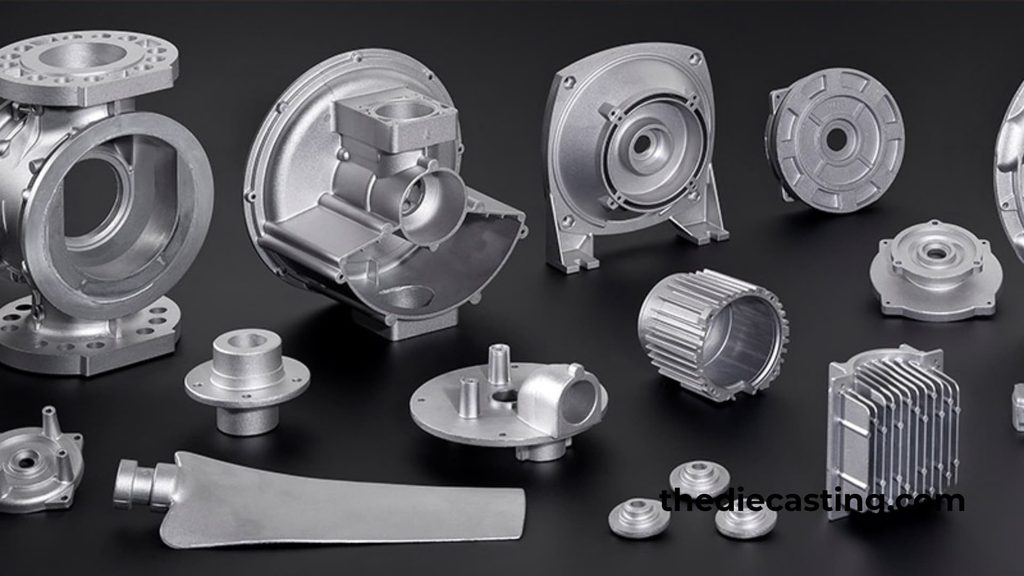
- Elektronik: Heat sinks, chassis for routers/servers, and frames for LED lighting (where its thermal conductivity and lightweight nature are prized).
- General Hardware: Ladder steps, pneumatic manifold blocks, and consumer appliance parts.
The Caveat: The Rise of Structural Alloys
It is worth noting that A380’s “throne” is being challenged in specific sectors. Because A380 contains copper, it suffers from lower corrosion resistance and poor ductility (it is brittle when bent).
As the automotive industry moves toward electric vehicles (EVs) and requires large, structural castings (like “Gigacastings” for the entire underbody of a car), alloys like Silafont 36 (A356 derivative) veya C611 are becoming more popular. These are “structural die-casting alloys” that are silicon-based but copper-free. They can be heat-treated, welded, and riveted, and they absorb crash energy much better than A380.
Summary:
A380 is the “workhorse” of the HPDC industry. Its dominance stems from the fact that it is the easiest alloy to cast into complex, high-volume parts at the lowest possible manufacturing cost, while still providing sufficient strength for the vast majority of everyday applications.
A383 – While A380 is the most widely used general-purpose aluminum die-casting alloy due to its excellent combination of castability and mechanical properties, it has two specific limitations: it is prone to hot cracking (tearing) during solidification and can be difficult to hold to tight tolerances due to shrinkage.
A383 is specifically engineered to overcome these issues: - Resistance to Hot Cracking: Hot cracking occurs when a casting is restrained from shrinking naturally as it cools from the molten state. This creates internal stresses that tear the semi-solid metal apart. A383 achieves better resistance to this by modifying the alloying elements. Specifically, A383 often has a slightly modified chemistry (including adjusted levels of copper, silicon, and iron). The reduced copper content and optimized silicon phase help the metal “feed” (flow) into shrinking areas during freezing, preventing the formation of micro-tears along grain boundaries. This makes A383 ideal for complex thin-wall parts, housings, or components that require intricate tooling with varying cross-sections.
Improved Dimensional Stability: Because A383 solidifies with less internal stress and manages shrinkage more evenly, the final cast part warps or “drifts” less out of shape after ejection from the die. This is critical for components that require tight tolerances without extensive secondary machining, such as electronic enclosures, intricate lighting fixtures, and complex chassis components.
Trade-off: The trade-off for this improved castability and stability is that A383 typically offers slightly lower ultimate tensile strength and hardness compared to A380. However, in many applications, the elimination of casting defects (cracks) more than compensates for this minor reduction in raw strength.
A380 and A383 prioritize “castability” (the ability to fill a mold easily and eject cleanly). However, this often comes at the cost of ductility (the ability to bend without breaking) and corrosion resistance due to their relatively high copper content.
A360: A 360 is designed to solve these environmental and mechanical limitations: - Superior Corrosion Resistance: The primary culprit for poor corrosion resistance in standard die-casting alloys is copper. When exposed to moisture, salt, or industrial chemicals, copper-rich phases within the aluminum matrix create galvanic micro-cells that accelerate oxidation (rusting) of the aluminum. A360 is formulated with a very low or nominal copper content (typically 0.60%). By removing copper from the alloy, A360 becomes much more resistant to atmospheric corrosion, stress corrosion cracking, and pitting.
Better Ductility (Elongation and Toughness): Ductility is the ability of a metal to deform under tensile stress without fracturing. High-copper alloys are generally harder but more brittle. Because A360 lacks this hardening copper phase, it is “softer” and more elastic. It can absorb impact energy much better than A380/A383. If an A380 part is overloaded, it will snap or shatter; an A360 part will typically bend or deform first.
Trade-offs & Applications: Because A360 lacks the copper that makes the metal flow easily, it is slightly more difficult to cast than A380 (lower fluidity in the die). Additionally, it has lower yield strength and hardness. Therefore, A360 is used specifically for parts that must survive harsh environments veya impact loads, rather than parts needing high structural rigidity.
Typical Applications include: - Marine hardware: Brackets, housings, and handles exposed to saltwater.
Automotive chassis/suspension parts: Components subjected to road salt, water, and vibration where cracking is not an option.
Outdoor electrical enclosures: Junction boxes and lighting fixtures that must survive weather without white corrosion blooming on the surface.
Pneumatic and hydraulic components: Manifolds or housings that must withstand pressure spikes without brittle fracture.
Summary Comparison:
A380: The standard; cheapest, high strength, moderate corrosion, low ductility.
A383: The “tweaked” version; fixes cracking and warping issues for complex shapes; slightly softer than A380.
A360: The “tough” version; sacrifices some strength and ease of casting to achieve high corrosion resistance and high impact absorption.
Choosing the right alloy depends on the specific mechanical requirements, operating environment, and production volume of the part.
Alüminyum Basınçlı Dökümün Avantajları
Die casting aluminum offers several significant benefits over other manufacturing methods.
Lightweight and Strong
Aluminum provides a high strength-to-weight ratio. This makes it particularly valuable in automotive and aerospace applications, where reducing weight directly improves fuel efficiency and performance.
High-Speed Production
Once the die is created, the casting cycle is fast. A single die can produce thousands of identical parts with minimal variation, making aluminum die casting highly cost-effective for large production runs.
Excellent Dimensional Accuracy
Die cast aluminum parts require little to no secondary machining. Tight tolerances are achievable consistently, reducing waste and lowering overall production costs.
Smooth Surface Finish
Parts produced through aluminum die casting typically have a clean, smooth surface right out of the mold. This reduces the need for additional finishing processes and makes the parts suitable for painting, powder coating, or plating.
Karmaşık Geometriler
The process allows for the creation of intricate shapes with thin walls, internal features, and detailed contours that would be difficult or impossible to achieve with other manufacturing methods.
Alüminyum Basınçlı Döküm Uygulamaları
Aluminum die casting is used across a broad range of industries. Common applications include:
- Otomotiv – Engine blocks, transmission housings, brackets, and structural components.
- Havacılık ve Uzay – Lightweight structural parts and housings.
- Elektronik – Heat sinks, enclosures, and connectors.
- Tüketici Ürünleri – Power tool housings, kitchen appliances, and furniture hardware.
- Telekomünikasyon – RF filter housings and antenna mounts.
Choosing the Right Aluminium Die Casting Manufacturer
Working with the right partner is critical to the success of any die casting project. A qualified aluminium die casting manufacturer will offer:
- Experience with the specific alloy your project requires.
- In-house tooling design and maintenance capabilities.
- Quality control systems such as ISO certification.
- Value-added services like CNC machining, surface finishing, and assembly.
When evaluating potential suppliers, ask about their previous projects, production capacity, and ability to meet your tolerance and surface finish requirements. A manufacturer with a strong engineering team can also help optimize your part design for the die casting process, reducing costs and improving quality.
Sonuç
Die casting aluminum remains one of the most efficient and versatile manufacturing methods for producing high-quality metal components. With its combination of lightweight strength, corrosion resistance, and cost-effectiveness for high-volume production, alümi̇nyum döküm continues to be a go-to solution across many industries. By understanding the process, the available alloys, and the importance of partnering with a reliable aluminium die casting manufacturer, you can make informed decisions that lead to better products and more efficient production.