
Alumiinivalu on edelleen yksi suosituimmista valmistusmenetelmistä monimutkaisten, kevyiden ja lujien osien valmistuksessa auto-, ilmailu- ja avaruusteollisuudessa, LVI-alalla, elektroniikkateollisuudessa sekä teollisuuskoneiden valmistuksessa. Alhainen tiheys, lämmönjohtavuus, korroosionkestävyys ja kierrätettävyys ovat sen monien etujen joukossa, mikä tekee siitä välttämättömän materiaalin. Prosessi on kuitenkin altis virheille, jotka voivat johtaa ei-toivottuihin rakenteellisiin vaihteluihin, ylimääräiseen romuun ja kustannuksiin.
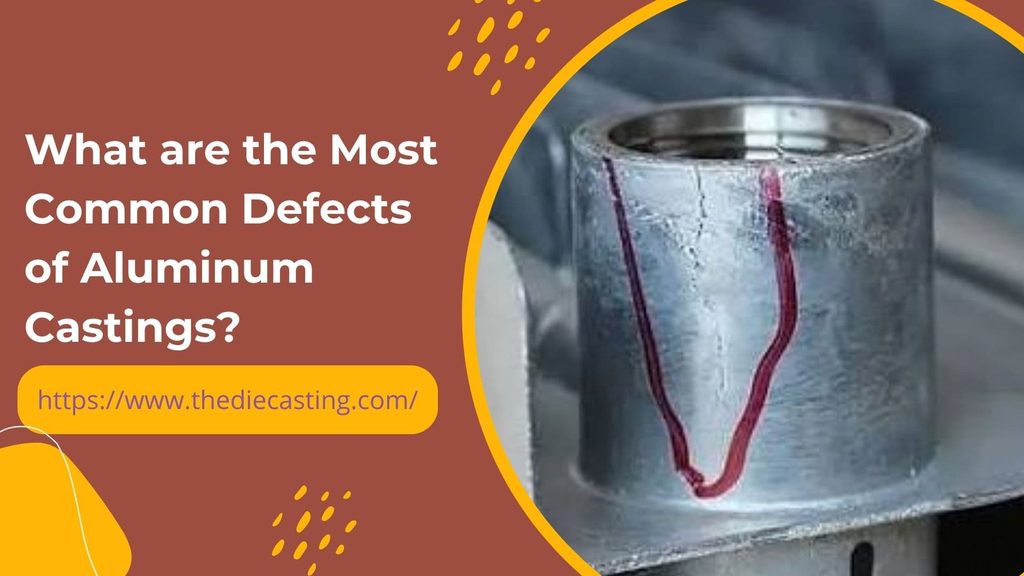
Jotta hävikki voidaan pitää alle 2%:n ja taata osien tasalaatuisuus, on tärkeää, että valimo on tietoinen yleisimmistä valuvirheistä, niiden syistä ja siitä, miten ne voidaan poistaa. Tässä artikkelissa käsitellään yli 10 yleistä virhettä, selitetään niiden syntymekanismeja ja esitetään käytännön ohjauskeinoja, taulukoita, yleisiä ehkäisykeinoja sekä niiden vaikutuksia teollisuuteen kokonaisuudessaan.
Mikä on alumiinivalun virhe?
Viat Alumiinivalu ovat vikoja, jotka muodostuvat sulatus-, valamis-, jähmettymis- tai jälkikäsittelyprosessin aikana. Ne voivat olla sisäisiä (näkyvät vasta leikkaamisen tai röntgentutkimuksen jälkeen) tai ulkoisia. Monet sisäiset viat voivat muodostaa vuotoreittejä, lyhentää väsymisikää tai aiheuttaa ennenaikaisen pettämisen paineen alaisena; pintaviat puolestaan voivat olla hyväksyttäviä tai eivät.
Viat eivät yleensä johdu vain yhdestä syystä. Ne johtuvat eri tekijöiden, kuten sulan laadun, suulakkeen rakenteen tai muotti, sulamislämpötila, paine, täyttönopeus ja käyttäjän toiminta. Näin ollen tehokkaan hallinnan saavuttamiseksi on otettava huomioon kaikki nämä neljä osa-aluetta.
Alumiinivalujen yleisimmät virheet
Seuraavassa on lueteltu 10 yleisintä vikaa, joita esiintyy useimmin alumiinivaluseosten painovoimavalussa (GDC), korkeapainevalussa (HPDC) ja hiekkavalussa.
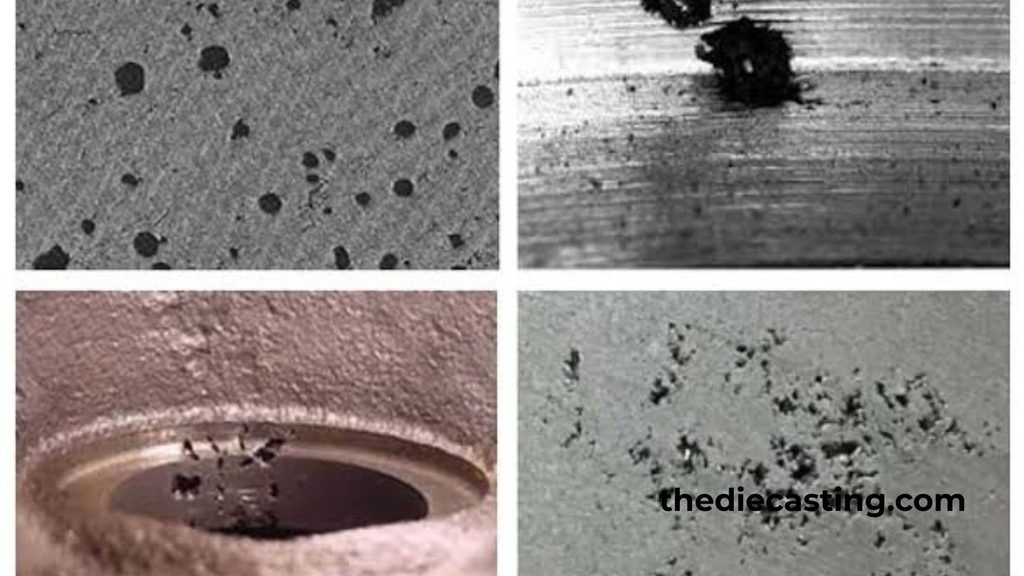
Kaasun huokoisuus
Kaasuhuokoisuus näkyy suhteellisen sileinä, pyöreinä tai soikeina aukkoina. Vety on tärkein syy, sillä se on ainoa kaasu, joka liukenee hyvin sulaan alumiiniin. Ilmakehän kosteus, kosteat raaka-aineet, saastuneet sulatusaineet tai riittämättömästi kuivatut uunin vuoraukset altistavat metallin vedylle, joka kerrostuu metallin jähmettyessä.
Tärkeimmät syyt
- Sulatteiden riittämätön kaasunpoisto.
- Kun kaataminen tapahtuu epätasaisesti, jolloin siihen sekoittuu ilmaa.
- Muotin irrotusainetta on liikaa tai muotissa on liikaa kosteutta.
- Huono muotin ilmanvaihto.
Eliminointimenetelmät
- Esikäsittely pyörivällä kaasunpoistolla ennen valua inerttikaasulla (argon tai typpi).
- Vetytestaus alipainekokeilla.
- Säädeltyjen täyttönopeuksien ja laminaarisen syöttörakenteen käyttö. Säädeltyjen täyttönopeuksien ja laminaarisen syöttörakenteen soveltaminen.
- Kuivaa latausaineet ja uunin vuoraukset täysin.
Kutistumishuokoisuus / Kutistumisaukot
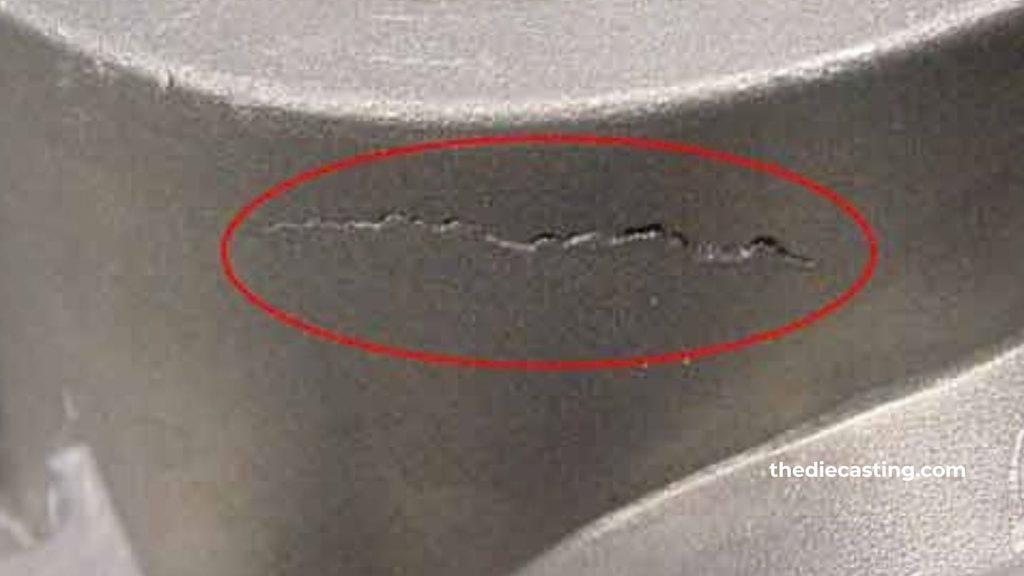
Kutistumahuokoisuus ilmenee epäsäännöllisinä, karkeaseinäisinä onteloina, jotka sijaitsevat yleensä viimeisinä jähmettyvissä kohdissa, kuten paksuissa kohdissa, lämpökeskittymissä tai valukanavien lähellä olevissa kuumissa pisteissä. Alumiinin kutistuma alumiinivalussa on 6–7% jähmettymisen yhteydessä, ja onteloita syntyy, jos syöttöä ei hoideta asianmukaisesti.
Tärkeimmät syyt
- Riittämättömät nousuputket tai virheelliset syöttöjärjestelmät.
- Mitä korkeampi valulämpötila on, sitä suurempi on kokonaiskutistuma.
- Epäyhtenäisen seinämän paksuuden aiheuttamat kuumat kohdat.
- Porttien ennenaikainen jäätyminen, mikä katkaisee metallin syötön.
Eliminointimenetelmät
- Oikeanlainen valukanavan ja syöttökanavan sijoittelu suunnatussa jähmettymisessä.
- Paikallinen kuumeneminen (lämmittää) ohuissa osissa.
- HPDC:ssä optimoitu tiivistämispaine.
- Laskentasovellukset (ProCAST, MAGMAsoft) kuumien pisteiden ennustamiseen ja poistamiseen.
Kylmäkatkokset
Kylmäliitos on juottamaton liitoskohta tai sauma, joka näkyy kahden metallivirran välissä. Etureunat ovat osittain kovettuneet ennen kosketusta.
Tärkeimmät syyt
- Valun tai muotin lämpötila on alhainen.
- Hidas täyttönopeus.
- Epä tasapainoisen porttitoiminnon aiheuttama kuollut alue.
- Eliminointimenetelmät.
- Nosta valulämpötilaa seoksen sallimissa rajoissa.
- Lämpö laskee käyttölämpötilaan.
- Suunnittele ja kehitä syöttöjärjestelmä uudelleen, jotta täyttö tapahtuu samanaikaisesti ja tasapainoisesti.
- Jos muotin rakenne sen sallii, lisää täyttönopeutta.
Harhautukset
The painevalut Virhevalujen seurauksena muotit ovat puutteellisia, mikä tarkoittaa, että ontelo ei täyty kokonaan. Syyt ovat hyvin samankaltaisia kuin kylmäliitosten syyt.
Tärkeimmät syyt
- Jos metallin lämpötila tai nopeus on liian alhainen.
- Jos osuudet ovat kapeita tai sijaitsevat kaukana toisistaan, niitä pidetään “varhaisen pakkasen” osuuksina.
- Huono muotin pinnoitus, joka aiheuttaa liian nopeaa lämpöhukkaa.
Eliminointimenetelmät
- Levitä eristäviä suulakepäällysteitä, kuten DYCOTE, nesteen virtauksen ylläpitämiseksi.
- Pienennä pinnoitteen paksuutta ja levitysmäärää.
- Optimoi sulkimen toiminta, jotta metallin kulku ohuisiin osiin nopeutuu.
- Pidä muotin lämpötila vakiona.
Oxide Inclusions and Bifilms
Aluminum melts and oxidises immediately as a very thin, strong oxide film. These films are entrapped in the melt during the turbulent transfer and turn into nearly imperceptible defects that act as crack initiators or bifilms.
Tärkeimmät syyt
- Pouring or ladling that is turbulent.
- Dirty melt surface and inadequate fluxing.
- Chemically and physically damaged charged or scrap material.
Eliminointimenetelmät
- Ladles of bottom pour, tilting GDC, or low-pressure processes for laminar fill.
- The use of COVERAL-type fluxes regularly.
- The filtration and skimming procedures for melting.
- Reducing free fall distances when transferring the load.
Hot tears (Hot cracking)
Below the solidus temperature, hot tears have been developed in the semi-solid casting because the thermal contraction stresses could not be accommodated in the constrained casting. Cracks can be either internal or surface-breaking.
Tärkeimmät syyt
- To avoid abrupt section changes and sharp corners.
- Inadequate draft angles.
- Wide solidification range alloys (some grades of Al-Si).
- Premature ejection.
Eliminointimenetelmät
- Smooth transitions and generous radii in part design.
- Properly drafted and timed ejections.
- Use of near-eutectic compositions for alloys, where feasible.
- Strategies to minimize residual stress in the form of sequential solidification.
Die Soldering
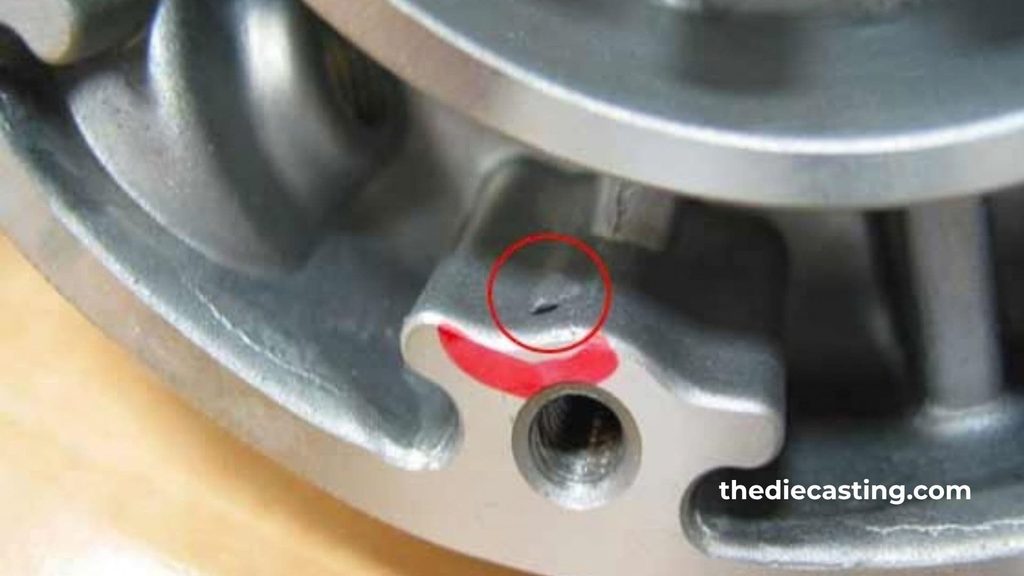
Die soldering is caused when the protective coating is destroyed, and molten alumiiniseokset react with the surface of the ferrous die to create intermetallics between the aluminum and iron in aluminum casting. This causes damage to the surface of the casting, and die wear and production downtime.
Tärkeimmät syyt
- Failure of the coating to withstand breakdown or to be sufficiently thick.
- High heat of the die surface
- A lack of iron in the alloy.
Eliminointimenetelmät
- Regular application and checks of die coatings (including DYCOTE SAFEGUARD nano-ceramic coatings).
- Regulate the temperature of the cores and cooling circuits.
- To maintain alloy iron to the correct specification.
Surface Roughness and Flash
If the surface is too rough, it will increase the amount of material that needs to be machined and put wear on the tools. Removal of Flash (thin fin of metal at parting lines/core prints) is manual and may cause dimensional damage.
Tärkeimmät syyt
- Worn die separating surfaces.
- Too much pressure on the metal or too little clamping force.
- Inadequate die maintenance.
Eliminointimenetelmät
- Regular inspection and reconditioning of parting faces.
- Properly set up machine clamping configuration.
- Optimized parting-line design.
Slag / Dross Inclusions
The non-metallic particles or oxidized slag get trapped in the casting to form irregular crusts or pockets, which decrease the mechanical properties and make the parts difficult to machine.
Tärkeimmät syyt
- Dirty charge materials.
- Not skimming well after refining.
- Surface dross that is entrained into the metal stream by turbulence.
Eliminointimenetelmät
- Low charge ratio of clean and low return-scrap ratio.
- Correctly fluxing and sufficient standing time after the refining process.
- Use of filter screens in the runner system.
Pinhole Porosity
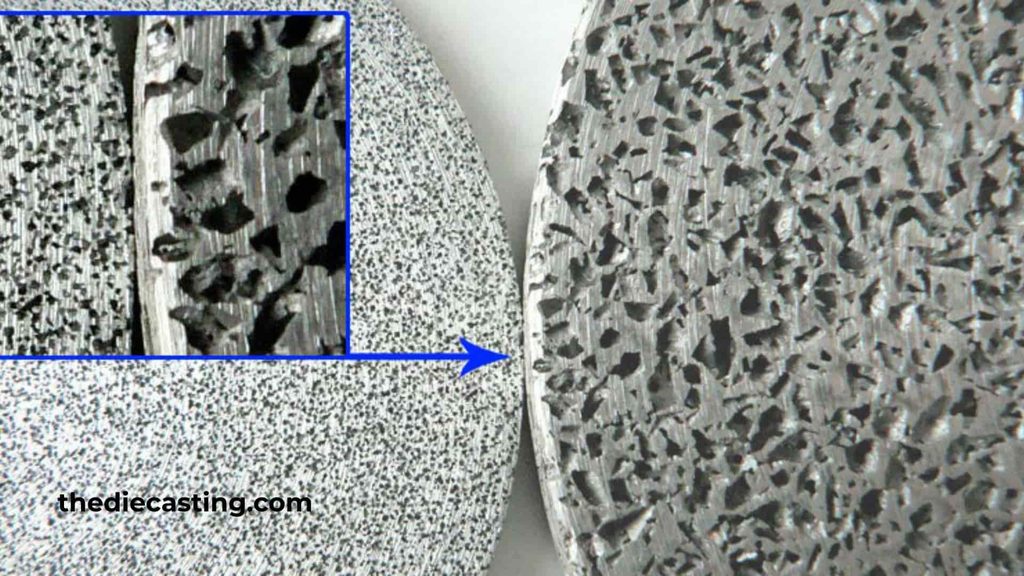
Pinholes are many small, evenly distributed holes that appear primarily after machining. They are hard to see with typical X-ray.
Tärkeimmät syyt
- Melt material that is contaminated or overheated and absorbs too much hydrogen.
- Failure to degas product for an extended period of time.
- The injection is made by atomizing the material into small gates.
Eliminointimenetelmät
- Strict control of raw materials and timely use of degassed metal.
- Precise temperature management
- Properly redesign the gating to prevent atomization.
Leakage (Functional Failure)
Leakage is not a primary defect per se, but instead a critical functional outcome of interconnected porosity, cracks, or cold flow that form through wall leakage pathways. When the pressure test is performed, failure is revealed.
Tärkeimmät syyt
- Any mix of gas or shrinkage porosity that creates continuous networks.
- Bursting or deep cold holes in the body.
Eliminointimenetelmät
- Correct the above-listed mechanisms to solve the underlying porosity or cracking.
- Try to make the structure denser by increasing the intensification pressure.
- If impregnation is not required for critical applications, it is possible to select it for other applications.
Brittleness
Brittleness will manifest itself as a sudden breakage with little plastic deformation. It is caused by coarse grain or overly fine grain, high impurity level, or oxide film as crack starters.
Tärkeimmät syyt
- Any overheating or over-holding of the melt.
- The levels of iron, zinc, or copper are out of specification.
- Rapid chilling causes very brittle microstructures.
Eliminointimenetelmät
- Strict temperature & composition control
- Grain-refining practices
- Optimized cooling rates
Summary Table of Common Aluminum Casting Defects
| Vika | Typical Appearance | Primary Cause Category | Key Corrective Action |
| Kaasun huokoisuus | Smooth spherical voids | Melt quality/venting | Rotary degassing + vent optimization |
| Kutistumishuokoisuus | Irregular rough voids | Feeding/solidification | Risers, chills, directional solidification |
| Kylmä sulkee | Visible seams | Temperature / fill speed | Raise temperatures, balance gating |
| Harhautukset | Incomplete sections | Fluidity/coating | Insulating coatings, faster fill |
| Oxide / bifilm inclusions | Thin films, fatigue initiators | Turbulence/melt handling | Laminar fill, fluxing, filtration |
| Kuumat kyyneleet | Cracks near solidus | Constraint/design | Draft angles, smooth transitions |
| Die soldering | Metal stuck to die | Coating breakdown | Consistent die coating maintenance |
| Flash & roughness | Fins at parting line | Die condition/pressure | Die maintenance, clamping control |
| Slag inclusions | Irregular particles | Dirty melt | Skimming, clean charge |
| Pinholes | Fine dispersed voids | Hydrogen reabsorption | Timely melt use, temperature control |
| Leakage | Pressure-test failure | Interconnected porosity | Eliminate root porosity sources |
| Brittleness | Sudden fracture | Grain structure/impurities | Composition & cooling control |
Impact of These Defects on the Die Casting Industry
Defects in aluminum casting have high economic and operational costs. The apparent cost of the scrap metal is just a fraction; energy used to melt the alloy, die time lost, labor used to inspect and rework, and disrupted delivery schedules all add to the true cost. For high-volume HPDC production, it costs only a small increase in the amount of scrap to wipe out margins on thin-walled automotive and electronics parts.
There are also indirect costs such as damage to reputation. Leakage and fatigue are critical for automotive and aerospace buyers, as they can result in contract penalties when there is near-zero leakage and high fatigue performance. These processes also have a negative impact on die life, increasing the cost of tooling replacement by 15-20% in poorly controlled shops.
Then again, on the bright side, foundries that systematically work to address root causes—by treating the melt, using simulation-based design, and having a disciplined process control—routinely keep scrap rates under 2%. The ability to do so is emerging as a competitive differentiator as OEMs are reducing suppliers and are attracted to integrated suppliers with a focus on quality. In addition to the associated penalty for uncontrolled defects, industry trends toward thinner walls, higher integrity structural castings, and sustainability further add to the payoff for mastering these defects.
Practical Prevention Framework
Improved defect reduction is based on four parallel principles:
- Melt quality: degassing, fluxing, filtration, and hydrogen monitoring.
- Die / mold condition: coating integrity, venting, temperature control, and maintenance.
- Process parameters: pouring temp, fill profile, intensification pressure, solidification control.
- Design & simulation: uniform sections, suitable feeding & virtual process trials before tooling
Usein kysytyt kysymykset
What are 5 common defects of casting?
Among the top five common defects in aluminum casting, gas porosity, shrinkage porosity, oxide inclusion, and cold shut are included, as well as hot tears.
How to check casting defects?
Visual inspection and Dye penetrant are used to identify surface defects. Internal defects are caused by X-ray radiography, ultrasonic testing, or destructive sectioning. Pressure testing (air, water, or oil) is used to confirm functional leakage. This is confirmed by additional density measurement and/or metallographic examination.
What are the most likely reasons for casting fault?
Most common sources are dissolved hydrogen, improper feeding during solidification, turbulent metal flow, incorrect melt and/or die temperatures, poor die coating or venting, and die design that causes stress concentrations or hot spots.
What are types of casting defects?
The defects are usually classified into metallurgical defects (porosity, inclusions, brittleness), heat defects (hot tears, cold shuts), muotti-material defects (in sand casting), and shape defects (flash, misruns, mismatches). The main categories in aluminum valu are porosity, inclusions, and solidification cracks.
Is there a way to repair aluminum casting defects by impregnation?
Resin impregnation will seal minor interconnected porosity for non-critical pressure applications, but can be a secondary treatment. The long-term solution is still considered to be the process control known as the root cause process.
What does die coating have to do with defect rates?
Insulating coatings like DYCOTE decrease heat loss, enhance fluidity, and do not allow soldering. Regular application and timely re-coating directly reduce misruns, cold shuts, and die-soldering defects.
Päätelmä
All of the common defects of aluminum casting (such as gas and shrinkage porosity, cold shut, misrun, oxide inclusion, hot tear, die soldering, flash, slag inclusion, pinhole, leakage, and brittleness) have common causes: insufficient attention to melt quality, die condition, process parameters, and part design. Every defect has a known metallurgical and operational cause, and every defect can be systematically eliminated or reduced.
A defect prevention program is not a one-time solution, but a way of working that is practiced every day, in order to reduce SCRAPs, increase die life, and ensure reliability that meets the requirements of today’s automotive, aerospace, and industrial customers. The best route to quality and competitiveness is to maintain a focus on the basics of aluminum casting throughout the entire process.