
Alüminyum döküm, otomotiv, havacılık ve uzay, HVAC, elektronik ve endüstriyel makine sektörlerinde karmaşık, hafif ve dayanıklı parçaların üretimi için hâlâ en popüler imalat tekniklerinden biridir. Düşük yoğunluk, termal iletkenlik, korozyon direnci ve geri dönüştürülebilirlik, bu malzemenin sayısız avantajı arasında yer alır ve onu vazgeçilmez bir malzeme haline getirir. Ancak bu süreç, istenmeyen yapısal farklılıklara, aşırı hurda oluşumuna ve maliyet artışına yol açabilecek kusurlara karşı hassastır.
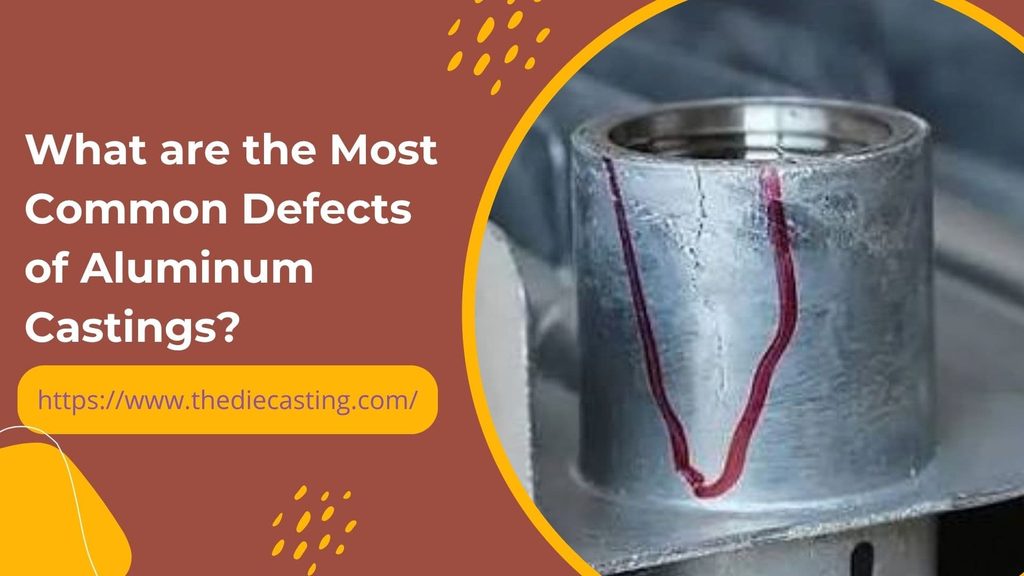
Hurda oranını 2%’nin altında tutmak ve tutarlı parçalar üretmeyi garanti altına almak için, dökümhanenin en yaygın döküm kusurlarını, bunların nedenlerini ve nasıl ortadan kaldırılabileceğini bilmesi önemlidir. Bu makale, 10'dan fazla yaygın kusuru ele almakta, bunların nasıl oluştuğunu açıklamakta ve pratik kontrol yöntemleri, tablolar, bunları önlemenin yaygın yolları ile bunların sektörün geneline nasıl etki ettiğini sunmaktadır.
Alüminyum Döküm Kusuru Nedir?
Kusurlar Alüminyum döküm Erime, döküm, katılaşma veya son işlem aşamalarında oluşan kusurlardır. Bunlar iç kusurlar (sadece kesildikten veya röntgenle incelendikten sonra görülebilen) veya dış kusurlar olabilir. Birçok iç kusur, sızıntı yolları oluşturabilir, yorulma ömrünü kısaltabilir veya basınç altında erken arızaya yol açabilir; ancak yüzey kusurları kabul edilebilir de olabilir, olmayabilir de.
Kusurlar genellikle tek bir nedenden kaynaklanmaz. Bunlar, eriyik kalitesi, kalıp tasarımı veya kalıp, erime sıcaklığı, basınç, dolum hızı ve operatörün davranışları. Dolayısıyla, etkili bir kontrol sağlamak için bu 4 alanın tümünün ele alınması gerekmektedir.
Alüminyum Dökümde En Sık Görülen Kusurlar
Alüminyum döküm alaşımlarının yerçekimi kalıplama (GDC), yüksek basınçlı kalıplama (HPDC) ve kum kalıplama işlemlerinde en sık görülen 10'dan fazla kusur aşağıda sıralanmıştır.
Gaz Gözenekliliği
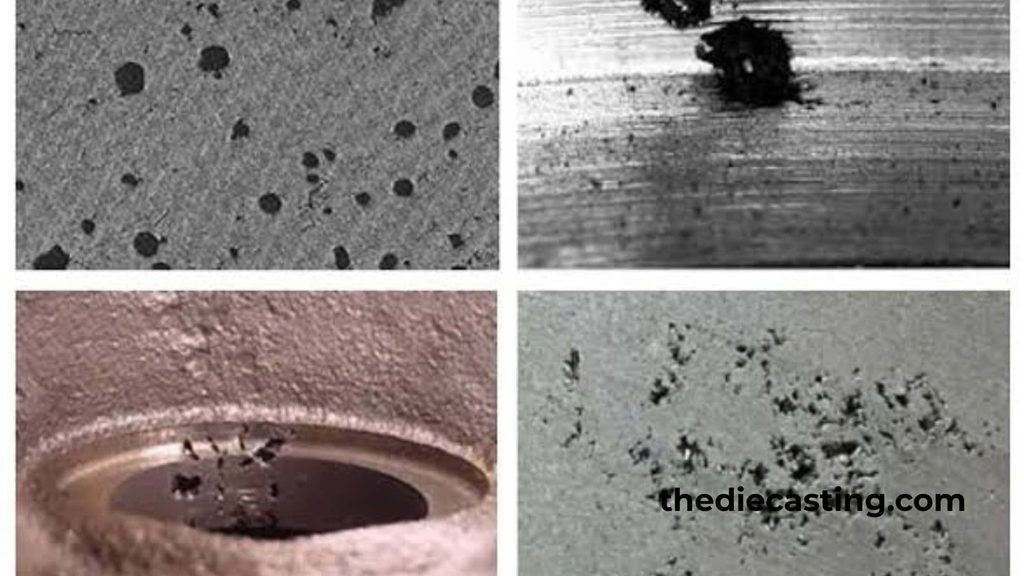
Gaz gözenekleri, nispeten pürüzsüz, yuvarlak veya eliptik boşluklar şeklinde görünür. Hidrojen, erimiş alüminyumda yüksek oranda çözünen tek gaz olması nedeniyle en önemli nedendir. Atmosferdeki nem, ıslak hammadde, kirlenmiş akı maddeleri veya yeterince kurutulmamış fırın astarları, metalin katılaşması sırasında biriken hidrojene maruz kalmasına neden olur.
Başlıca nedenler
- Ergitme sırasında gaz gideriminin yetersiz olması.
- Döküm işlemi türbülanslı olduğunda, havanın karışmasına neden olur.
- Kalıpta aşırı kalıp ayırıcı madde veya nem bulunması.
- Kalıbın havalandırması yetersiz.
Eleme yöntemleri
- Döküm öncesinde inert gaz (argon veya azot) kullanılarak döner gaz giderme yoluyla ön işlem.
- Düşük basınç testleri yoluyla hidrojen testi.
- Kontrollü dolum hızlarının ve laminer kalıp girişi tasarımının kullanılması. Kontrollü dolum hızlarının ve laminer kalıp girişi tasarımının uygulanması.
- Şarj ve fırın astarlarını tamamen kurutun.
Büzülme Gözenekliliği / Büzülme Boşlukları
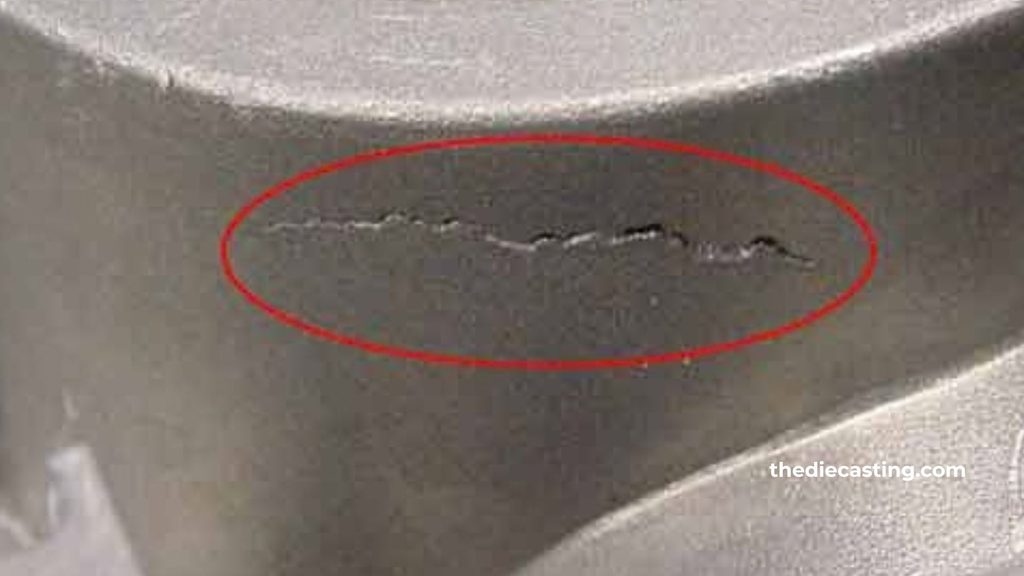
Büzülme gözenekliliği, genellikle kalın bölgeler, termal merkezler veya döküm kanallarına yakın sıcak noktalar gibi donmanın en son gerçekleştiği yerlerde görülen, düzensiz ve pürüzlü duvarlı boşluklar olarak tanımlanır. Alüminyum dökümde alüminyumun katılaşma sırasında büzülme oranı 6-7%’dir ve uygun besleme sağlanmadığında boşluklar oluşur.
Başlıca nedenler
- Yetersiz yükselticiler veya hatalı besleme sistemleri.
- Döküm sıcaklığı ne kadar yüksek olursa, toplam büzülme o kadar fazla olur.
- Düzensiz duvar kalınlığından kaynaklanan sorunlu noktalar.
- Metal beslemesini kesen geçitlerin erken donması.
Eleme yöntemleri
- Yönlü katılaşma için doğru kalıp kanalları ve besleme kanallarının yerleştirilmesi.
- İnce kesitlerde yerel ısınma (ısınma).
- HPDC’de yoğunlaştırma basıncı optimize edildi.
- Sıcak noktaları tahmin etmek ve ortadan kaldırmak için kullanılan hesaplama programları (ProCAST, MAGMAsoft).
Soğuk Kapamalar
Soğuk birleşme, iki metal akışı arasında görülebilen, lehimlenmemiş bir birleşme noktası veya ek yerdir. Ön kenarlar, temas etmeden önce kısmen sertleşmiştir.
Başlıca nedenler
- Döküm veya kalıbın sıcaklığı düşüktür.
- Doldurma hızı düşük.
- Dengesiz geçit kontrolünden kaynaklanan ölü bölge.
- Eleme yöntemleri.
- Döküm sıcaklığını alaşımın izin verdiği aralık içinde artırın.
- Isı, çalışma sıcaklığına kadar düşer.
- Eşzamanlı ve dengeli dolum için gating sistemini yeniden tasarlayın ve yenileyin.
- Kalıp tasarımı izin verdiği ölçüde, doldurma hızını artırın.
Misruns
Bu kalıp dökümler Hatalı dökümlerden kaynaklanan kusurlar eksik olup, bu da kalıbın iç boşluğunun tam olarak doldurulmadığı anlamına gelir. Bunun nedenleri, soğuk birleşmelerin nedenlerine çok benzerdir.
Başlıca nedenler
- Metal sıcaklığı veya hızı çok düşükse.
- Bölümler inceyse veya birbirinden uzaksa, bunlar “erken donma” bölümleri olarak kabul edilir.
- Yetersiz kalıp kaplaması, bu da ısının çok hızlı bir şekilde kaybolmasına neden oluyor.
Eleme yöntemleri
- Sıvı akışını sağlamak için DYCOTE gibi yalıtıcı kalıp kaplamaları uygulayın.
- Kaplama kalınlığını ve uygulanan miktarı en aza indirin.
- İnce kesitlere metalin ulaşımını hızlandırmak için kalıp açma işlemini optimize edin.
- Kalıp sıcaklığını sabit tutun.
Oksit Kapsulamaları ve Çift Katmanlı Filmler
Alüminyum erir ve hemen çok ince, dayanıklı bir oksit tabakası oluşturarak oksitlenir. Bu tabakalar, türbülanslı aktarım sırasında eriyik içinde hapsolur ve çatlak başlatıcıları veya çift tabakalar olarak işlev gören, neredeyse fark edilemeyen kusurlara dönüşür.
Başlıca nedenler
- Pouring or ladling that is turbulent.
- Dirty melt surface and inadequate fluxing.
- Chemically and physically damaged charged or scrap material.
Eleme yöntemleri
- Ladles of bottom pour, tilting GDC, or low-pressure processes for laminar fill.
- The use of COVERAL-type fluxes regularly.
- The filtration and skimming procedures for melting.
- Reducing free fall distances when transferring the load.
Hot tears (Hot cracking)
Below the solidus temperature, hot tears have been developed in the semi-solid casting because the thermal contraction stresses could not be accommodated in the constrained casting. Cracks can be either internal or surface-breaking.
Başlıca nedenler
- To avoid abrupt section changes and sharp corners.
- Inadequate draft angles.
- Wide solidification range alloys (some grades of Al-Si).
- Premature ejection.
Eleme yöntemleri
- Smooth transitions and generous radii in part design.
- Properly drafted and timed ejections.
- Use of near-eutectic compositions for alloys, where feasible.
- Strategies to minimize residual stress in the form of sequential solidification.
Die Soldering
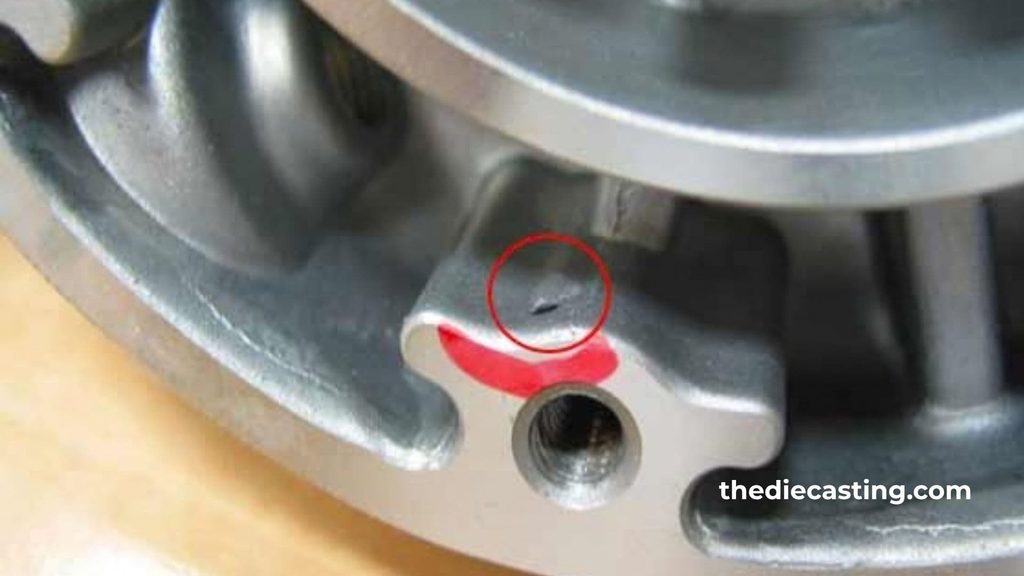
Die soldering is caused when the protective coating is destroyed, and molten alümi̇nyum alaşimlari react with the surface of the ferrous die to create intermetallics between the aluminum and iron in aluminum casting. This causes damage to the surface of the casting, and die wear and production downtime.
Başlıca nedenler
- Failure of the coating to withstand breakdown or to be sufficiently thick.
- High heat of the die surface
- A lack of iron in the alloy.
Eleme yöntemleri
- Regular application and checks of die coatings (including DYCOTE SAFEGUARD nano-ceramic coatings).
- Regulate the temperature of the cores and cooling circuits.
- To maintain alloy iron to the correct specification.
Surface Roughness and Flash
If the surface is too rough, it will increase the amount of material that needs to be machined and put wear on the tools. Removal of Flash (thin fin of metal at parting lines/core prints) is manual and may cause dimensional damage.
Başlıca nedenler
- Worn die separating surfaces.
- Too much pressure on the metal or too little clamping force.
- Inadequate die maintenance.
Eleme yöntemleri
- Regular inspection and reconditioning of parting faces.
- Properly set up machine clamping configuration.
- Optimized parting-line design.
Slag / Dross Inclusions
The non-metallic particles or oxidized slag get trapped in the casting to form irregular crusts or pockets, which decrease the mechanical properties and make the parts difficult to machine.
Başlıca nedenler
- Dirty charge materials.
- Not skimming well after refining.
- Surface dross that is entrained into the metal stream by turbulence.
Eleme yöntemleri
- Low charge ratio of clean and low return-scrap ratio.
- Correctly fluxing and sufficient standing time after the refining process.
- Use of filter screens in the runner system.
Pinhole Porosity
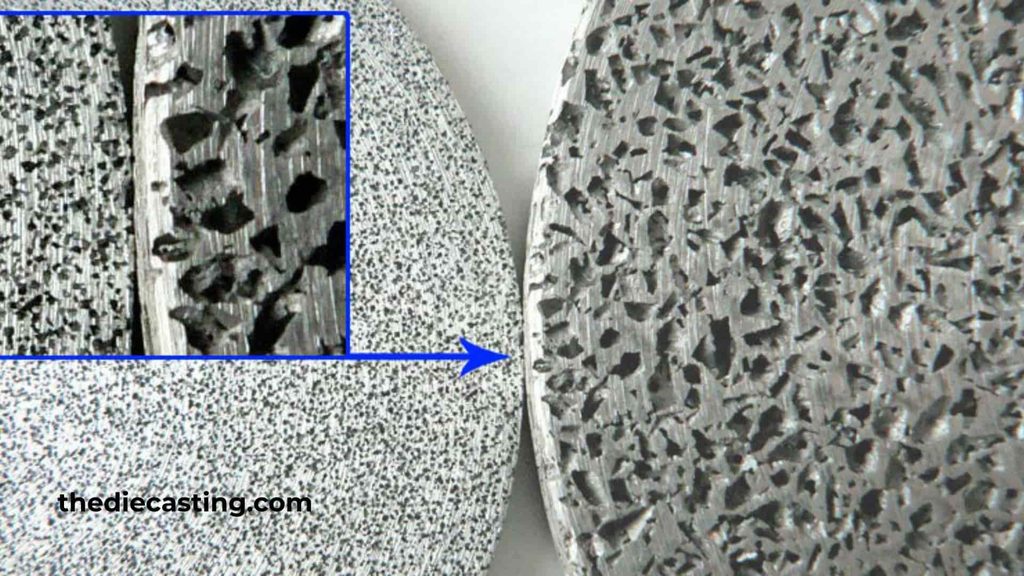
Pinholes are many small, evenly distributed holes that appear primarily after machining. They are hard to see with typical X-ray.
Başlıca nedenler
- Melt material that is contaminated or overheated and absorbs too much hydrogen.
- Failure to degas product for an extended period of time.
- The injection is made by atomizing the material into small gates.
Eleme yöntemleri
- Strict control of raw materials and timely use of degassed metal.
- Precise temperature management
- Properly redesign the gating to prevent atomization.
Leakage (Functional Failure)
Leakage is not a primary defect per se, but instead a critical functional outcome of interconnected porosity, cracks, or cold flow that form through wall leakage pathways. When the pressure test is performed, failure is revealed.
Başlıca nedenler
- Any mix of gas or shrinkage porosity that creates continuous networks.
- Bursting or deep cold holes in the body.
Eleme yöntemleri
- Correct the above-listed mechanisms to solve the underlying porosity or cracking.
- Try to make the structure denser by increasing the intensification pressure.
- If impregnation is not required for critical applications, it is possible to select it for other applications.
Brittleness
Brittleness will manifest itself as a sudden breakage with little plastic deformation. It is caused by coarse grain or overly fine grain, high impurity level, or oxide film as crack starters.
Başlıca nedenler
- Any overheating or over-holding of the melt.
- The levels of iron, zinc, or copper are out of specification.
- Rapid chilling causes very brittle microstructures.
Eleme yöntemleri
- Strict temperature & composition control
- Grain-refining practices
- Optimized cooling rates
Summary Table of Common Aluminum Casting Defects
| Kusur | Typical Appearance | Primary Cause Category | Key Corrective Action |
| Gaz gözenekliliği | Smooth spherical voids | Melt quality/venting | Rotary degassing + vent optimization |
| Büzülme gözenekliliği | Irregular rough voids | Feeding/solidification | Risers, chills, directional solidification |
| Soğuk kapanışlar | Visible seams | Temperature / fill speed | Raise temperatures, balance gating |
| Misruns | Incomplete sections | Fluidity/coating | Insulating coatings, faster fill |
| Oxide / bifilm inclusions | Thin films, fatigue initiators | Turbulence/melt handling | Laminar fill, fluxing, filtration |
| Sıcak gözyaşları | Cracks near solidus | Constraint/design | Draft angles, smooth transitions |
| Die soldering | Metal stuck to die | Coating breakdown | Consistent die coating maintenance |
| Flash & roughness | Fins at parting line | Die condition/pressure | Die maintenance, clamping control |
| Slag inclusions | Irregular particles | Dirty melt | Skimming, clean charge |
| Pinholes | Fine dispersed voids | Hydrogen reabsorption | Timely melt use, temperature control |
| Leakage | Pressure-test failure | Interconnected porosity | Eliminate root porosity sources |
| Brittleness | Sudden fracture | Grain structure/impurities | Composition & cooling control |
Impact of These Defects on the Die Casting Industry
Defects in aluminum casting have high economic and operational costs. The apparent cost of the scrap metal is just a fraction; energy used to melt the alloy, die time lost, labor used to inspect and rework, and disrupted delivery schedules all add to the true cost. For high-volume HPDC production, it costs only a small increase in the amount of scrap to wipe out margins on thin-walled automotive and electronics parts.
There are also indirect costs such as damage to reputation. Leakage and fatigue are critical for automotive and aerospace buyers, as they can result in contract penalties when there is near-zero leakage and high fatigue performance. These processes also have a negative impact on die life, increasing the cost of tooling replacement by 15-20% in poorly controlled shops.
Then again, on the bright side, foundries that systematically work to address root causes—by treating the melt, using simulation-based design, and having a disciplined process control—routinely keep scrap rates under 2%. The ability to do so is emerging as a competitive differentiator as OEMs are reducing suppliers and are attracted to integrated suppliers with a focus on quality. In addition to the associated penalty for uncontrolled defects, industry trends toward thinner walls, higher integrity structural castings, and sustainability further add to the payoff for mastering these defects.
Practical Prevention Framework
Improved defect reduction is based on four parallel principles:
- Melt quality: degassing, fluxing, filtration, and hydrogen monitoring.
- Die / mold condition: coating integrity, venting, temperature control, and maintenance.
- Process parameters: pouring temp, fill profile, intensification pressure, solidification control.
- Design & simulation: uniform sections, suitable feeding & virtual process trials before tooling
Sıkça Sorulan Sorular
What are 5 common defects of casting?
Among the top five common defects in aluminum casting, gas porosity, shrinkage porosity, oxide inclusion, and cold shut are included, as well as hot tears.
How to check casting defects?
Visual inspection and Dye penetrant are used to identify surface defects. Internal defects are caused by X-ray radiography, ultrasonic testing, or destructive sectioning. Pressure testing (air, water, or oil) is used to confirm functional leakage. This is confirmed by additional density measurement and/or metallographic examination.
What are the most likely reasons for casting fault?
Most common sources are dissolved hydrogen, improper feeding during solidification, turbulent metal flow, incorrect melt and/or die temperatures, poor die coating or venting, and die design that causes stress concentrations or hot spots.
What are types of casting defects?
The defects are usually classified into metallurgical defects (porosity, inclusions, brittleness), heat defects (hot tears, cold shuts), kalıp-material defects (in sand casting), and shape defects (flash, misruns, mismatches). The main categories in aluminum döküm are porosity, inclusions, and solidification cracks.
Is there a way to repair aluminum casting defects by impregnation?
Resin impregnation will seal minor interconnected porosity for non-critical pressure applications, but can be a secondary treatment. The long-term solution is still considered to be the process control known as the root cause process.
What does die coating have to do with defect rates?
Insulating coatings like DYCOTE decrease heat loss, enhance fluidity, and do not allow soldering. Regular application and timely re-coating directly reduce misruns, cold shuts, and die-soldering defects.
Sonuç
All of the common defects of aluminum casting (such as gas and shrinkage porosity, cold shut, misrun, oxide inclusion, hot tear, die soldering, flash, slag inclusion, pinhole, leakage, and brittleness) have common causes: insufficient attention to melt quality, die condition, process parameters, and part design. Every defect has a known metallurgical and operational cause, and every defect can be systematically eliminated or reduced.
A defect prevention program is not a one-time solution, but a way of working that is practiced every day, in order to reduce SCRAPs, increase die life, and ensure reliability that meets the requirements of today’s automotive, aerospace, and industrial customers. The best route to quality and competitiveness is to maintain a focus on the basics of aluminum casting throughout the entire process.