
لا يزال صب الألومنيوم أحد أكثر تقنيات التصنيع شيوعًا لتصنيع الأجزاء المعقدة والخفيفة الوزن والقوية في صناعات السيارات والطيران والتكييف والإلكترونيات والآلات الصناعية. وتعد الكثافة المنخفضة، والتوصيل الحراري، ومقاومة التآكل، وقابلية إعادة التدوير من بين مزاياها العديدة، مما يجعلها مادة أساسية. ومع ذلك، فإن هذه العملية عرضة لحدوث عيوب يمكن أن تؤدي إلى تباينات هيكلية غير مرغوب فيها، وزيادة في النفايات، وارتفاع التكاليف.
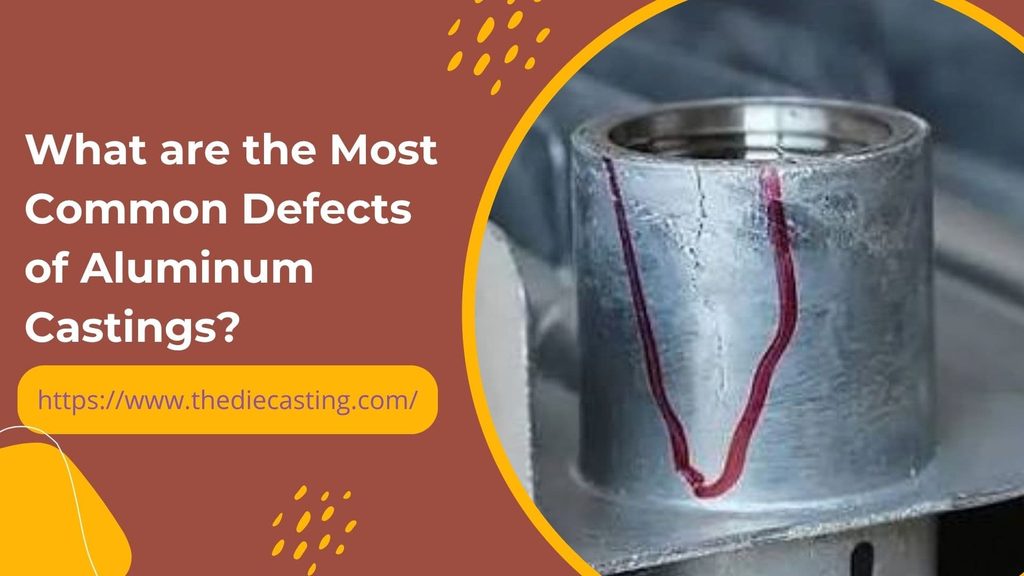
للحفاظ على معدل الفاقد عند مستوى أقل من 2% وضمان اتساق قطع الغيار، من المهم أن تكون المصبغة على دراية بأكثر عيوب الصب شيوعًا وأسبابها وكيفية التخلص منها. تتناول هذه المقالة أكثر من 10 عيوب شائعة، وتشرح كيفية حدوثها، وتقدم إجراءات رقابة عملية وجداول وطرقًا شائعة للوقاية منها، بالإضافة إلى تأثيرها على الصناعة ككل.
ما هو عيب صب الألومنيوم؟
العيوب في صب الألومنيوم هي عيوب تتشكل أثناء عمليات الصهر أو الصب أو التصلب أو المعالجة اللاحقة. ويمكن أن تكون داخلية (لا تظهر إلا بعد القطع أو الفحص بالأشعة السينية) أو خارجية. وقد تؤدي العديد من العيوب الداخلية إلى تكوين مسارات تسرب، أو تقليل العمر التشغيلي تحت الإجهاد، أو التسبب في فشل مبكر تحت الضغط؛ غير أن العيوب السطحية قد تكون مقبولة أو غير مقبولة.
لا تحدث العيوب عادةً بسبب سبب واحد فقط. بل تنجم عن التفاعل بين عوامل مختلفة، مثل جودة المادة المنصهرة، وتصميم القالب، أو قالب, ، ودرجة حرارة الذوبان، والضغط، ومعدل التعبئة، وسلوك المشغل. وبالتالي، يجب معالجة هذه المجالات الأربعة جميعها من أجل تحقيق تحكم فعال.
أكثر العيوب شيوعًا في صب الألومنيوم
فيما يلي قائمة بأكثر من 10 عيوب تظهر في أغلب الأحيان في عمليات الصب بالقالب بالجاذبية (GDC)، والصب بالقالب تحت الضغط العالي (HPDC)، والصب بالرمل لسبائك الألومنيوم.
مسامية الغاز
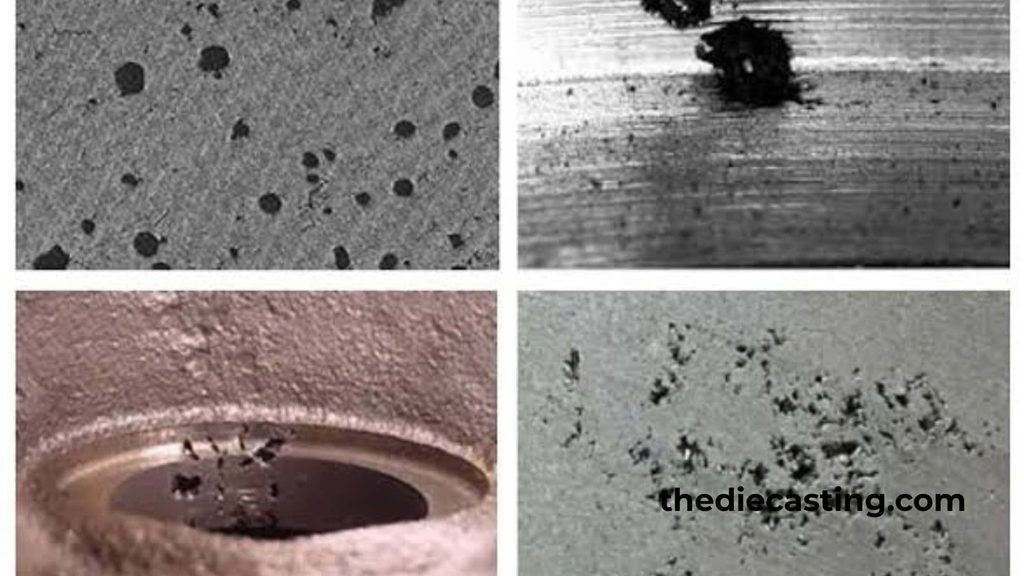
ستظهر مسامية الغاز على شكل فراغات ناعمة نسبيًا، مستديرة أو بيضاوية الشكل. ويُعد الهيدروجين السبب الرئيسي، حيث إنه الغاز الوحيد الذي يتميز بدرجة عالية من الذوبان في الألومنيوم المنصهر. ويؤدي وجود الرطوبة في الجو، أو مواد التحميل الرطبة، أو مواد التلحيم الملوثة، أو بطانات الأفران غير المجففة بشكل كافٍ إلى تعرض المعدن للهيدروجين الذي يترسب أثناء تصلب المعدن.
الأسباب الرئيسية
- عدم كفاية عملية إزالة الغازات من المادة المنصهرة.
- عندما يكون الصب مضطربًا، مما يؤدي إلى انخلاط الهواء.
- زيادة كمية مادة فصل القالب أو الرطوبة داخل القالب.
- سوء تهوية القوالب.
طرق الاستبعاد
- المعالجة المسبقة عن طريق إزالة الغازات بالدوران قبل الصب باستخدام غاز خامل (الأرجون أو النيتروجين).
- اختبار الهيدروجين عن طريق اختبارات الضغط المنخفض.
- استخدام سرعات ملء محكومة وتصميم بوابة تدفق طبقي. تطبيق سرعات ملء محكومة وتصميم بوابة تدفق طبقي.
- تجفيف بطانات الشحن والفرن تجفيفًا تامًا.
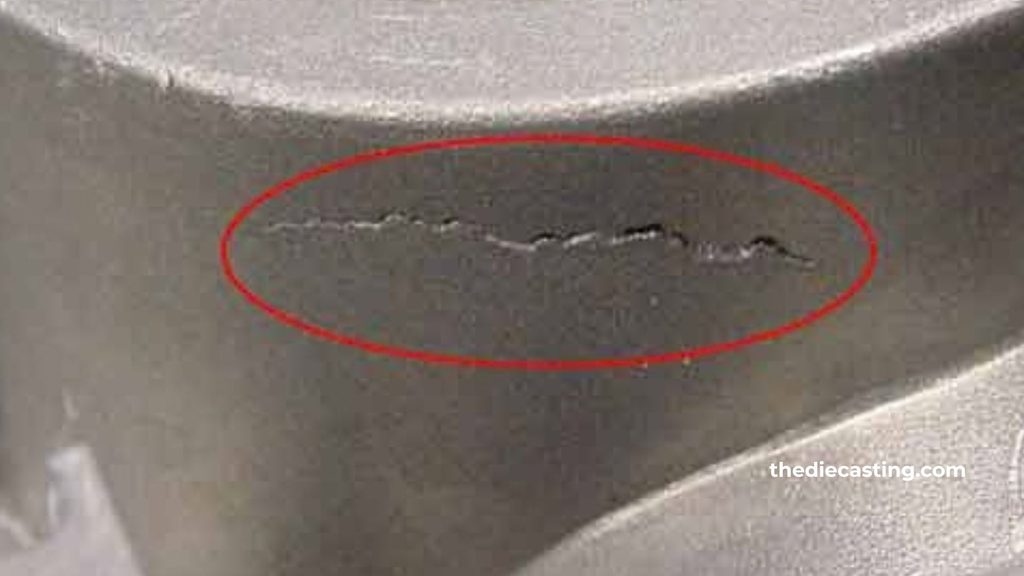
المسامية الناتجة عن الانكماش / التجاويف الناتجة عن الانكماش
تتميز مسامية الانكماش بوجود فراغات غير منتظمة ذات جدران خشنة، وتكون عادةً في المواقع التي تتجمد في النهاية، مثل المناطق السميكة، أو المراكز الحرارية، أو النقاط الساخنة القريبة من فتحات الصب. يبلغ معدل انكماش الألومنيوم في عملية صب الألومنيوم 6-7% عند التصلب، وستظهر الفراغات في حالة عدم توفير التغذية المناسبة.
الأسباب الرئيسية
- مصاعد غير ملائمة، أو أنظمة تغذية غير سليمة.
- كلما ارتفعت درجة حرارة الصب، زاد مقدار الانكماش الإجمالي.
- النقاط الساخنة الناتجة عن عدم انتظام سماكة الجدار.
- التجميد المبكر للبوابات التي تقطع تدفق المعدن.
طرق الاستبعاد
- التصميم الصحيح للفتحات ووضع القنوات في عملية التصلب الاتجاهي.
- تسخين موضعي (تسخينات) في المقاطع الرقيقة.
- ضغط التكثيف المُحسَّن في عملية HPDC.
- برامج حاسوبية (ProCAST، MAGMAsoft) للتنبؤ بالنقاط الساخنة وإزالتها.
إغلاق بسبب البرد
يُقصد بـ«الانغلاق البارد» الوصلة أو التماس غير الملحوم الذي يمكن رؤيته بين تيارين معدنيين، حيث تكون الحواف الأمامية قد تصلبت جزئيًا قبل التلامس.
الأسباب الرئيسية
- درجة حرارة الصب أو القالب منخفضة.
- سرعة ملء بطيئة.
- منطقة ميتة ناتجة عن عدم توازن عملية التحكم في البوابات.
- طرق الاستبعاد.
- زيادة درجة حرارة الصب ضمن النطاق المحدد للسبائك.
- تنخفض درجة الحرارة إلى درجة حرارة التشغيل.
- إعادة تصميم وإعادة ابتكار نظام فتح البوابات لتحقيق تعبئة متزامنة ومتوازنة.
- حيثما يسمح تصميم القالب بذلك، قم بزيادة سرعة التعبئة.
التجاوزات
إن مصبوبات القوالب تكون القطع الناتجة عن أخطاء الصب غير مكتملة، مما يعني أن التجويف لم يتم ملؤه بالكامل. وتشبه أسباب ذلك إلى حد كبير أسباب حدوث «الانغلاق البارد».
الأسباب الرئيسية
- إذا كانت درجة حرارة المعدن أو سرعته منخفضة جدًّا.
- إذا كانت المقاطع رفيعة أو متباعدة، فإنها تُعتبر مقاطع “تجميد مبكر”.
- طلاء رديء للقالب، مما يؤدي إلى فقدان سريع جدًّا للحرارة.
طرق الاستبعاد
- استخدم طلاءات عازلة للقالب مثل DYCOTE للحفاظ على تدفق السوائل.
- تقليل سماكة الطلاء وكمية تطبيقه إلى الحد الأدنى.
- تحسين عملية التحكم في تدفق المعدن لتسريع وصوله إلى الأجزاء الرقيقة.
- حافظ على ثبات درجة حرارة القالب.
Oxide Inclusions and Bifilms
Aluminum melts and oxidises immediately as a very thin, strong oxide film. These films are entrapped in the melt during the turbulent transfer and turn into nearly imperceptible defects that act as crack initiators or bifilms.
الأسباب الرئيسية
- Pouring or ladling that is turbulent.
- Dirty melt surface and inadequate fluxing.
- Chemically and physically damaged charged or scrap material.
طرق الاستبعاد
- Ladles of bottom pour, tilting GDC, or low-pressure processes for laminar fill.
- The use of COVERAL-type fluxes regularly.
- The filtration and skimming procedures for melting.
- Reducing free fall distances when transferring the load.
Hot tears (Hot cracking)
Below the solidus temperature, hot tears have been developed in the semi-solid casting because the thermal contraction stresses could not be accommodated in the constrained casting. Cracks can be either internal or surface-breaking.
الأسباب الرئيسية
- To avoid abrupt section changes and sharp corners.
- Inadequate draft angles.
- Wide solidification range alloys (some grades of Al-Si).
- Premature ejection.
طرق الاستبعاد
- Smooth transitions and generous radii in part design.
- Properly drafted and timed ejections.
- Use of near-eutectic compositions for alloys, where feasible.
- Strategies to minimize residual stress in the form of sequential solidification.
Die Soldering
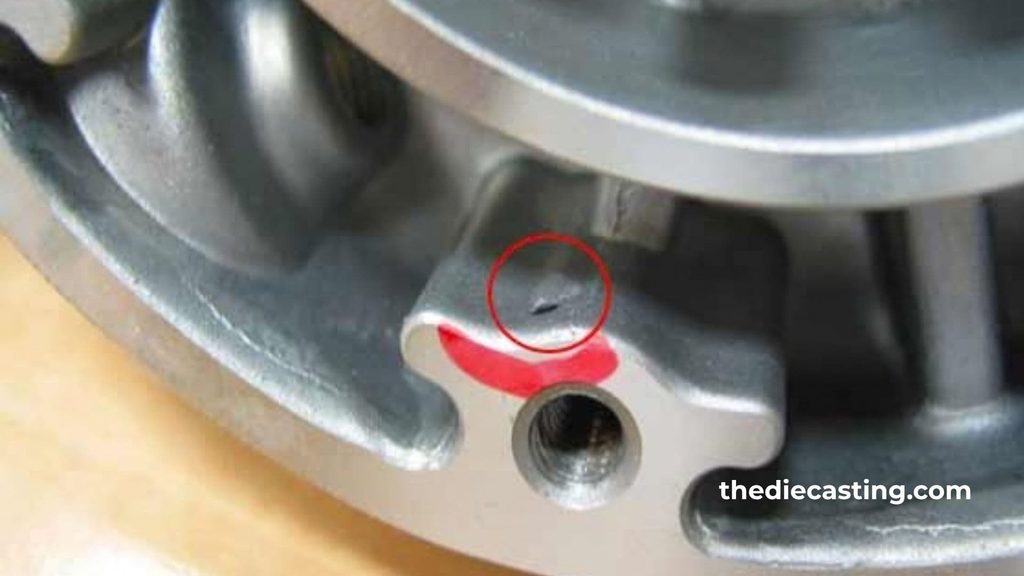
Die soldering is caused when the protective coating is destroyed, and molten سبائك الألومنيوم react with the surface of the ferrous die to create intermetallics between the aluminum and iron in aluminum casting. This causes damage to the surface of the casting, and die wear and production downtime.
الأسباب الرئيسية
- Failure of the coating to withstand breakdown or to be sufficiently thick.
- High heat of the die surface
- A lack of iron in the alloy.
طرق الاستبعاد
- Regular application and checks of die coatings (including DYCOTE SAFEGUARD nano-ceramic coatings).
- Regulate the temperature of the cores and cooling circuits.
- To maintain alloy iron to the correct specification.
Surface Roughness and Flash
If the surface is too rough, it will increase the amount of material that needs to be machined and put wear on the tools. Removal of Flash (thin fin of metal at parting lines/core prints) is manual and may cause dimensional damage.
الأسباب الرئيسية
- Worn die separating surfaces.
- Too much pressure on the metal or too little clamping force.
- Inadequate die maintenance.
طرق الاستبعاد
- Regular inspection and reconditioning of parting faces.
- Properly set up machine clamping configuration.
- Optimized parting-line design.
Slag / Dross Inclusions
The non-metallic particles or oxidized slag get trapped in the casting to form irregular crusts or pockets, which decrease the mechanical properties and make the parts difficult to machine.
الأسباب الرئيسية
- Dirty charge materials.
- Not skimming well after refining.
- Surface dross that is entrained into the metal stream by turbulence.
طرق الاستبعاد
- Low charge ratio of clean and low return-scrap ratio.
- Correctly fluxing and sufficient standing time after the refining process.
- Use of filter screens in the runner system.
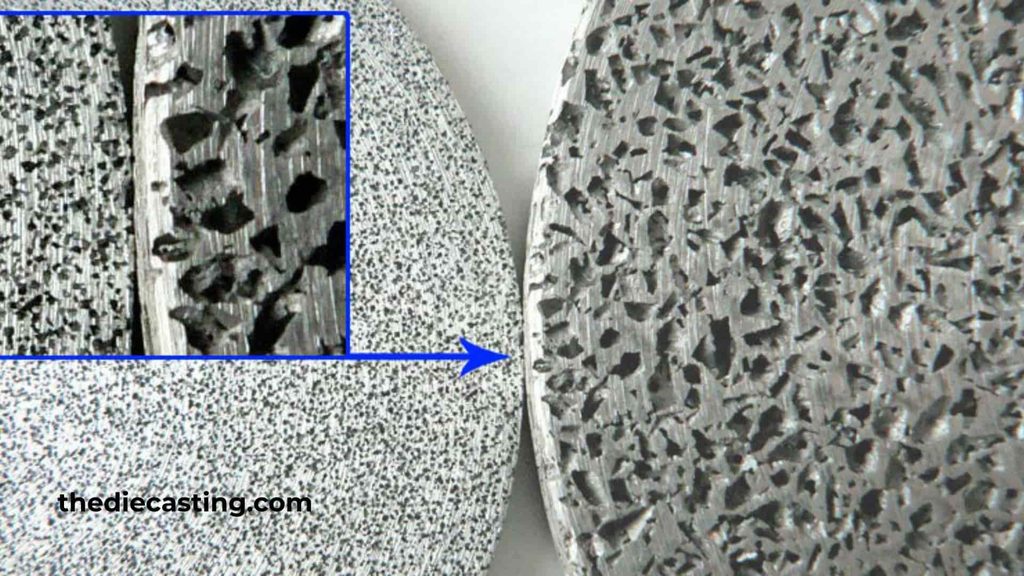
Pinhole Porosity
Pinholes are many small, evenly distributed holes that appear primarily after machining. They are hard to see with typical X-ray.
الأسباب الرئيسية
- Melt material that is contaminated or overheated and absorbs too much hydrogen.
- Failure to degas product for an extended period of time.
- The injection is made by atomizing the material into small gates.
طرق الاستبعاد
- Strict control of raw materials and timely use of degassed metal.
- Precise temperature management
- Properly redesign the gating to prevent atomization.
Leakage (Functional Failure)
Leakage is not a primary defect per se, but instead a critical functional outcome of interconnected porosity, cracks, or cold flow that form through wall leakage pathways. When the pressure test is performed, failure is revealed.
الأسباب الرئيسية
- Any mix of gas or shrinkage porosity that creates continuous networks.
- Bursting or deep cold holes in the body.
طرق الاستبعاد
- Correct the above-listed mechanisms to solve the underlying porosity or cracking.
- Try to make the structure denser by increasing the intensification pressure.
- If impregnation is not required for critical applications, it is possible to select it for other applications.
Brittleness
Brittleness will manifest itself as a sudden breakage with little plastic deformation. It is caused by coarse grain or overly fine grain, high impurity level, or oxide film as crack starters.
الأسباب الرئيسية
- Any overheating or over-holding of the melt.
- The levels of iron, zinc, or copper are out of specification.
- Rapid chilling causes very brittle microstructures.
طرق الاستبعاد
- Strict temperature & composition control
- Grain-refining practices
- Optimized cooling rates
Summary Table of Common Aluminum Casting Defects
| العيب | Typical Appearance | Primary Cause Category | Key Corrective Action |
| مسامية الغاز | Smooth spherical voids | Melt quality/venting | Rotary degassing + vent optimization |
| مسامية الانكماش | Irregular rough voids | Feeding/solidification | Risers, chills, directional solidification |
| الإغلاق البارد | Visible seams | Temperature / fill speed | Raise temperatures, balance gating |
| التجاوزات | Incomplete sections | Fluidity/coating | Insulating coatings, faster fill |
| Oxide / bifilm inclusions | Thin films, fatigue initiators | Turbulence/melt handling | Laminar fill, fluxing, filtration |
| دموع ساخنة | Cracks near solidus | Constraint/design | Draft angles, smooth transitions |
| Die soldering | Metal stuck to die | Coating breakdown | Consistent die coating maintenance |
| Flash & roughness | Fins at parting line | Die condition/pressure | Die maintenance, clamping control |
| Slag inclusions | Irregular particles | Dirty melt | Skimming, clean charge |
| Pinholes | Fine dispersed voids | Hydrogen reabsorption | Timely melt use, temperature control |
| Leakage | Pressure-test failure | Interconnected porosity | Eliminate root porosity sources |
| Brittleness | Sudden fracture | Grain structure/impurities | Composition & cooling control |
Impact of These Defects on the Die Casting Industry
Defects in aluminum casting have high economic and operational costs. The apparent cost of the scrap metal is just a fraction; energy used to melt the alloy, die time lost, labor used to inspect and rework, and disrupted delivery schedules all add to the true cost. For high-volume HPDC production, it costs only a small increase in the amount of scrap to wipe out margins on thin-walled automotive and electronics parts.
There are also indirect costs such as damage to reputation. Leakage and fatigue are critical for automotive and aerospace buyers, as they can result in contract penalties when there is near-zero leakage and high fatigue performance. These processes also have a negative impact on die life, increasing the cost of tooling replacement by 15-20% in poorly controlled shops.
Then again, on the bright side, foundries that systematically work to address root causes—by treating the melt, using simulation-based design, and having a disciplined process control—routinely keep scrap rates under 2%. The ability to do so is emerging as a competitive differentiator as OEMs are reducing suppliers and are attracted to integrated suppliers with a focus on quality. In addition to the associated penalty for uncontrolled defects, industry trends toward thinner walls, higher integrity structural castings, and sustainability further add to the payoff for mastering these defects.
Practical Prevention Framework
Improved defect reduction is based on four parallel principles:
- Melt quality: degassing, fluxing, filtration, and hydrogen monitoring.
- Die / mold condition: coating integrity, venting, temperature control, and maintenance.
- Process parameters: pouring temp, fill profile, intensification pressure, solidification control.
- Design & simulation: uniform sections, suitable feeding & virtual process trials before tooling
الأسئلة الشائعة
What are 5 common defects of casting?
Among the top five common defects in aluminum casting, gas porosity, shrinkage porosity, oxide inclusion, and cold shut are included, as well as hot tears.
How to check casting defects?
Visual inspection and Dye penetrant are used to identify surface defects. Internal defects are caused by X-ray radiography, ultrasonic testing, or destructive sectioning. Pressure testing (air, water, or oil) is used to confirm functional leakage. This is confirmed by additional density measurement and/or metallographic examination.
What are the most likely reasons for casting fault?
Most common sources are dissolved hydrogen, improper feeding during solidification, turbulent metal flow, incorrect melt and/or die temperatures, poor die coating or venting, and die design that causes stress concentrations or hot spots.
What are types of casting defects?
The defects are usually classified into metallurgical defects (porosity, inclusions, brittleness), heat defects (hot tears, cold shuts), قالب-material defects (in sand casting), and shape defects (flash, misruns, mismatches). The main categories in aluminum الصب are porosity, inclusions, and solidification cracks.
Is there a way to repair aluminum casting defects by impregnation?
Resin impregnation will seal minor interconnected porosity for non-critical pressure applications, but can be a secondary treatment. The long-term solution is still considered to be the process control known as the root cause process.
What does die coating have to do with defect rates?
Insulating coatings like DYCOTE decrease heat loss, enhance fluidity, and do not allow soldering. Regular application and timely re-coating directly reduce misruns, cold shuts, and die-soldering defects.
الخاتمة
All of the common defects of aluminum casting (such as gas and shrinkage porosity, cold shut, misrun, oxide inclusion, hot tear, die soldering, flash, slag inclusion, pinhole, leakage, and brittleness) have common causes: insufficient attention to melt quality, die condition, process parameters, and part design. Every defect has a known metallurgical and operational cause, and every defect can be systematically eliminated or reduced.
A defect prevention program is not a one-time solution, but a way of working that is practiced every day, in order to reduce SCRAPs, increase die life, and ensure reliability that meets the requirements of today’s automotive, aerospace, and industrial customers. The best route to quality and competitiveness is to maintain a focus on the basics of aluminum casting throughout the entire process.