
Introduction
Cast aluminum is widely used in industrial production and is known for its lightweight properties, corrosion resistance, heat conductivity, and design flexibility. Aluminum alloys are commonly used in die casting applications in the automotive industry, electronics, industrial machines, aerospace, and consumer goods.
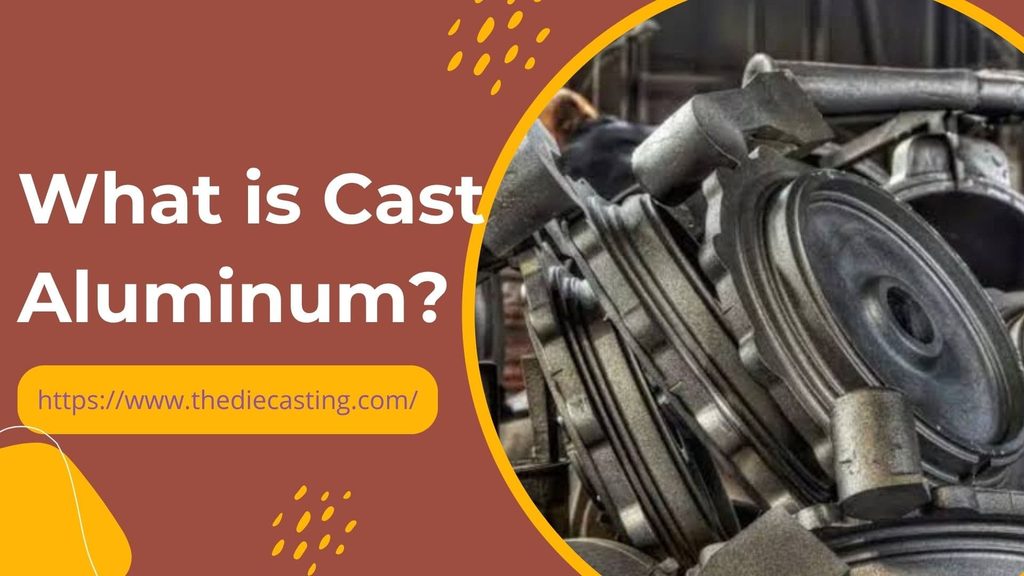
The use of Aluminum die casting can help the manufacturer produce parts that have detailed geometries, consistent dimensions, and relatively smooth surfaces at a high production volume. Castings can also help reduce material waste and secondary machining compared to machining a component from solid aluminum.
But getting the right aluminum alloy and casting method is very important. The resulting material depends on factors like mechanical strength, wall thickness, operating temperature, corrosion exposure, production volume, and finishing.
What Is Cast Aluminum?
Cast aluminum is a metal or metal alloy that is formed by melting and pouring or injecting it into a mold. After the molten metal cools and solidifies, it becomes a part with the desired shape.
Wrought aluminum is produced by rolling, extruding, or shaping aluminum, while cast aluminum is poured into a mold. This enables it to be used for parts with ribs and mounting features, curved surfaces, internal cavities, and other shapes.
Typical elements in cast aluminum alloys are silicon, copper, magnesium, and zinc. These additions can affect the casting fluidity, strength, hardness, wear resistance, and corrosion resistance.
Aluminium-silicon alloys play a particular role due to the role of silicon as an alloying element of the metal in the liquid state to enhance the flow of the liquid metal and to facilitate filling of the intricate mould cavity.
Why Is Cast Aluminum Used in Manufacturing?
Cast aluminum is used by manufacturers when complex shapes and quality of production are required, and lightweight parts are desired. Several design aspects can be combined in a single component with casting.
- These include motor casings, transmissions, electronic housings, heat sinks, pump bodies, and construction brackets.
- The material is especially useful if the project needs to satisfy a compromise between weight, performance, production efficiency, and cost.
What’s the Role of Cast Aluminum in the Die Casting Industry?
Aluminum die casting is a process of manufacturing in which the molten aluminum alloy is injected into a reusable metal die under high pressure. Once the metal has hardened, the die then opens up, and the casting is removed.
Cast aluminum is one of the significant materials used by the industry because it is used for producing intricate and lightweight components on a large scale. It is castable and has desirable mechanical properties, and is suitable for functional and decorative products.
1. Producing Complex Components
The ribs and bosses formed by die casting can be added to the drawings to make the components. These features can be added to the original casting design, and less fabrication and assembly are required.
2. Supporting High-Volume Production
Manufacturers can generate a great deal of identical parts using reusable steel dies. After tooling development and approval, the process can provide consistent dimensions and efficient cycle times.
Aluminum die casting is ideal for automotive parts, electrical enclosures, appliance enclosures, and high-volume parts and products.
3. Reducing Component Weight
The density of cast aluminium is about 2.7g/cm³, which is much lower than that of steel or cast iron. Use of appropriate cast aluminum alloys can save weight in the components, while retaining the necessary strength for the application.
4. Improving Heat Management
Most aluminum alloys are good conductors of heat. Heat dissipation from components during operation can therefore be achieved with the help of heat sinks made of die-cast aluminum, motor or LED housings, as well as electronic enclosures.
5. Integrating Functional Features
Multiple features can be integrated into one part by the die casting process. For instance, mounting bosses, cooling fins, screw holes, and reinforcing ribs can be included in an electronic housing. This integration can lead to fewer individual components and fewer fasteners and assembly operations.
What Are the Main Types of Aluminum Casting Alloys
The selection of the alloy will depend on the strength, corrosion resistance, castability, and operating environment.
Aluminum-Silicon Alloys
The alloys used in casting are primarily alloys of aluminium and silicon, which provide an increase in fluidity and mold filling. They can be used for complex parts, housings, automotive parts, and industrial equipment.
- Typical examples are A356, A380, A383, and AlSi10Mg; however, these are not necessarily all suitable for each casting process and application.
- A380 is often used for high-pressure die-cast housings and enclosures due to its useful castability and mechanical properties.
- In some instances, the components to be fabricated will have complex geometries, where A383 is an option.
Aluminum-Copper Alloys
Aluminum-copper alloys can be used in situations where greater strength or hardness is desired, and additions of copper enhance them. But these alloys may not be as resistant to corrosion as other alloys. Protective coatings and proper environment control may therefore be required.
Aluminum-Magnesium Alloys
Aluminium-magnesium alloys offer satisfactory corrosion resistance, particularly in marine and other severe environments. For some grades, the strength-to-weight properties are also noteworthy. They have casting behaviour that is different from common aluminium-silicon alloys; therefore, careful selection of the alloy and process control are essential.
Aluminum-Zinc Alloys
For some applications, a specific strength or hardness property is desired, and zinc-containing aluminium casting alloys are used. They have properties that are dependent on the full composition of the alloy and the heat treatment condition.

Aluminum vs. Cast Aluminum: What is the Difference?
In manufacturing, aluminum can be available in sheets, plates, bars, extrusions, or forgings. The most frequent uses for these forms are for components manufactured using machining or other forming operations.
| Comparison Factor | Cast Aluminum | Wrought Aluminum |
| Manufacturing method | Molten metal solidifies in a mold | Rolling, extrusion, forging, or related forming |
| Design flexibility | Suitable for complex, integrated shapes | Suitable for sheets, bars, profiles, and forged shapes |
| Alloy composition | Often optimized for castability | Often optimized for forming and mechanical performance |
| Mechanical properties | Depend on alloy, casting quality, and heat treatment | Depend on alloy, processing, and temper |
| Potential defects | Porosity, shrinkage, inclusions, and incomplete filling | Forming defects, cracking, or other process-related flaws |
| Common applications | Housings, pump bodies, engine components, and heat sinks | Structural profiles, plates, brackets, and machined parts |

What Are the Advantages of Cast Aluminum?
Lightweight Construction
Cast Aluminum has a lower density than cast Iron and Steel. This allows the manufacturer to save weight in the components, but maintain the required performance if the alloy and design are chosen appropriately.
Using complex shapes and flexibility of design.
Integrated geometry in the casting process is possible that may otherwise need multiple machining or assembly operations for solid stock.
Efficient High-Volume Production
Reusable dies allow for repeatable production and can lower the cost per component if the number of parts produced is large enough to warrant the investment in the die.
Good Thermal Conductivity
Aluminum alloys have good thermal conductivity, which is suitable for the use of heat sinks, electronic shells, thermal management parts, etc.
Corrosion Resistance
Aluminum has a thin layer of oxide that is naturally formed to protect its surface. The corrosion performance is dependent on the type of alloy, type of environment, and contact with dissimilar metals, however. There are some castings that need extra finishes for protection.
Recyclability
Aluminum is a recyclable material and can be used again as a raw material for manufacturing. Sorting and quality control for the melt are used appropriately to ensure the desired alloy composition and casting quality.
What are the disadvantages of Cast Aluminum?
Cast aluminum, however, has its pros and cons, which should be taken into account by manufacturers when considering its use.
Potential Casting Defects
Pressure-containing components may leak or may not achieve the desired mechanical characteristics due to porosity, shrinkage cavities, inclusions, and incomplete filling. These risks can be minimized through good mold design, melt treatment, and process control.
Tooling Investment
The metal dies and equipment used for high-pressure die casting are special. For very small production runs, initial tooling costs can be significant, making it less appealing.
Alloy-Dependent Strength
Not all cast aluminum alloys are appropriate for high loads, high temperatures, and high severity of fatigue. The alloy should be chosen based on the specific service conditions for the part.
Finishing and Machining Requirements
After casting, some parts are required to be processed by CNC to meet the precision and sealing surface requirements. If the casting design and process are not well controlled, there can also be issues with porosity in proximity to the machined surfaces.
Welding Challenges
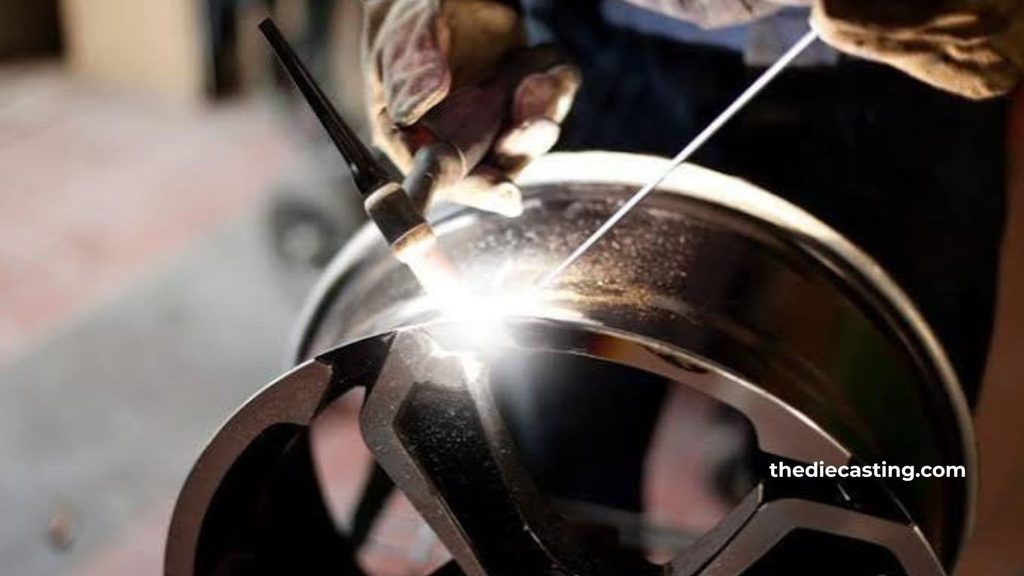
Porosity, oxide contamination, and alloy reactivity can make it challenging to weld cast aluminum. The weldability of each grade and casting quality may differ, and the method of joining should be validated prior to production.
What is the most common use for Cast Aluminum?
Cast aluminum is utilized in various industries where lightweight parts, intricate shapes, and quick production are essential.
Automotive Industry
The most common uses are transmission housings, engine parts, brackets, motor housings, and selected structural parts. Aluminium castings can assist in the weight savings of vehicles and combine several pieces into a single part.
Electronics and Electrical Equipment
Cast aluminum has many applications, such as electronic enclosures, LED housings, motor bodies, and heat-dissipating components. It offers excellent thermal conductivity and flexible design options for electrical system protection and support.
Industrial Machinery
Cast aluminum can be used for pump housings, valve bodies, gearboxes, machine parts, and more when the strength, pressure, and conditions of operation are suitable for the chosen alloy.
Aerospace and Transportation
Cast aluminum parts are applied in the transportation and aerospace industry. In the aerospace material supply chain, the inspection and qualification of materials and components must be carried out with high accuracy and reliability, while material traceability is a key requirement. For many aerospace parts, especially those with critical applications, it is not suitable to use every die-cast alloy and technology.

Household and Consumer Products
Cast aluminum is used in cookware, furniture parts, appliance parts, and decorative hardware because of its lightness and the ease of making it into functional or attractive shapes.
How Can Manufacturers Improve Cast Aluminum Part Quality?
- The first step to quality is to choose an appropriate alloy and to design the part to be cast into that alloy.
- The wall thickness, draft angles, fillets, ribs, gate positions, cooling characteristics, and location of important features that are machined can all be important considerations for engineers.
- In addition, manufacturers need to monitor the cleanliness of the melt, injection parameters, die temperature, and cooling conditions.
- The methods of inspection could be dimensional inspection, visual inspection, leak testing, and radiographic examination, as required by the part’s service.
- Secondary CNC machining can provide accurate holes, threads, bores, sealing surfaces, and more, for parts that need precise interfaces.
- The final quality plan should reflect the risk, applicable standards, and customer requirements of the component and not treat all components in the same way.
Conclusion
Cast aluminum is a material that has good thermal conductivity, corrosion resistance, and casting efficiency, low weight, and can be used to produce various complex parts, so it is an important material in the die casting industry. Aluminum die casting is particularly beneficial for producing large quantities of housings, automotive parts, electronic enclosures, and industrial pieces.
However, it requires the selection of the appropriate alloy, development of suitable tooling, process control of the casting process, and surface finishing/machining process, if required, for successful manufacturing. Manufacturers can use this knowledge to help them create a product that is both high quality and high performance while still being cost-effective.
By using the appropriate casting technique and alloy for the specific component needs, manufacturers can ensure the creation of reliable aluminum castings suitable for various industrial applications.
FAQs
1. What’s the Difference Between Aluminum and Cast Aluminum?
Aluminium is a malleable metal that can be cast, extruded, rolled, forged, and produced in various other ways. Cast aluminum is the term used for any aluminum or aluminum alloy that is cast or injected from a molten state into a mold. The two are made differently and have different common alloying elements and properties.
2. How to cook in Cast Aluminum Cookware?
Cast Aluminum cookware is safe to use as long as it is cast for food preparation and used as directed. Cookware suitability depends upon the alloy, surface coating, and condition. Do not use cookware with damaged coatings, and cook or clean according to the directions.
3. Is Cast Aluminium Good?
Yes, cast aluminum is a suitable material for applications demanding lightweight construction, complex shapes, good heat transfer efficiency, and corrosion resistance. The performance is a function of alloy, casting quality, and operating conditions.
4. What are the disadvantages of Cast Aluminum?
The drawbacks are that it may be porous and can shrink during casting, can be expensive to set up for die casting, and may have less strength in some types of applications than an appropriate wrought aluminum alloy. Depending on the component specifications, cast aluminum may also need to be secondary processed, coated, or welded.