
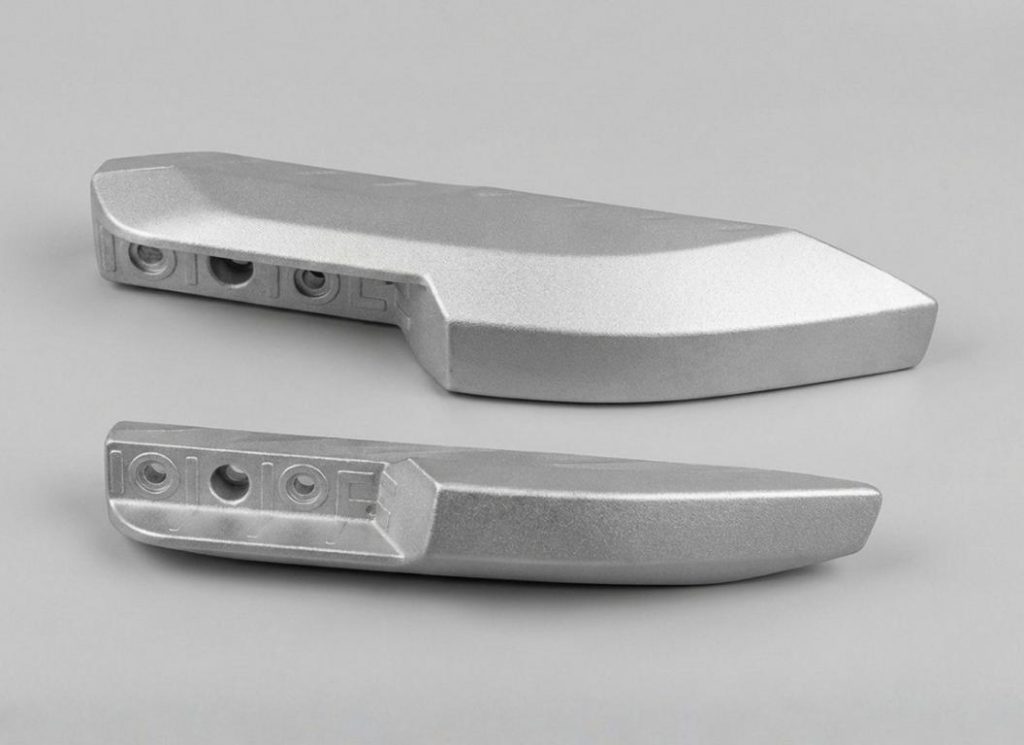

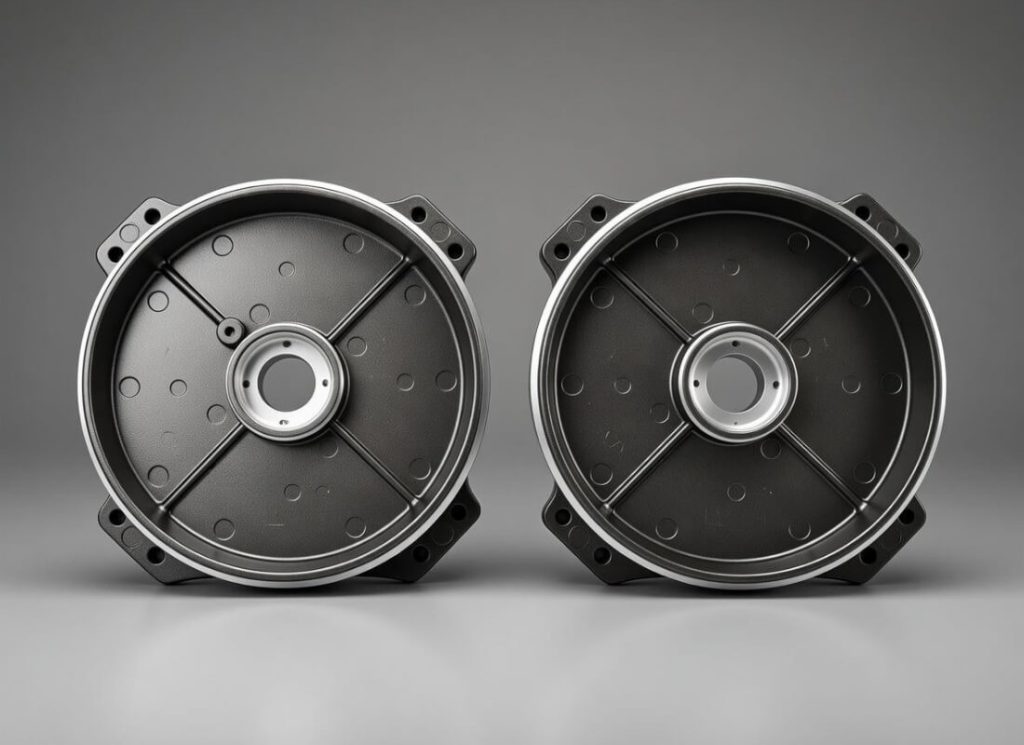

Automotive die casting Products that uses into automobile industry which has experienced several changes in recent decades, including performance, efficiency, and sustainability. The key values driving this business. Automotive die casting is one of the crucial technologies in the list of possible manufacturing processes that brought such a change. It enables manufacturers of motor vehicles to make complicated, lightweight, and highly strengthened parts with very precise and reliable.
Die casting is now essential in engine blocks and transmission housings, and in structural parts and electric vehicle (EV) enclosures. This is the detailed guide on all about automotive aluminum die casting, how we do it, and what materials we use, pros, and possibilities of the future die casting suppliers on how these vehicles will shape up tomorrow.
Automotive die casting is a metal casting technology whereby high-pressure melted metals, usually aluminium, magnesium, or zinc, are forced into a reusable steel form known as a die cast mould. After freezing, the solidified section is ejected, and the section is cleaned and refined to suit the specifications that are required.
It is used to manufacture thousands (or even millions) of identical automotive parts with high accuracy, tight tolerances, and high surface finishes. Due to its efficiency and cost-effectiveness, it has been an ideal option in the mass production of light parts within the automotive industry.
Die casting is an important component of the automotive industry as it assists in reaching the following main goals contributing to the vehicle’s performance, efficiency, and quality:
This is a direct way of reducing the weight of a vehicle, which leads to better fuel economy and a decrease in emissions. The Aluminum die casting substitutes heavy steel components with light but strong components, thus assisting the automakers to comply with global sustainability and emission standards.
The modern car models require complicated contours and compressed elements. The die casting makes the complex geometries in one process and reduces the levels of assembly and structural integrity in all parts.
This is a feature where automotive parts are required to match the tolerances appropriately to fit and operate correctly. Die casting guarantees high accuracy in large volume production, making it less variable and eliminating secondary processing.
Die-cast components inherently have smooth surfaces, so there is a reduction in the post-processing, which enhances aesthetics and performance. It can also be easily coated, painted, and corrosion-protected.
This process can produce numerous units in a short time, with identical quality in each unit, which is why it is among the cheapest ways to handle large-scale car manufacturing. The process also leads to a considerable decrease in the material waste, which also reduces the total cost of production without interfering with quality.

The following are different steps for the Automotive diecasting process;
It starts off with designing the automotive die-cast mould, which is a steel mould that is used to obtain the shape of the molten metal accurately. The molds are crafted to be durable and fresh, in many cases created with high-end CAD/CAM equipment to serve the best purpose possible.
Molds are made of two halves, the fixed one (cover die) and the movable one (ejector die), which jointly determine the geometry of the final part. This is an important step since an effective mold design has a direct influence on the quality of the product and the efficiency of production.

During automotive aluminum die casting, aluminum ingots undergo melting in a furnace that uses high efficiency to maintain a low temperature, which is carefully regulated in order to guarantee fluidity and purity. All defects are eliminated before injection to avoid flaws in the completed cast.
It is also important that warnings are guarded during the melting process since any slight temperature changes can compromise the strength, density, and general finish of the part.

The die cavity is pressurized to an extremely high pressure that is usually between 1,500 and 25,000 psi, and the molten aluminum is injected under that pressure utilizing a plunger or piston mechanism. This pressure is unbelievable, as it makes certain that the metal fills up each and every individual part of the mold cavity before it starts cooling off.
This process is done in milliseconds, and therefore, it enables the manufacturers to create multi-faceted and detailed die-casting automotive components with extreme precision and less porosity.

When injected, molten metal solidifies quickly in the die-cast mould and hardens subsequently. Water channels or oil-based cooling systems are used to control the rate of cooling so that a uniform solidification can be attained.
Appropriate cooling of the product may improve the mechanical strength in addition to minimizing the internal stresses to create reliable and durable automotive parts.

Once solidified, the two halves of the mold are opened, and the solidified part is ejected through automated ejector pins. This action will have to be timed well; otherwise, the freshly cast part will be ruined or distorted.
Automated ejection systems assist in keeping good consistency of cycles, and less time is required in handling the system, thus it is able to accomplish the whole automated die casting process faster and more efficiently.
Any surplus metal in the form of sprues, runners, or flash is cut off with the aid of mechanical or automated cutting systems. Depending on the desired results, after trimming, the parts can pass through several activities such as machining, polishing, coating, painting, or laser marking to get the final desired look.
This last step improves the look as well as the functionality of the component to fit the high standards that should be met during the production of the current automotive industry.
Although there are several metals that can be used in die casting, the selection will depend on the strength, weight, and cost considerations. The summary provided below shows the materials most frequently used in automotive die casting, their major properties, and applications.

| Material | Common Alloys | Key Properties / Values | Typical Applications |
| Aluminum Alloys | A380, A383, A360, ADC12 | Density: ~2.7 g/cm³ • High strength-to-weight ratio • Excellent corrosion & heat resistance • Melting point ~660°C | Engine blocks, transmission housings, EV battery enclosures |
| Magnesium Alloys | AZ91D, AM60, AM50 | Density: ~1.8 g/cm³ • 33% lighter than aluminum • Good damping capacity • Melting point ~650°C | Steering wheels, seat frames, and interior supports |
| Zinc Alloys | Zamak 3, Zamak 5, ZA-8 | Density: ~6.6 g/cm³ • High strength & detail accuracy • Low melting point ~420°C | Door handles, brackets, locks, trim parts |
| Copper Alloys | C18200, C95400 | Density: ~8.9 g/cm³ • Excellent electrical & thermal conductivity • Superior wear resistance | Electrical connectors, heat sinks, EV bus bars |
| Steel Alloys | AISI 4140, AISI 4340 | Density: ~7.8 g/cm³ • High tensile strength (>900 MPa) • Exceptional rigidity & fatigue resistance | Safety brackets, drivetrain, reinforcement parts |
Die ability, particularly in the automotive industry, is essential in almost all processes involved in the manufacture of a vehicle to give it strength, precision, and performance that is lightweight. Typical die-cast automotive components are:

The increasing trend in automotive aluminum die casting is due to its performance plus low cost, plus sustainability:
Despite the numerous advantages of automotive die casting, there are various challenges that manufacturers and suppliers are forced to deal with:
Die casting suppliers are vital in determining quality, reliability, and newness in the automotive production. Their knowledge is not limited to production; they are also partners in design optimization, materials testing, and sustainability.
Leading suppliers invest in:

The companies listed as some of the world-famous suppliers in the automotive industry are located in the United States, China, Germany, and Japan, which provide end-to-end solutions in the global automotive diecasting to automakers worldwide.
The technologies in automotive die casting will evolve rapidly in the next decade, particularly as the world transitions to the use of electric and autonomous cars.
Tesla was the first to practice Giga casting, which consists of casting very large die casting machines to produce single large car frames, cutting the number of parts, time, and cost of assembly and parts.
As electric vehicles begin to gain increasing popularity, much larger and complicated battery enclosures and motor housings of electric vehicles are now being produced with die casting.
Sensors and AI systems connected to IoT are being incorporated to track the conditions of the mold, metal flow, and cooling in real time.
The manufacturers are also implementing closed-loop recycling, renewable sources of energy, and the use of environmentally friendly coatings to ensure that the process becomes environmentally friendlier.
New developments in the composition of alloys are also creating lighter, stronger, and more heat-resistant material, which fits the next-generation cars.
In conclusion to “Automotive diecasting,” it’s the strongholds of present-day vehicles. It works well for both electric vehicles and internal combustion engines. Moreover, it can produce complex parts. Besides this, it has lightweight and durable parts with high repeatability.
With the changing technology, the automotive aluminum die casting will even be more utilized in ensuring that the automakers reach their performance, efficiency, and sustainability targets. The future of this industry is even more promising due to the advanced die-cast mould design, next-gen automotive die-casting suppliers, and so on.
Q1: What is the application of automotive die casting?
Lightweight and complex parts, such as engine blocks, transmission housings, and EV battery enclosures, with high accuracy and strength, are manufactured with automotive die casting.
Q2: What makes aluminum so popular in the automotive die-cast?
Experts recommend aluminum because it has a perfect correlation between light weight, strength, corrosion resistance, and thermal conductivity, and hence is suitable in the car industry that requires performance and fuel efficiency.
Q3: What is the life of a die-cast mould?
A good automotive die-cast mould has a life cycle of 100,000 to 200,000 cycles, again depending on the material, design, and maintenance practices.
Q4: What are the primary die casting processes?
These two are High-Pressure Die Casting (HPDC) and Low-Pressure Die Casting (LPDC). HPDC is applied to mass production, and LPDC was found to be better in mechanical properties.
Q5: Can electric vehicles (EVs) use die casting?
Absolutely. Die casting would play an important role in EVs, Electric vehicle castings products include EV battery housing, and motor casings, as well as lightweight chassis components, to increase range and efficiency.
Q6: What are the best automotive die casting manufacturers?
The leading automotive die casting manufacturers are the companies of China, Germany, Japan, and the USA, which are specialized in manufacturing and specializing in precision die casting and international OEM with partners globally, which include Ryobi, Dynacast, and Nemak. CNM Tech is one of best top automotive die casting suppliers as well.