Introduction
Zamak is a family of zinc-based metal alloys, which are widely used in the die casting industry for their strength, dimensional stability, high castability, and cost-effectiveness. Zamak is a practical alloy with a combination of mechanical properties and manufacturability.
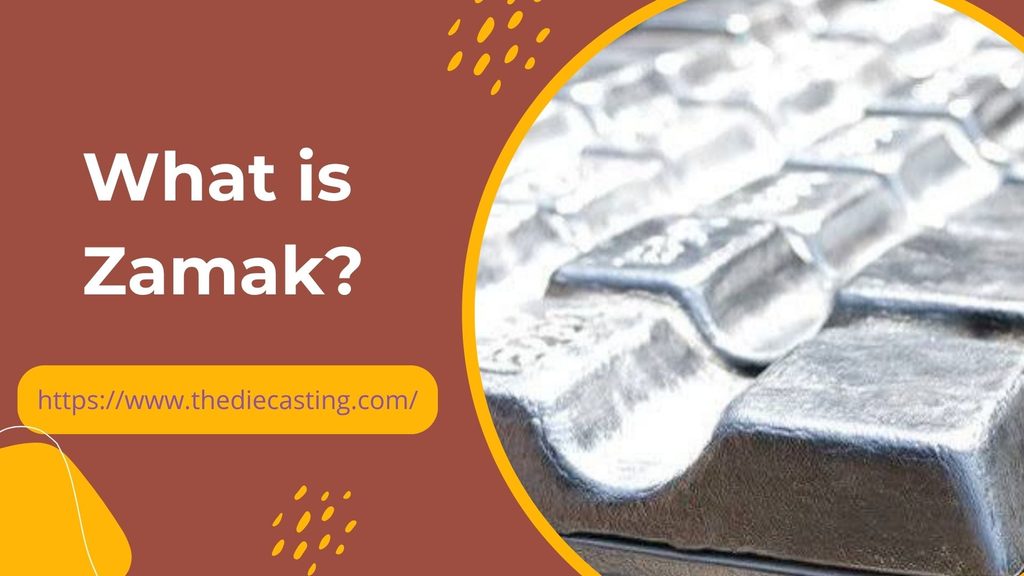
Zamak is used in a wide range of industries, including automotive, electrical fittings, furniture handles, household appliances, and decorative accessories. It is also relatively inexpensive to melt and flows into complex mold cavities, helping manufacturers save on tooling costs, machining time, and production time.
What Is Zamak?
This alloy is a family of zinc alloys that contain aluminium, magnesium, and copper in controlled proportions. Numerous other elements are added to the composition, but they provide improved strength, hardness, fluidity, and dimensional stability.
The names of the main components in the alloy are German in origin: Zink (zinc), Aluminium (aluminum), Magnesium (magnesium), and Kupfer (copper), which is why the name of Zamak is from German.
Zamak alloys are controlled mixtures of metals that have more predictable mechanical properties than uncontrolled metal mixtures. The consistency makes them suitable for industrial applications where repeatable quality and reliable performance are required.
The Components of Zamak
Zamak is a combination of zinc and other alloying elements. The composition varies according to the grade
- Zinc: It is the base material of the alloy and also exhibits casting properties.
- Aluminum: Increases strength, hardness, and fluidity, and promotes the ability of the alloy to fill complex mold cavities.
- Magnesium: Improves hardness and stability and helps resist some types of corrosion.
- Copper: Higher levels increase strength, hardness, and wear resistance, but may decrease the ductility and long-term dimensional stability.
History of Zamak
The use of alloy was developed during the 1920s when it was found to be a more reliable material for high-pressure die casting. The earlier pot-metal mixtures were not always consistent in the proportions of the different metals with which they were mixed, and thus the strength, surface quality, and reliability were not predictable.
These issues were solved with the development of controlled zinc alloys, which offer a more stable material and can be melted and cast with efficiency.
The development helped lay the foundations for zinc die casting as a viable means of producing complex metal parts in large volumes. Since then, the use of this material has been extended by improvements in the composition of the alloys, in die design, casting equipment, and finishing processes.

Comparison of Common Zamak Grades
| Zamak Grade | Main Characteristics | Typical Applications |
| Zamak 2 | High strength and hardness; comparatively lower ductility | Mechanical components, gears, and demanding castings |
| Zamak 3 | Balanced mechanical properties, dimensional stability, and castability | Door handles, hardware, toys, and general-purpose castings |
| Zamak 5 | Higher strength and hardness from increased copper content | Automotive parts, locks, and mechanical hardware |
| Zamak 7 | Improved fluidity and ductility in suitable formulations | Thin-walled components, intricate castings, and precision parts |
| Zamak 8 | Used in selected applications requiring specific strength and wear characteristics | Specialized industrial components and hardware |
How to Choose the Right Zamak Grade
Choosing the right grade begins by first understanding the function of the part and manufacturing requirements.
- Select Zamak 3 for a compromise between castability, tolerance, and price.
- If strength and hardness are important, then look into Zamak 2.
- Use Zamak 5 when extra strength and wear resistance are required.
- Assess Zamak 7 in terms of good fluidity, thin sections, and intricate geometries.
Key Properties of Zamak alloys
The use of alloy is popular owing to its mechanical, physical, and manufacturing properties, which are suitable for making small and medium-sized components efficiently.
Mechanical Strength and Hardness
Zamak alloys offer valuable strength and hardness characteristics in numerous hardware, automotive, and consumer product applications. They have mechanical properties suitable for their normal service loads and anti-surface wear. But Zamak is not necessarily a substitute for steel or structural die casting aluminum alloys.
Corrosion Resistance
This alloy has useful corrosion resistance in many indoor and moderately demanding locations. Under certain conditions, zinc forms a surface film which may reduce further corrosion. Its performance, however, is affected by the environment, composition of the alloy, and surface treatment.
Fluidity and Dimensional Stability
Zamak’s most desirable feature is its ability to take the shape of complicated mold cavities. This allows production of thin walls, fine details, small features, and intricate shapes with good dimensional accuracy.
Low Melting Temperature
The range of the melting point of common alloys is approximately 380 to 390 °C, depending on the type and composition of the alloy. Because of their relatively low casting point, they impose a lower thermal load on the casting equipment and molds than do many casting-point metals.
Thermal and Electrical Conductivity
The material is conductive to heat and electricity and can be used for certain fittings, housings, connectors, and components that require heat or electrical performance.

Zamak Die Casting: How the Manufacturing Process Works
The main manufacturing technique for Zamak components is high-pressure die casting. It is the process of filling a reusable steel die with molten alloy under pressure to form a component having the desired geometry.
Zamak is especially suitable for hot chamber die casting due to its relatively low melting temperature and fluidity.
Step 1: Die Design and Preparation
A steel mold is designed by the manufacturer based on the size, surface finish, and production requirements of the component. The cavity and supporting features found on the die are important to control the flow of metal, remove air, and extract the casting.
Step 2: Melting the Alloy
The alloy is held in a melting pot where the melting process is closely monitored. Consistency of mechanical properties and surface quality depends on the proper composition and the control of contamination.
Step 3: High-Pressure Injection
Molten Zamak is injected into the die cavity. It is fluid enough to fill fine details and relatively thin sections before setting, allowing it to fill in between the details.
Step 4: Cooling and Ejection
The alloy freezes in the mold, creating the desired shape. The die separates, and the part is ejected. The relatively fast solidification of the zinc alloys allows for short cycle times and rapid, repeated component production in Zamak die casting.
Step 5: Trimming and Finishing
Removes excess material, e.g., runners, gates, and flash. Manufacturers may also conduct drilling, tapping, polishing, plating, painting, or other finishing processes, depending on the design.
Importance in the Die Casting Industry
A major reason for the importance of Zamak in die casting is its ability to offer design flexibility along with efficient and high-volume production.

High Production Efficiency
Short casting cycle times are enabled by Zamak’s low melting temperature and fast solidification. This can be very beneficial for high-volume production of automotive hardware, consumer goods, and fittings.
Reduced Manufacturing Costs
There are multiple ways that Zamak can help lower manufacturing costs:
- Lower melting temperatures can decrease energy use.
- Large production runs are possible with reusable steel dies.
- Near-net-shape casting minimizes material waste and machining.
- Details can be integrated, removing separate components or assembly steps.
- If processes are controlled, the risk of expensive rework is minimized due to consistent production.
Complex Geometries & Thin-Walled Designs
Zamak’s fluidity allows for the creation of complex geometries, small features, and thin walls. This is design flexibility that can ease assembly and enhance product integration.
Consistent Quality and Surface Finish
In a well-controlled Zamak die casting process, smooth surfaces and repeatable dimensions can be achieved. These are beneficial features for items that are visible.
Machinability and Surface Finishing of Zamak
Die casting can create near-net-shape parts; however, some parts might need further machining or finishing to achieve the final design criteria.
Machining Zamak Components
Most of the time, appropriate conventional cutting tools can be used to machine Zamak. Common operations include drilling, tapping, milling, and trimming. But during the design stage, the machining needs should be considered.
To improve results:
- If possible, incorporate mounting holes and other features into the die.
- Use tight tolerances only when it is necessary for the function.
- Apply proper cutting practices and workholding.
- Check the critical dimensions following the machining.
Common Surface Finishing Options
Zamak accepts several surface treatments, allowing manufacturers to tailor components to functional and decorative requirements.
| Surface Finish | Main Benefit | Common Applications |
| Chrome plating | Bright appearance and improved surface protection | Handles, trim, and bathroom accessories |
| Nickel plating | Decorative finish and additional corrosion protection | Hardware and consumer products |
| Painting | Flexible colors and appearance | Housings and decorative components |
| Powder coating | Durable, colored protective finish when properly applied | Hardware and selected industrial parts |
| Polishing | Smoother, more reflective surface | Decorative fittings and visible components |
Applications of Zamak Across Different Industries
The versatility of Zamak makes it applicable across a wide variety of industries that require highly detailed, low-cost, and repeatable metal parts.
- Selected automotive hardware, like handles and door trims, is made from this material.
- Furniture and household hardware represent major applications for Zamak.
- The alloy can be made into beautiful shapes and can be given various colors and textures.
- In some electronic housings, connectors, controls, and other metal parts are made of Zamak. The accuracy of its casting can enable manufacturers to incorporate intricate details into their smaller designs.
- This alloy can be used to make buckles, clasps, pendants, and other decorative accessories, too.
Advantages and Limitations of Zamak
All manufacturers need to take into consideration the advantages and disadvantages of Zamak.
Advantages
- Compact Production: Especially suitable for high-volume die casting.
- Great castability: Can be cast into complicated shapes and fine details.
- Good dimensional accuracy: Able to make repeatable parts.
- Short production cycles: Helps increase manufacturing throughput.
- Versatile for finishing: Can be plated, painted, polished, etc.
- Recyclability: Clean, appropriate scrap material may be remelted and reused in a controlled manner.
- Minimized secondary machining: Near-net-shape designs may reduce the need for secondary machining.
Limitations
Although it has its benefits, Zamak is not always the best material to use.
Sensitive to temperature: Strength may decrease, and creep or deformation may increase with higher temperatures.
Load limits: It needs to be tested for strength and fatigue for heavy-load or safety-critical parts.
Corrosion risk: Exposure to harsh conditions might necessitate protective coatings or a particular material.
Conditions for completion: The process of plating and painting requires appropriate pretreatment and quality control.
Design constraints: If very large parts or components are needed that have special structural properties, other materials may be better suited.
Zamak vs. Aluminum and Steel
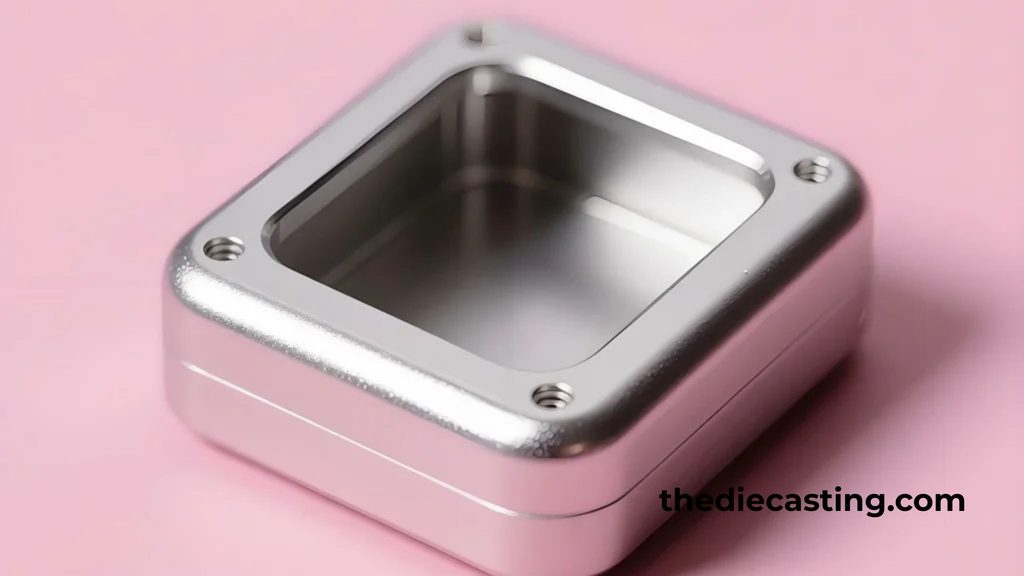
Comparing Zamak with aluminum and steel helps engineers identify the most suitable material for a particular casting project.
| Factor | Zamak | Aluminum | Steel |
| Density | Relatively high | Lower | Varies by grade; generally similar to or higher than Zamak |
| Melting temperature | Low | Higher | Much higher |
| Die casting suitability | Excellent for hot-chamber processes | Commonly cast using cold-chamber processes for many alloys | Conventional steel casting uses different processes |
| Complex details | Excellent for small, intricate components | Good, depending on alloy and process | Depends on casting process and design |
| Tooling and cycle efficiency | Strong advantage in suitable high-volume applications | Depends on alloy and process | Generally more demanding for comparable high-precision production |
| High-temperature service | Limited for many applications | Depends on alloy and temperature | Often preferred for demanding high-temperature conditions |
| Typical uses | Hardware, fittings, small precision parts | Lightweight housings, structural and automotive parts | High-load and demanding structural components |
FAQs
What material is Zamak primarily made of?
Zamak is widely applied in the production of automotive hardware, furniture handles, locks, appliance parts, decorative parts, and some electronic housings. The material is very castable, making it very useful for the manufacture of complex parts, especially in mass production.
2. Does Zamak rust?
Zamak is not readily corroded like iron or steel because it does not have iron as its main component. But under certain environmental conditions, zinc can be corroded.
What is the most used grade of Zamak?
Zamak 3 is a very popular alloy due to its combination of castability, dimensional stability, and mechanical properties.
4. Can Zamak be used for high-pressure die casting?
Yes. Hot chamber die casting is one process in which Zamak is commonly used, and it is well suited to high-pressure die casting applications. It’s easily molded and has a low melting point and fast solidification rate, making it suitable for making complex parts.
5. Is it possible to machine Zamak after casting?
Yes. When further features or tighter tolerances are desired, Zamak can be drilled, tapped, milled, and trimmed. Direct casting of the required features, however, can make the process quicker and less expensive.
Conclusion
The combination of special alloy qualities like mechanical properties, its excellent fluidity, dimensional accuracy, and its ability to be produced at a lower cost for high-volume production makes it another important material used in the die casting industry.
The low melting point of the alloy, short casting time, and the ability to cast complex shapes can help to lower the cost of manufacturing and minimize secondary machining. Meanwhile, the selection of Zamak must take into account the temperature limits, loading conditions, corrosion exposure, porosity, and finishing requirements of the engineers.