
Introduction
Gravity casting vs. die casting is a major consideration when manufacturers are choosing a metal casting process for a new component. The two methods are able to produce consistent dimensions of parts that are hard to produce by other methods and will result in a durable part. They vary in the way the molten metal enters the mold, rate of production, tooling investment, and the shape that can be produced.
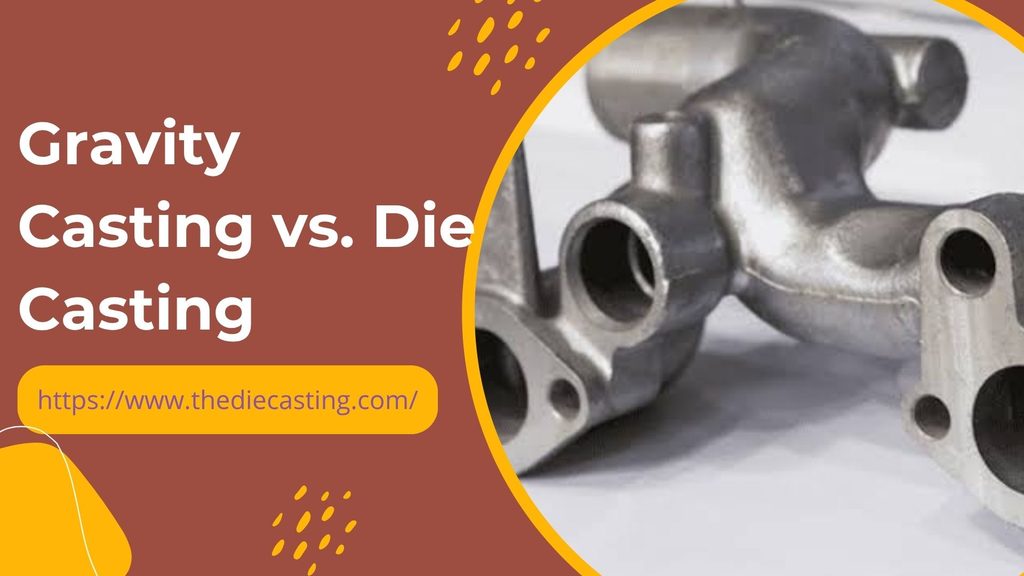
Gravity die casting is gravity casting and is mainly used for many medium-sized production parts and components that require controlled solidification. High-pressure Die casting (HPDC): Molten metal is injected under pressure into a die at a high velocity, which is ideal for large numbers of thin-walled, complex parts.
Quick Comparison: Gravity Casting vs. Die Casting
| Comparison factor | Gravity casting (GDC) | High-pressure die casting (HPDC) |
| Filling method | Gravity | High-pressure injection |
| Mold type | Reusable metal mold | Reusable steel die |
| Typical production volume | Low to medium, sometimes higher | Medium to very high |
| Part complexity | Simple to moderately complex | Complex, detailed geometries |
| Wall thickness | Generally thicker sections | Thin-walled sections |
| Dimensional accuracy | Good | Generally higher |
| Surface finish | Good | Usually very good |
| Porosity | Often easier to control, depending on the process | Gas porosity can be a concern |
| Heat treatment | Often suitable for compatible alloys | Conventional HPDC parts may have heat-treatment limitations |
| Initial tooling cost | Generally lower | Generally higher |
| Cost per part | Often favorable for smaller runs | Often favorable for large runs |
| Typical materials | Aluminum alloys; selected other nonferrous alloys | Aluminum, zinc, magnesium, and selected copper alloys |
| Common applications | Housings, pump bodies, automotive components | Electronic enclosures, automotive housings, thin-walled components |
What is Gravity Casting?
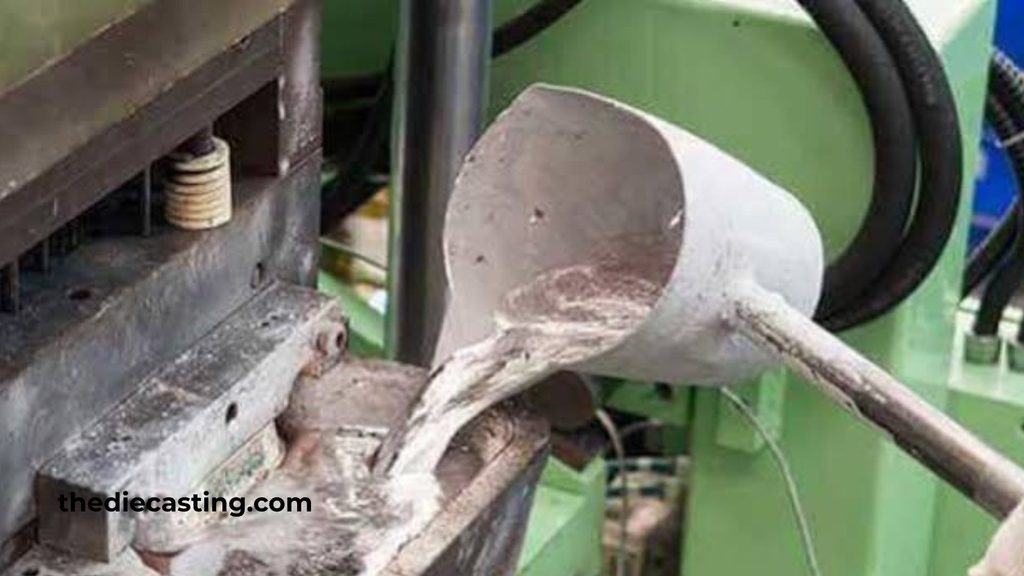
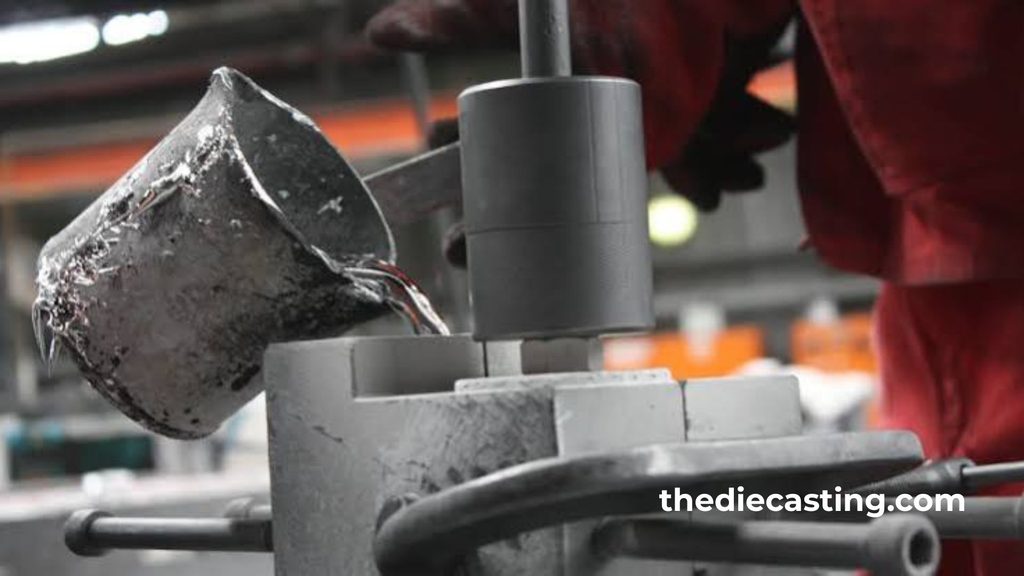
Gravity casting is a metal forming process that involves pouring molten metal into a mold under the influence of gravity. If the mold is reusable and made out of steel or cast iron, the process is usually known as gravity die casting or permanent mold casting.
Gravity casting is a type of casting that does not require a high-pressure injection system to fill the mold. The casting quality can be controlled by regulating the mold temperature, pouring speed, gating design, and cooling conditions in the manufacturing process.
How does gravity casting work?
The following is the usual procedure:
- Preparation of the mold: This is carried out by the manufacturer, who cleans and preheats the mold if necessary, and then coats it with an appropriate coating.
- The alloy is melted and analyzed for its composition and temperature.
- Pouring: Molten metal is poured into the mold, where gravity fills the mold.
- Solidification: The metal cools and solidifies, and the shrinkage is controlled by the mold and feeding system.
- Part removal: The mold is parted, and the casting is removed from the mold.
- Finish and inspect: Gates and excess material are cut off, and then are machined, surface finished, or inspected, as appropriate.

What materials do you use in gravity casting?
Aluminum alloys are used especially for gravity casting. If the mold material, working temperature, and design of the process are appropriate, other nonferrous alloys can also be used.
| Material | Key characteristics | Typical applications |
| Aluminum alloys, including A356 and A357 | Lightweight, good corrosion resistance, useful mechanical properties | Automotive housings, pump bodies, machinery components |
| Magnesium alloys | Low density and excellent weight-saving potential | Lightweight automotive and equipment components |
| Zinc alloys | Good castability and dimensional detail in suitable applications | Hardware, fittings, selected small components |
| Brass and bronze | Useful corrosion resistance and thermal or electrical properties, depending on alloy | Decorative parts, fittings, selected industrial components |
What Are the Advantages of Gravity Casting?
- Properly designed gravity-fed metal flow may minimize turbulence during filling, which is termed controlled filling.
- Potentially low porosity: Dense castings with good internal integrity are possible by controlling the process.
- Heat-treatment options: Many gravity cast aluminum alloys have heat treatment options that will result in improvement of mechanical properties.
- Moderate tooling investment: Normally, the permanent mold tooling is not as complicated as high-pressure die casting tooling.
- Suitable mechanical properties: With suitable alloy and casting quality, the process can be used to produce reliable mechanical parts for structural applications and pressure applications.
What Are the Limitations of Gravity Casting?
- Because of the long production time, gravity casting is generally more time-consuming than HPDC.
- Thin sections and complex features to fill may be more challenging, and additional machining may be required to meet tight tolerances.
- While the cost of tooling for HPDC is sometimes higher than the cost of permanent mold tooling, investment is still needed with the latter.
What Is Die Casting?
Die casting is a manufacturing process whereby a reusable metal die is filled with molten metal.
High Pressure Die Casting: A machine forces the molten metal into the die cavity at high pressure, which enables the metal to fill in the details of the cavity prior to solidification.
It is commonly employed in situations where manufacturers require thin walls, high production rates, complex geometry, and want to have consistent size.
How Does Die Casting Work?
The general procedure for HPDC is:
- Cleaning, lubricating, and preparing the die for production.
- Alloy melting: The alloy is melted and kept within the required temperature range of the process.
- Injection: Molten metal is under high pressure and poured into the cavity of the mold.
- Cooling: The metal is made solid in the die under controlled conditions.
- Ejection: The casting is ejected from the mold by ejector pins.
- Trimming and inspection: Remove excess material and inspect the component for dimensional and casting defects.

What Are the Two Main Types of Die Casting?
There are basically two kinds of conventional die casting: hot-chamber and cold-chamber.
Hot-Chamber Die Casting
Hot-chamber die casting uses a part of the injection system to be immersed in the molten metal or to be connected to the molten metal. This setup eliminates the need for transfers of molten metal into the injection system for each cycle.
Cold-Chamber Die Casting
Cold chamber die casting involves the melting of the metal in an external furnace and pouring it into the casting chamber during each cycle. This is the method used for aluminium alloys and a few magnesium and copper alloys.
What are the Benefits of Die Casting?
- High production speed: HPDC is the ideal choice for large orders because of the short cycles.
- Complex geometry: The process can duplicate complex geometry with thin walls.
- Repeatable dimensions: Good design of the dies and controlled processes help to achieve dimensional consistency.
- Good surface finish: Parts may be finished so that the surfaces are smooth enough for a variety of finishes.
- Production efficiency: Machining and material waste can be reduced by near-net-shape production.
What Are the Limitations of Die Casting?
- The initial investment in die casting is slightly high because it requires the use of special machines and still needs high-quality, long-lasting, and precision-designed tooling.
- Another issue with rapid injection of metal is the possibility that gas will be trapped, which will impact the mechanical properties, pressure tightness, or finishing performance.
- These restrictions can be minimized by using vacuum-assisted and other high-integrity die casting processes.
What Is the Difference Between Gravity Casting and Die Casting?
The key distinction is in the way in which the molten metal is poured into the mold. Gravity casting relies on the force of gravity, while HPDC relies on a powered injection system.
1. Production speed and quantity.
Typically, gravity casting takes longer because the metal is cast into the mold and left to cool before it is removed. Depending on the demand for tools and parts.
HPDC provides fast cycle times and is suitable for high-volume manufacturing.
2. Design Complexity and Dimensional Accuracy
Gravity casting is suitable for a wide range of parts that are moderately geometrically complex as well as have relatively thick walls.
HPDC can be used to create complex integrated geometries, thinner walls and intricate features.
3. Strength, Porosity, and Heat Treatment
If casting and solidification are controlled, then the integrity of the castings can be good using a gravity casting method.
While HPDC can be used for making strong and lightweight components, rapid injection can lead to the formation of gas pores.
4. Surface Finish and Secondary Operations.
The as-cast finish is normally smooth, and there is good reproduction of small surface features. This can simplify some designs, thus cutting down on some of the machine operations required.
Gravity-cast components can also achieve good surface quality, particularly with well-maintained metal molds.
Cost Comparison: Which Casting Method Is More Economical?
| Cost factor | Gravity casting | High-pressure die casting |
| Initial tooling | Generally lower | Generally higher |
| Equipment investment | Usually lower | Higher |
| Cycle time | Longer | Shorter |
| Cost per part in small runs | Often competitive | Can be high because of tooling |
| Cost per part in large runs | May be higher | Often lower through automation |
| Secondary machining | Depends on tolerances and design | Can be reduced by near-net-shape accuracy |
Applications of Gravity Casting and Die Casting
Here are some examples of the common applications for gravity casting.
Common Gravity Casting Applications
- Selected engine parts, cylinder heads and automotive housings.
- Pump bodies, valve housings and industrial machine components.
- Transmission and gearbox housings of aluminium.
- Structural components that need appropriate mechanical properties.
- Aerospace, sporting-equipment, and electrical components (as applicable) with material and qualification requirements.
Common Die Casting Applications
- Automotive transmission housing, covers, brackets and trim.
- Electronics casings, connectors, and heat sink enclosures.
- Appliance housings and parts of consumer products.
- Cover and structural fittings for industrial equipment.
- Thin-walled, lightweight components with complex features.
What Are the Three Types of Casting?
There are three popular types:
- Sand casting: Melting the metal and pouring it into a mold made of sand. It can be used for large parts and a variety of alloys, and the mould preparation is relatively inexpensive.
- Investment casting: A disposable wax or similar material is coated with refractory materials to form a mold. Once the pattern is removed, a cavity is left behind for making a complex shape with fine detail.
- Die casting: Molten metal is poured into a reusable metal mold, either by gravity or by a system that pushes the metal under pressure.
How to Choose Between Gravity Casting and Die Casting
Manufacturers should consider the following factors before choosing a process:
- Design review: Wall thickness, cavity, ribs, bosses, draft angle, and dimensional tolerances.
- Material requirements: Ensure alloy compatibility, strength, corrosion resistance, operating temperature, and heat treatment requirements.
- Production volume: Estimate initial demand as well as expected lifetime volume.
- Quality requirements: Specify acceptable porosity, pressure tightness, surface finish, and inspection techniques.
- Total cost: Consider tooling, unit production, machining, finishing, inspection, and logistics.
Manufacturer’s process experience, equipment, quality system, and delivery capability of suppliers. Pre-tooling opportunities for mold simplification, improved metal flow, reduced machining, and cost control in manufacturing are identified during a design-for-manufacturing (DFM) review.
Conclusion
Both gravity casting and high-pressure die casting yield components with high reliability and are used for different manufacturing priorities.
Gravity casting is frequently used for low-to-medium volumes, thicker sections, and alloys that might need heat treatment. High-pressure die casting is usually preferred for complicated parts or parts with thin walls and for large-volume production.
Price and speed are not the only criteria when it comes to the best process. The decision is subject to the properties of the material, part geometry, porosity needs, dimensional tolerances, tooling investment, and total output. Early comparison of these factors allows manufacturers to achieve a balance between quality, performance, and cost.
Frequently Asked Questions
How many types of casting are there?
Sand casting, investment casting, and die casting are the three common types of casting. Sand casting employs a sand mold, investment casting utilizes a disposable pattern and refractory mold, and die casting utilizes a reusable metal die. Other techniques are gravity casting, centrifugal casting, and continuous casting.
What does gravity die casting mean?
Gravity die casting is a casting method where molten metal is poured or gravity-fed into a reusable mold without being forced under high pressure. It is used for aluminum parts and can be used for good dimensional accuracy and internal integrity with proper control of alloy, mold, and process.
How many kinds of die casting are there?
There are two significant types: Hot Chamber and Cold Chamber Die Casting. Zinc and other appropriate low-melting-point alloys are generally hot-chamber processed. The aluminum alloy and other metals that need to be melted prior to being transferred to the injection chamber are commonly melted using cold-chamber systems.
What do PDC and GDC stand for?
Usually, PDC is a short form for pressure die casting, more specifically high-pressure die casting (HPDC), in which molten metal is forced under pressure into a die. Gravity Die Casting (GDC) is a technique wherein gravity forces molten metal into a reusable metal mold. PDC is typically used in larger production volumes or for quick production, whereas GDC can be used for smaller production runs as well as for components where controlled solidification is required.