
Black anodized aluminium is a popular option for metal components that require a dark color, high wear resistance, and corrosion resistance. The black finish is not painted, but is produced by an anodizing process. The surface is coated with an aluminum oxide layer and then colored by a controlled electrical current.
The finish is very close to the aluminum surface rather than a separate layer sitting on top. The contrast results in a desirable look and durability for black anodized aluminum. The finish is also suitable for products where glare, fingerprints, heat, and daily use are an issue.
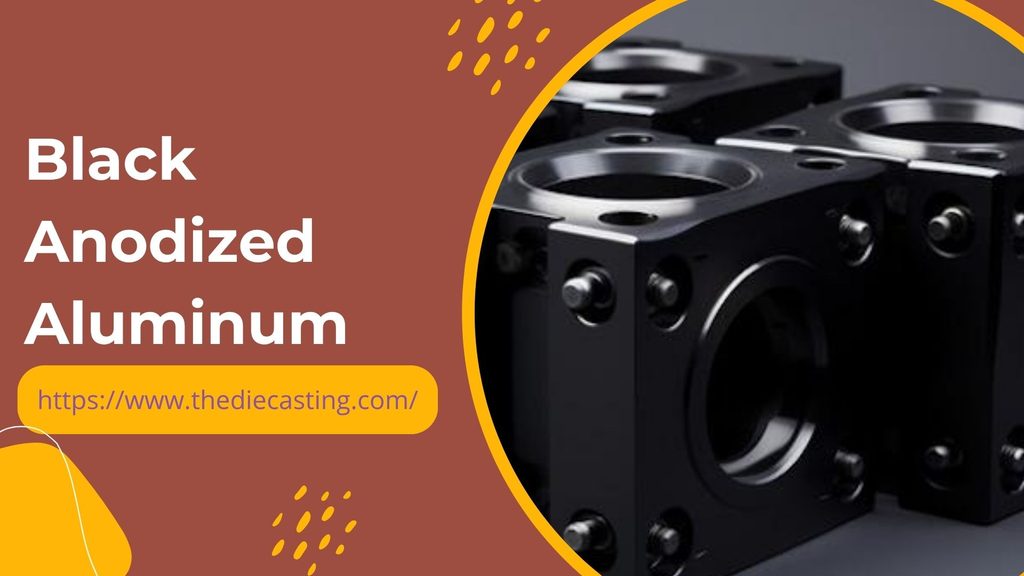
However, achieving a good black finish isn’t as easy as dipping an aluminum part into a black dye bath. The aluminum alloy, surface preparation, anodizing type, oxide thickness, dye, sealing method, and part design all have an impact on the result.
What Is Black Anodized Aluminum?
Black aluminium anodisé is aluminum treated through an electrochemical process and then colored black.
During anodizing, the anodisation de l'aluminium moulé sous pression part serves as the anode inside an electrolyte bath. Direct electrical current causes a controlled aluminum oxide layer to form on the surface. Unlike paint or powder coating, the oxide layer grows from the aluminum itself.
The newly formed oxide layer has a porous structure. Those pores provide space for dye or metallic coloring materials. After coloring, the pores are sealed to hold the color in place and protect the surface.
This simple process gives black anodized aluminum a number of desirable characteristics:
- Harder surface than untreated aluminum.
- Improved wear and abrasion resistance.
- Amélioration de la résistance à la corrosion
- Dark or black color.
- Low surface glare with appropriate preparation.
- Oxide layer acts as an electrical insulator.
- Excellent heat-radiating properties of the anodized surface.
The outcome is very much dependent on material and process parameters. There are various shades that can be achieved with different aluminum alloys. 6xxx alloys (e.g., 6061, 6063) are good options for uniform black finishes, and copper-rich and high-silicon alloys may not yield a uniform finish.
How Black Anodizing Works
Black anodizing generally follows four main stages: surface preparation, anodizing, coloring, and sealing.
· Préparation de la surface
In the first step, the oil, dirt, machining fluids, and other contaminants are removed from the aluminum.
Cleaning is usually followed by chemical etching. Etching removes a thin layer from the surface and gives a more even texture. In some processes, an acidic desmutting step is also used to remove the residue of alloying elements.
Mechanical preparation is different. Before anodizing, the surface is altered by sandblasting, polishing, and other abrasive techniques.
This stage can significantly affect the final look. A rougher surface disperses light and creates a matte surface. A smooth surface reflects more light and results in a brighter finish.
· Anodisation
The prepared aluminum enters an electrolyte bath, often using sulfuric acid for Type II or Type III anodizing.
The aluminum part connects to the positive side of a DC power supply, while a cathode completes the electrical circuit. Current passes through the electrolyte and causes an aluminum oxide layer to grow on the part.
The oxide layer is porous rather than completely sealed. Those pores later hold the black coloring material.
· Coloring
The black color comes after the oxide layer has formed.
Three common approaches are organic dyes, inorganic dyes, and electrolytic coloring using metal salts.
Organic dyes tend to produce deep, rich colors at relatively low cost. Their main weakness is UV exposure. Long periods of sunlight may cause fading.
Inorganic dyes offer better light resistance. Electrolytic coloring uses metallic salts deposited inside the oxide pores and generally provides strong outdoor color stability.
· Scellement
The final stage closes the pores in the anodic layer.
Sealing helps keep the dye inside the oxide layer and improves resistance to staining and corrosion. Hydrothermal sealing and chemical sealing are two methods used for this purpose.
Without proper sealing, the finished surface is more vulnerable to staining and color loss.
Which Aluminum Alloys Work Best?
Aluminum alloy selection has a direct effect on black anodizing.
Some alloying elements respond poorly during anodizing. Copper, silicon, manganese, and other elements form particles or residues within the aluminum structure. These areas may respond differently during surface treatment and create uneven color.
For cosmetic black anodizing, 5xxx, 6xxx, and 7xxx series alloys are generally preferred. 6xxx alloys, especially 6061, receive particular attention because they tend to provide a consistent black finish.
| Aluminum series | Typical response to black anodizing |
| 2xxx | Often uneven or muted because of copper |
| 3xxx | May produce gray or uneven results |
| 5xxx | Generally good black finish |
| 6xxx | Consistent and rich black, especially 6061 |
| 7xxx | Dark finish, though the exact shade varies |
Alloy selection also matters when matching parts from different suppliers. Two parts that are nominally the same black finish may not appear to be the same if they are made from different alloys, tempers, machining processes, or pretreatment processes.
In production, it is sensible to use an approved sample of the same alloy to establish the desired color.
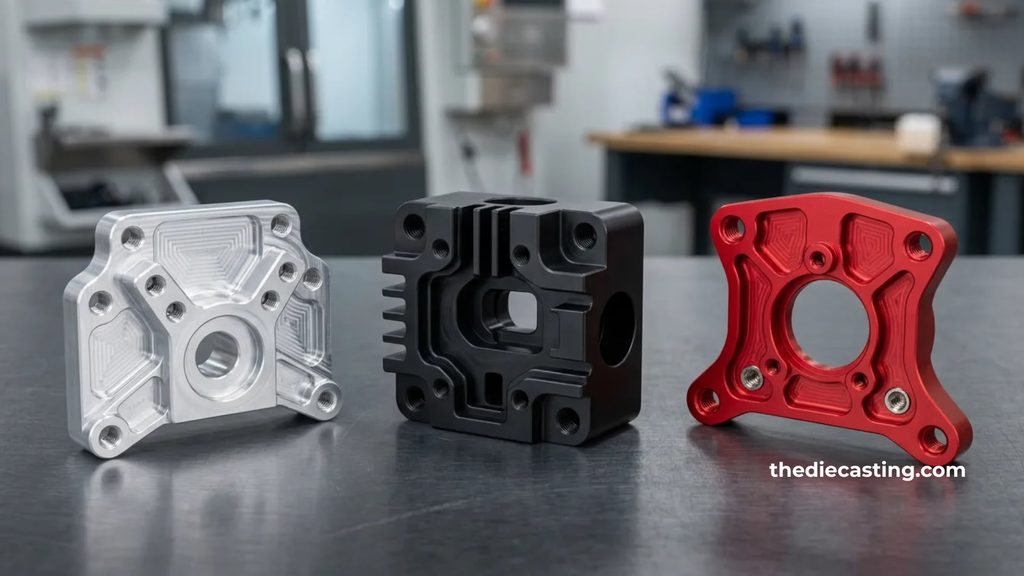
Type II vs. Type III Black Anodizing
Type II and Type III are the two anodisation types most often discussed for black aluminum parts.
· Type II anodizing
Type II is commonly used for parts that require only basic protection and where appearance is important.
The oxide layer is not as thick or dense as a Type III hardcoat. This makes it easier to absorb the dye and to obtain a deep black.
Common uses include:
- Electronics housings
- Panneaux décoratifs
- Automotive trim
- Architectural components
- Consumer products
- Equipment covers
· Type III anodizing
Hardcoat anodizing is also referred to as Type III.
This process creates a thicker and denser oxide layer, which has a much higher wear resistance. The compromise is in coloring. A dense hardcoat layer has smaller and less uniform pores, making it more difficult to achieve a deep and even black color.
Type III suits parts that are subject to frequent rubbing, abrasion, or mechanical contact. Some examples are aerospace parts, machinery components, pistons, gears, valves, and guides.
| Fonctionnalité | Type II | Type III |
| Main purpose | Appearance and general protection | High wear resistance |
| Oxide layer | Thinner | Thicker and denser |
| Dye absorption | Bon | More difficult |
| Black color | Usually easier to achieve | Often gray-black or bronze-black |
| Typical use | Electronics, trim, housings | Machinery, aerospace, high-wear parts |
The choice comes down to the job of the part. A housing that needs a clean black appearance often suits Type II. A sliding mechanical component needs the harder surface provided by Type III.
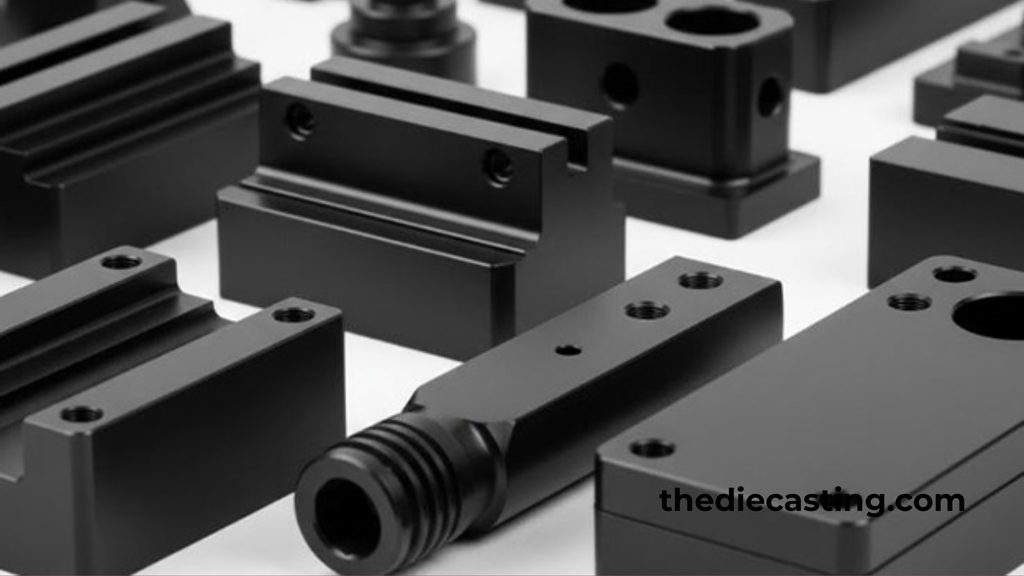
Matte vs. Glossy Black Anodized Aluminum
Anodizing alone does not decide whether a black aluminum part looks matte or glossy. Surface preparation has a major role.
· Noir mat
A matte finish usually starts with chemical etching or blasting.
These processes create small surface irregularities. Light scatters across those irregularities instead of reflecting directly toward the viewer.
Matte black aluminum is useful for products where glare and fingerprints are concerns. This finish is commonly applied to optical equipment, electronics housings, and equipment panels.
· Glossy black
A smooth starting surface is required for a glossy finish.
Mechanical polishing removes small peaks on the surface and creates a more reflective surface. Chemical bright dipping also creates a smoother surface on the aluminum on a microscopic level.
This black anodizing process, then, yields different visual effects depending on the pre-anodizing treatment.
| Préparation de la surface | Typical appearance |
| Bead blasting | Uniform matte |
| Alkaline etching | Fine matte or satin |
| Mechanical polishing | Glossy |
| Chemical bright dipping | Bright, highly reflective |
How Thick Should Black Anodizing Be?
The thickness of oxides has an impact on protection and color.
A thicker oxide layer typically yields more pore volume to absorb the dye for Type II finishes. Approximately 18 to 25 microns is a good range for a rich Type II black finish. Thinner films yield lighter or less saturated colors.
The pattern of Type III is different. The thicker the hardcoat, the more wear-resistant it is, but the thicker the hardcoat, the more difficult it will be to dye.
This results in a compromise. The thickest anodic layer does not necessarily equal the darkest black. Appearance and wear resistance must be taken into account.
Organic, Inorganic, and Electrolytic Coloring
The coloring method determines the durability of black anodized aluminum.
· Organic dyes
Organic dyes are extensively used due to their good color strength and relatively easy processing.
They are suitable for products that are used indoors, electronics, decorative parts, and other applications that do not receive much sunlight.
Their greatest weakness is long-term exposure to UV. Ordinary organic dyes may cause fading on black surfaces when exposed to sunlight for extended periods of time.
· Inorganic dyes
Inorganic coloring systems provide better resistance to light and heat.
They suit outdoor products and parts exposed to demanding conditions. The color depth may differ from a deep organic-dyed black, but service life under UV exposure is often better.
· Electrolytic coloring
Electrolytic coloring uses metal salts and electrical current to place metallic material inside the anodic pores.
Tin, nickel, cobalt, and other metals are used in different coloring systems. Such finishes generally offer strong color stability and are useful for outdoor and architectural applications.
For an exterior product, dye selection deserves as much attention as the anodizing type itself.
Black Anodizing vs. Paint and Powder Coating
- Black anodizing has one major structural difference from paint and powder coating. The anodic layer grows from the aluminum surface.
- Paint and powder coating sit on top of the metal. Under enough impact, abrasion, or poor adhesion, a conventional coating may chip or peel.
- Anodizing does not behave in the same way. A scratch still damages the finish, but there is no separate paint film waiting to peel away from the aluminum.
- Black anodizing also leaves the metal surface relatively thin compared with many applied coatings. This is important in areas where heat transfer is a concern, like electronic enclosures and heat sinks.
- Paint and powder coating still have their role to play. They offer more color options and cover up more surface defects, such as scratches and machining marks.
- The choice depends on the function of the completed part.
Where Is Black Anodized Aluminum Used?
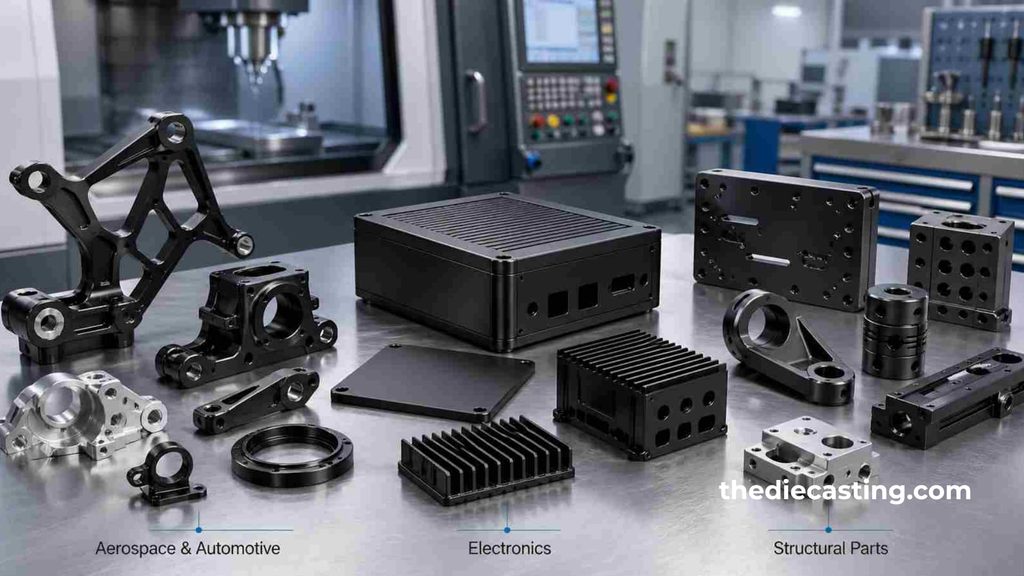
Black anodized aluminum is used in a variety of industries where appearance and surface performance are important.
· Électronique
Black anodized aluminum is commonly used for laptops, audio equipment, camera bodies, equipment housings, and more. The finish gives a clean look and protects the surface from regular use and wear. The oxide layer also acts as electrical insulation.
· Optical equipment
Black matte aluminum is suitable for use around optical components, as it reflects less light. This property is useful in camera housings, scientific instruments, and other optical equipment.
· Pièces détachées automobiles
Trim, interior components, and certain mechanical components are black anodized aluminum. The finish is designed to provide a blend of aesthetics and durability for everyday use.
· Architecture
Anodized aluminum is used to protect against corrosion and for appearance in window frames, doors, trim, panels, and other architectural components. The color system is important for exterior applications. The UV-resistant dye or electrolytic coloring process offers greater long-term color stability than simple organic dye.
· Aerospace and space equipment
Black anodized aluminum is also used in the aerospace and space industry. Black anodized surfaces on satellite components aid in heat radiation. Low outgassing is also important for properly sealed anodized parts in vacuum applications.
Designing Parts for Black Anodizing
Good results start before manufacturing.
Sharp internal corners may receive uneven current during anodizing. Deep cavities may hold chemicals after rinsing. Large flat surfaces may also show color differences more clearly than smaller textured surfaces.
Several simple design choices help:
- Add reasonable radii to sharp corners.
- Provide drainage and venting for hollow sections.
- Keep racking points away from visible surfaces.
- Tell the manufacturer which surfaces are cosmetic.
- Avoid unnecessary deep blind cavities.
- Approve a color sample before production.
- Maintain uniformity of alloy, temper, and finishing.
Another item of interest is racking. The part is secured in the rack, which also makes an electrical connection during processing. Poor positioning can cause non-uniform current distribution and coating thickness.
Conclusion
Black anodized aluminum is more than a black surface treatment. The anodizing process is used to form a protective layer of aluminum oxide. The coloring stage is used to give the part a dark color.
The outcome depends on various decisions made prior to and during production. Aluminum alloy has an impact on color consistency. Surface preparation controls matte or gloss appearance. Type II is more absorbent and appears more, and Type III is harder and more wear-resistant. The efficiency of the black color in resisting sunlight and heat depends on dye chemistry.
A standard organic dyed Type II finish can be used for indoor products and may offer a reasonable appearance and cost. Dye chemistry, sealing, oxide thickness, and anodizing type are more critical for outdoor or high-wear parts.
A clear specification is the first step to the best black anodized finish. Specify the alloy, anodizing type, thickness, surface texture, coloring process, and color standard before production. This provides the manufacturer with a clear target and minimizes the chances of surprises between the approved sample and the finished parts.